Showing posts with label Review. Show all posts

Tuesday, July 25, 2023

Final Fantasy XVI Review: Brand New World, Brand New Identity Crisis


Final Fantasy is perhaps one of the most revered and celebrated JRPG series to date, filled with a colourful history that is fondly remembered even by those who aren’t hardcore fans of the franchise, a fact I can attest to. One of the first Final Fantasy games I got to play and fondly remember was Final Fantasy XIII, unfortunately.

It was not until years later that I realised what was wrong with it and why many fans hated it. Despite this, I still remember the adventures and issues I encountered when I first fired up the game. And, as unfortunate as it is to say, Final Fantasy XVI shares a lot of those similarities with its predecessor.

A Title That Is Both Overhauled and Clunky
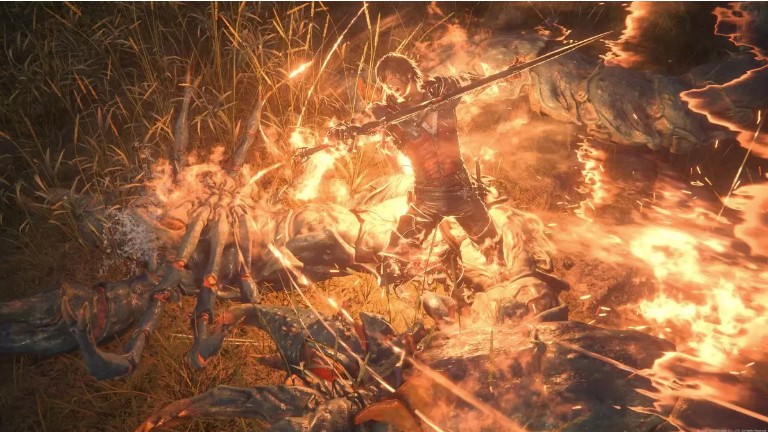

Since its controversial transition away from a turn-based combat system to a much more active one, Final Fantasy has been dipping its toes into all sorts of mechanics that would finally stick. Early on in the game’s run, it’s not hard to see that it borrows a lot of mechanics and ideas from other popular titles, which we will get to in a bit. However, as I played through the game, something was lacking that made the game so alienating.

But before we pour salt into the game’s gaping wound, let’s first discuss the positives of the game, the first of which is the graphics. It pushes the boundaries in terms of details that its predecessor set years before, both in gameplay and in cutscenes. Though we take it for granted, it is an absolute must when it comes to exploring an entirely new world. Something Square Enix has mastered at this point, with a few key twists that make it stand out.

Final Fantasy Magic, With A Touch Of Game Of Thrones
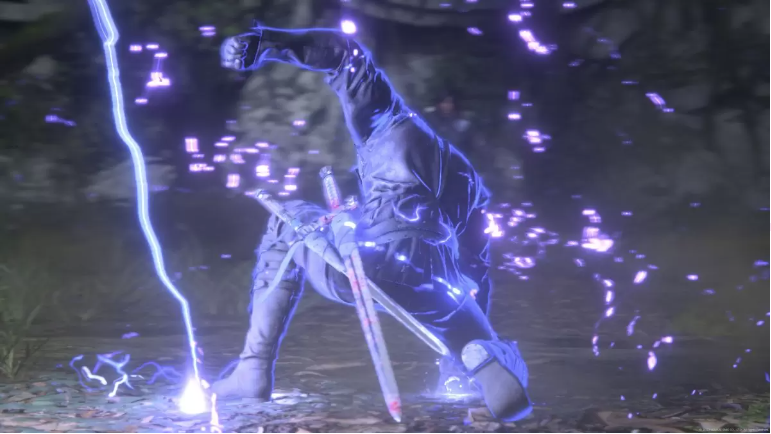

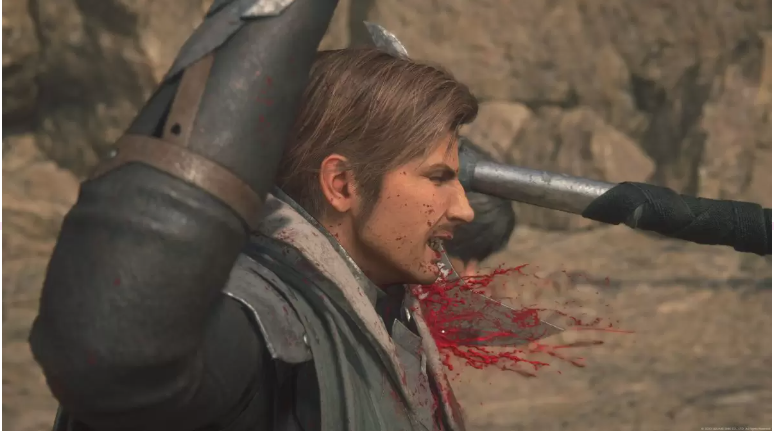
The first thing that stood out to me in Final Fantasy XVI was its unapologetically violent narrative, which doesn’t shy away from spraying torrents of blood. It is actually a very welcome change as the franchise reverts back to its high fantasy aesthetic and focuses on the world of Valisthea, a rich world that is slowly being consumed by a sickness called the ‘Blight’. This serves as the perfect setting for bloody wars as the kingdoms that dominate the land fight for untainted resources.

However, with new worlds come new words and jargon to memorise, not to mention centuries-long histories to keep track of. Instead of spending 30 minutes info-dumping mid-cutscene, Square Enix has created something amazing that I wish to see in future instalments. ‘Active Time Lore’ is definitely one of the best additions to the game, a feature where you can pause a cutscene and check out any information relevant to it, teaching you all you need to know about characters, empires, and other jargon.

These entries constantly update in accordance with the protagonist’s knowledge as it happens. In case you missed an entry, you can always refer to it at the central hub of the game and check it there, both old and updated ones alike.

Same Ol’ Revenge Plot With Minute But Welcomed Twists
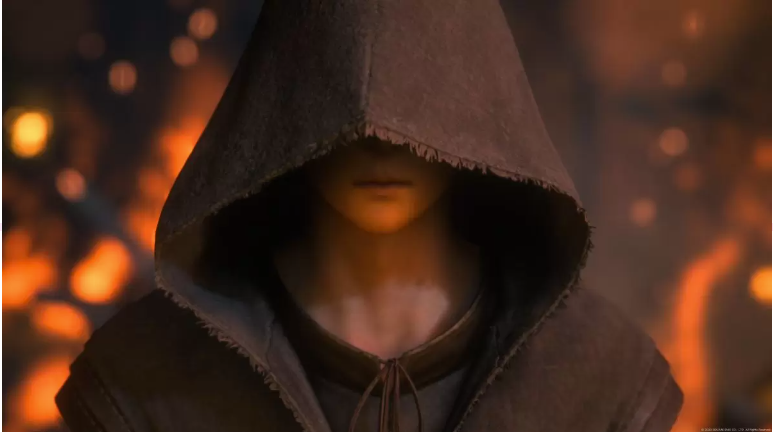

In the world of ceaseless wars, each faction relies on a trump card called ‘Dominants’ and their respective ‘Eikons’. Eikons replace the standard summons that have been a staple of the franchise and take on a more direct and active role in terms of the plot, serving as a sort of nuclear deterrent that can only be summoned by a Dominant.

You explore this expansive world through the eyes of Clive Rosfield, the eldest born prince of the Archduke of Rosaria and bodyguard for the nation’s Dominant who possesses the power of Fire. However, after a tragedy, Clive’s ward was murdered, and the young prince was captured and turned into an enslaved soldier. This brutal introduction to the plot and the story at large is a fitting entry point to present the world of Valisthea.
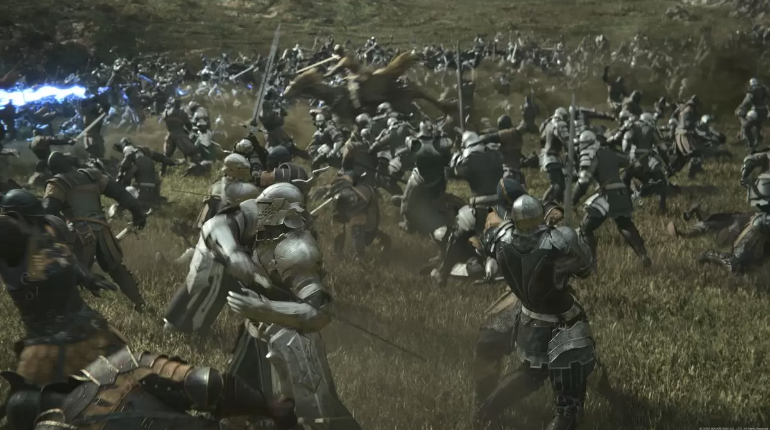

Though it falls back on a simplistic revenge plot, the execution and the set-up leading up to the tragedy were masterfully executed and got the ball rolling, giving him a goal to pursue for the first quarter of the game. Though constantly seeking blood and vengeance, Clive is actually a sensible male protagonist; he may be headstrong, but he isn’t reckless and can easily be talked out of his bloodlust and be reasonable, which is a nice change of pace.

The Most Linear Final Fantasy Title, To Date
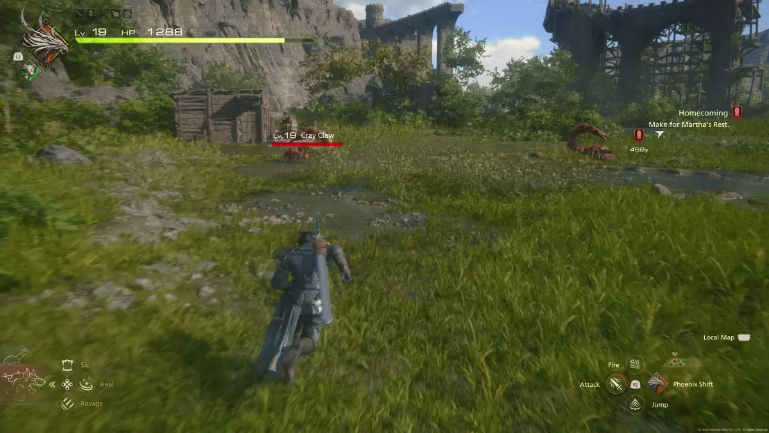

From the taste of the open road in Final Fantasy XV to walking all over the place again, Final Fantasy XVI dropped all aspects of the open world and stuck to a much more linear format of gameplay. Here, you have to run through an expansive but still limited map, mostly because exploration takes a back seat in this game in favour of combat. With all these beautiful details, it would be a sin not to explore them all; unfortunately, the game doesn’t incentivise that as there isn’t much in the way of loot or collectibles in the overworld.

Exploration, if you can call it that, has you running around the map, killing monsters, before moving on to the next area to kill that batch of monsters. Due to the fast-paced nature of the game’s combat, everything else feels slow. You get this feeling even more as the game doesn’t have a dedicated sprint button. Clive would have to run in a straight line for a few seconds, then breakout into a sprint, which is equally annoying and inconsistent.

As you progress through the map, you’ll encounter segments where you’ll have to hop and crawl. There is nothing wrong with these parts per se, but I need to address how off-putting the animation for these scenes can be. Animations in cinematics have a great spectacle element to them, making them quite enticing, but models outside of cinematics are extremely jarring, becoming stiff as a board. Examples of this are the hopping animation for Clive when he bounds over a small gap or when he kicks down a boarded-up doorway; both are prime examples of disjointed animation that looks and sounds weak, to say the least. Obviously, animations in and out of cinematics can’t be the same, but it’s something you need to know before going in.

Side Quests Are Absolute Chores, Literally
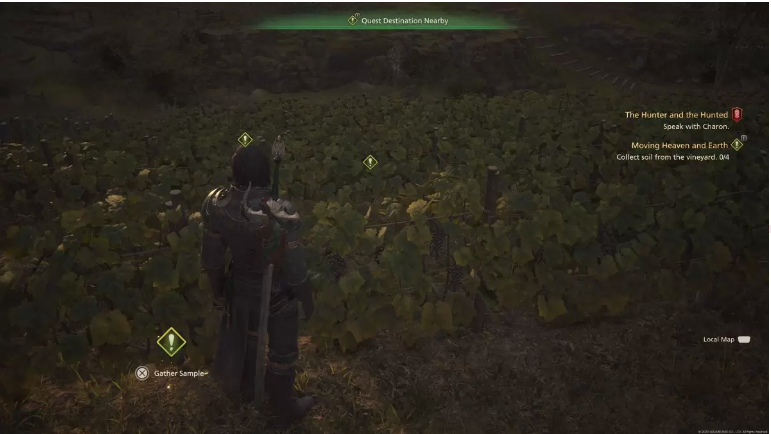


The title of this segment is no exaggeration. From passing on bowls of soup to literally collecting dirt, these tasks are, for lack of a better word, boring. Among all the comments I have made with the game so far, this one was perhaps the most shocking, as the Final Fantasy franchise is known to have the best side quests in the gaming world, but you’re going to have to endure doing these menial tasks for the larger half of your playthrough. Other reports state the same, but they do get better and more impactful as you progress more and more into the story.

One thing that is neat about side quests is that NPCs take note of Clive’s deeds and become more welcoming of the fallen prince in the hideaway. NPCs in Final Fantasy XVI are very chatty and will react accordingly to what and how many side quests you have completed. This nice touch gives the game more life, which could have been overlooked by other developers, so it’s a plus.

Overhauled Combat System Feels Spotty At Best
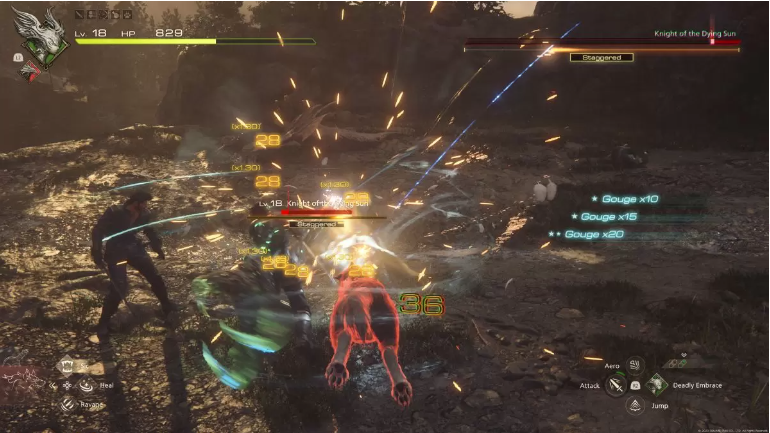

Now, on to the part of the game that has received the most attention: combat. As mentioned earlier, the combat system has received massive amounts of love as it continues to move away from the turn-based system the earlier entries in the franchise are known for. Battles are fast and explosive because of Ryota Suzuki’s work as the combat director for Final Fantasy XVI, who also worked on Dragon’s Dogma and Devil May Cry.

Combat places a big emphasis on combos and alternating between spells and techniques. Final Fantasy 16 has a ‘Will System’ that, once depleted, will cause enemies to stagger, letting you unload massive amounts of damage while they are still weak, a feature that was introduced in Final Fantasy 13 and has been improved upon since. You are given a four-move basic attack chain and nothing more, but this decision is deliberate as it forces you to explore and experiment with using different abilities and skills; doing so rewards you as the enemies will stagger faster.
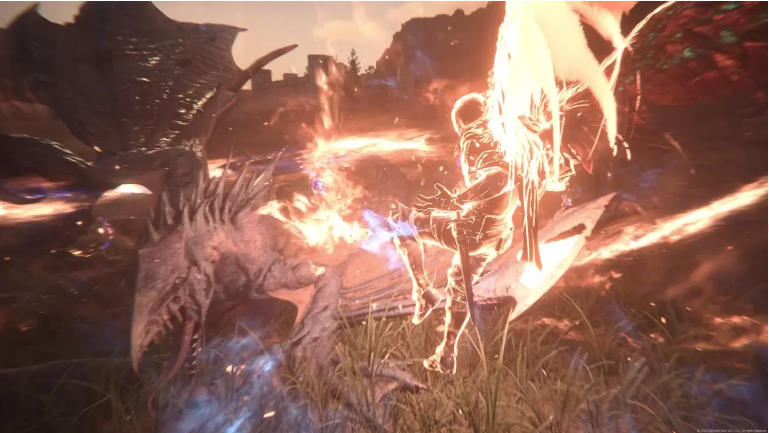

Despite the high praise the combat system has received, I actually have mixed feelings about it. The combat is reactive-based, and you are expected to look out for enemy tells in order to dodge and parry, giving you all sorts of bonuses for doing so. This would be alright if only stringing combos, like the magic bursts, wasn’t so problematic, as combos outright fail to register. Though it might feel like a skill issue, combat is not as fluid compared to, say, the first Bayonetta game, a game that perfectly balanced fast-paced combat, combo-stringing, and exploration over 10 years ago.

I thought that it was only a fluke, but after the first Eikon battle (a detail that I will get through shortly), I noticed Final Fantasy XVI’s most glaring problem: it feels as though it’s trying to replicate everything other games have done before and falls short with each of them. This led me to feel like the franchise is still in the middle of its identity crisis, as the best part of the game only felt okay at best. Though there were key moments, they were few and far between.

This high-octane fighting sequence is nice compared to Final Fantasy XV’s hybrid approach, but because of this, you can easily see compromises made in other aspects of the game once you’ve moved past it. Combat is simple when you break it down, but mastering it is another thing, and it is all that more rewarding when you do. That being said, it does become stale, and it doesn’t help that there is only a limited pool of monsters to fight against.
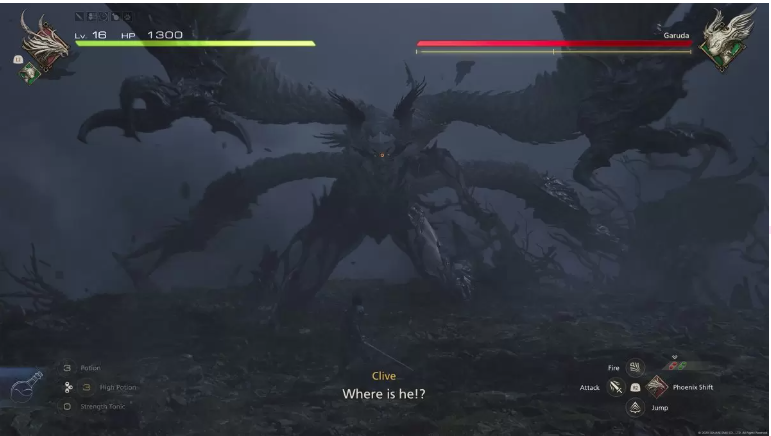

Eikon battles are one of the coolest parts of Final Fantasy XVI, and I say that with absolute conviction. However, the first proper Eikon battle is the slowest fight in the game, as I alternated between dodging, hitting those four hit combos, and getting past the overwhelming amount of QTEs. Not all is lost, as the subsequent fights have better controls and manoeuvrability with the Eikons as the story progresses.

Combat in Final Fantasy XVI is still satisfying, but there are times when it just feels like a drag. Since other aspects of the game have taken a reduced role, once the charm of combat is gone, it feels as though you’ve already explored everything.
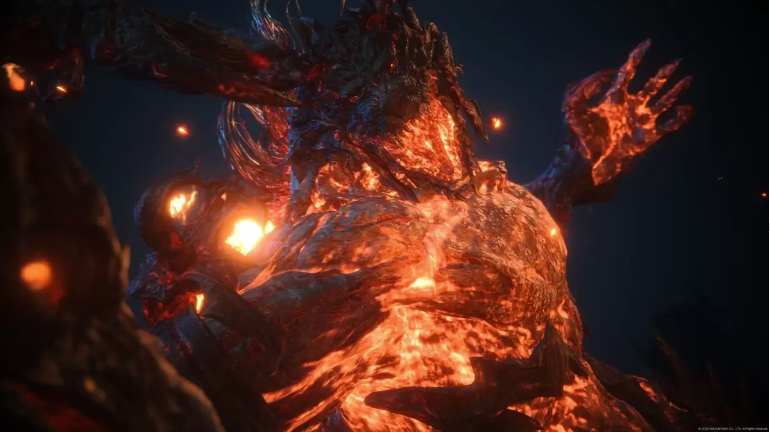


Should you still try Final Fantasy XVI? Yes, as there are unique aspects of the game that previous entries didn’t offer, and if you are interested in or a fan of the combat system, you are welcome to try it. However, if you are here for anything else, then it’s best to lower your expectations.

Friday, November 5, 2021

Ghost of Tsushima Director’s Cut Review: More Narrative Greatness With A Touch Of Grit

You’re probably tired of hearing this from me, but Ghost of Tsushima is great. And it got even better when Sucker Punch Productions gave it a free multiplayer component. For the most part, that’s already a lot to give for a single game, and many were expecting the studio to work on a sequel. But then the company announced a Director’s Cut, which included the Iki Island expansion.

And to put it simply, the expansion is also great – for all the same reasons that made the base game so enjoyable. So let’s talk about that. Being built on an amazing foundation, the only remaining element was a new story to tell, and boy did Sucker Punch pull it off again.

Another setting, Another Mongol Invasion

Being the continuation of the main story in Ghost of Tsushima, the Director’s Cut expansion naturally kept the Mongol invasion as an important part of the story. Very early on, the story makes clear that the events of the Iki Island expansion happen some time after the main game. That, and there is a canon ending to the base game, which forces you to make a decision after the final duel. There is also what I see as a very minor retcon in the base game’s story in order to tell this one. Which is fine, because it wasn’t a major detail back in the base game.


Though this time, the game takes a sharper turn from the road that history has provided. Which is actually fine, because it’s sort of necessary for the story that the expansion is trying to tell. And the story is essentially one of Sakai Jin dealing with the ghost of his own past.

This time, the fictional invading force is an oddly specific Mongolian tribe led by the a Shaman known as the “Eagle”, Ankhsar Khatun. For context, Khatun is the female equivalent of Khan. As the plot progresses, she managed to poison Jin with a special drug that amplifies his darkest thoughts and suppressed memories. And it is through dealing with this poison that Jin faces his past, contemplates what he should or should not have done, and learns to deal with his choices at the end. Again, not the most original of stories, but with a past as grey as his, it makes for a compelling story all the same.


Of course, not everyone is as lucky, or mentally strong, as Jin. Many of the others on Iki Island were poisoned by the Eagle, and have subsequently irreparably lost their minds. And as Jin fights his inner demons, he also helps the locals fight off the Mongols so that this new threat does not take over the island, and move on not only to Tsushima, but the Japanese mainland as well.

Depicting The True Greyness Of The Warrior Class


The relative greyness throughout Jin’s past also reflects the greyness of the role of the samurai during that era. This makes it a far more realistic depiction of the warrior class of the time. Quite the contrast to the main game, which reinforces the stereotypical idealised version of bushido.

Without going into anymore detail, it’s safe to say that the samurai had to do some really nasty stuff in order to serve their lord, and act as peacekeepers. Honour in battle is certainly far from the focus this time around, and I’ll leave it there to avoid the risk of spoiling the story any further.

New Toys To Play With


There are also three new enemy types added to Ghost of Tsushima Director’s Cut. One, which you’ll be introduced to very early on, is the shaman, who makes nearby enemies more resilient to damage, and fights like a spearman up close. Another looks like your average grunt, but can swap between dual swords, sword and shield, and pole-arm at will, and even has a unique pole-arm move set. And the final one is a new brute with a double-bladed pole-arm, who is a lot faster than the others in its class. Enemies in general also can take more hits before going down. All that being said, this list looks to be exclusive to the Iki Island region.

On another note, one improvement that you can expect to be transferrable to the main game is more varied stealth assassination animations. Ditto a new chiburi sheathing animation that was previously exclusive to boss duels. That being said, it’s unclear if these are part of the Director’s Cut, or part of the overall improvements that Sucker Punch promised. What’s definitely a new addition thanks to the Director’s Cut is a new armour set with its own unique set of skills, which is a lot of fun and very overpowered if you have quick reflexes in combat. Your horse gets some love too, which comes in both practical and comedic flavours.

Iki The Animal Sanctuary


If you like animals, then the Iki Island expansion has a treat for you – mostly in the form of three more animal types that you can pet. Scattered around the new area are animal sanctuaries for the monkey, deer and cat. The expansion adds a new limited gameplay mechanic that allows a more active use of your flute in these sanctuaries. Play them well, and the animals will calm down enough to trust you and let you pet them. They appear throughout the expanded area, but you can only pet them in their respective sanctuaries.

This is still quite the major improvement over the foxes in the main game. Beyond a single quest in Act II, the only time foxes appear are near their dens, from which they lead you to the nearest fox shrine. You can also only pet them once, if you see them after praying to said shrines. Beyond that, the foxes of Tsushima appear to completely vanish from the island. And unlike the foxes, as long as you return to the sanctuaries on Iki, you can pet the animals as often as you like.

PS5 Exclusive Features Not A Must, With One Exception

Having reviewed the Director’s Cut on a PS5, I’ll say that the improvements on this version of the game are mostly unimportant. Sure, you get constant 60fps gameplay rather than 30fps, but the DualSense features like haptic feedback and adaptive triggers are not really all that big an improvement. This is especially the case for the latter, which was a little disappointing after having experienced what Insomniac did with Ratchet & Clank: Rift Apart.


All that being said, if you want Japanese lip sync, then unfortunately the PS5 version is a must. It’s a strange thing to be locked behind the latest-generation console. I don’t know if this is a hardware limitation, and I have a hard time believing that it is the case, but here we are. Translations are still whack, with some names translated completely differently. But since these are remnants of the base game, there isn’t much that can be done there short of overhauling the text of from it.

Conclusion


If you can’t get enough of Ghost of Tsushima, then the Director’s Cut is for you. Since it’s built on the bones of such a brilliant game, there’s little that can go wrong. And thankfully, not only did nothing go wrong, but we got another compelling, albeit shorter story experience to continue where the base game left off.

In terms of landmass, the in-game version of the Iki Island is about a third of Tsushima. Though in terms of actual story, it feels a lot more than just a third of the main game. Because of this, the story feels faster – and better – paced. And because of the smaller landmass you can wrap things up pretty quickly. This includes all the side quests, challenges and collectibles, simply because there’s less traversing in between.

For this review, I’ve done almost all there is to do in slightly over 12 hours. Your experience may be quicker if you forgo the collectibles, and play on a difficulty that’s lower than Lethal+. Though that being said, I feel the desire to finish my current playthrough and go for a third one, this time completing the game in canonical order, while making use of the new toys for more of the base game. You don’t have to do that, because in an update quite late into the review cycle, Sucker Punch has added the ability to replay boss duels and outpost captures.


But for all the praise I pile onto this, I must reiterate one criticism. And that’s the fact that Japanese lip sync is locked behind the PS5 version. As I mentioned before, I can live without the DualSense improvements. I can also live without 60fps gameplay, although having it is certainly nice. But by far the one thing that drastically improved my enjoyment of the game is the Japanese lip sync. And it really feels unfair for those who don’t have the console but want to experience Ghost of Tsushima Director’s Cut at its best state, narratively speaking.

If you’ve never experienced Ghost of Tsushima, definitely jump into the PS5 version of the Director’s Cut. If you don’t yet have the console, then I would say you wait until after you get it. For those who have experienced the base game, I’d say that the new elements and replayabllity makes it worth its asking price, regardless of if you’re upgrading to the PS4 or PS5 versions.

Saturday, June 19, 2021

Biden Revokes Ban On TikTok And WeChat; Places Them Under Security Review Instead


US president Joe Biden has recently revoked former president Trump’s executive orders to ban TikTok and WeChat. Issued last year, the ban was intended to halt downloads and usage of both apps in the country due to allegations of potentially sharing data of US citizens to Chinese authorities.

While TikTok and WeChat are no longer subjected to the US government’s banhammer, both apps are not entirely in the clear just yet. It turns out that Biden has signed a new order to conduct thorough security reviews of software and applications developed by those living under the jurisdiction of a “foreign adversary” such as China and Russia. Basically, this new order aims to set out guidelines for “evidence-based” analysis of these apps in order to determine if their data management practices does indeed pose a security threat to the country.

Besides the two aforementioned apps, the US government had previously set its sights on the mobile photo manipulation tool FaceApp back in 2019, after it had reached virality among users in the country and across the globe. It was alleged that Russian authorities have been relying on the app, which is developed by St Petersburg-based developer Wireless Labs, to collect user data – especially those from the US.

“The administration is committed to promoting an open, interoperable, reliable, and secure internet and to protecting human rights online and offline, and to supporting a vibrant global digital economy,” a US senior administration official said during a press conference. “The challenge that we’re addressing with this [executive order] is that certain countries, including China, do not share these commitments or values and are instead working to leverage digital technologies and American data in ways that present unacceptable national security risks.”

It was previously reported that Oracle and Walmart was set to purchase ByteDance’s TikTok app and IP in order to stave off the former Trump administration’s orders. However, the deal was placed on indefinite hold after months of delays. With the app now no longer at risk of getting banned by the US government, the deal could very well be considered as irrelevant.


The fate for other China-based apps that were added in the list of banned software towards the end of former president Trump’s term are still unknown at this time. These include applications such as Alipay, WeChat Pay, QQ Wallet, Tencent QQ, and many others.

Xiaomi Shows Off Physical Concept Of Vision Gran Turismo

At the very tail end of last month, Xiaomi unveiled the Vision Gran Turismo. The car was revealed as a digital hypercar, and one that’s made...