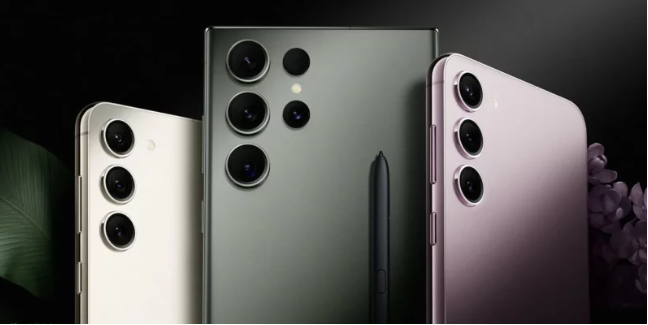
Yes, the Galaxy S23 is slowly trickling out to the masses, and, as Esper's senior technical editor Mishaal Rahman highlights in a storage space survey, Samsung's new phone is way out of line with most of the ecosystem. Several users report the phone uses around 60GB for the system partition right out of the box. If you have a 128GB phone, that's nearly half your storage for the Android OS and packed-in apps. That's four times the size of the normal Pixel 7 Pro system partition, which is 15GB. It's the size of two Windows 11 installs, side by side. What could Samsung possibly be putting in there?!
We can take a few guesses as to why things are so big. First, Samsung is notorious for having a shoddy software division that pumps out low-quality code. The company tends to change everything in Android just for change's sake, and it's hard to imagine those changes are very good. Second, Samsung may want to give the appearance of having its own non-Google ecosystem, and to do that, it clones every Google app that comes with its devices. Samsung is contractually obligated to include the Google apps, so you get both the Google and Samsung versions. That means two app stores, two browsers, two voice assistants, two text messaging apps, two keyboard apps, and on and on. These all get added to the system partition and often aren't removable.
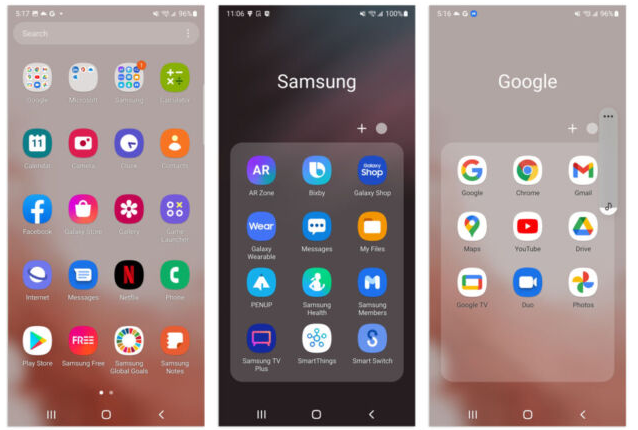
Unlike the clean OSes you'd get from Google or Apple, Samsung sells space in its devices to the highest bidder via pre-installed crapware. A company like Facebook will buy a spot on Samsung's system partition, where it can get more intrusive system permissions that aren't granted to app store apps, letting it more effectively spy on users. You'll also usually find Netflix, Microsoft Office, Spotify, Linkedin, and who knows what else. Another round of crapware will also be included if you buy a phone from a carrier, i.e., all the Verizon apps and whatever space they want to sell to third parties. The average amount users are reporting is 60GB, but crapware deals change across carriers and countries, so it will be different for everyone.
Just on the surface, Samsung's 60GB system partition looks bad compared to the Pixel 7's 15GB, but it's actually worse than those two raw numbers. Samsung isn't even using one of the big, storage-hungry Android features that you would normally get on Pixel 7: A/B system partitions. The Pixel 7 (and most other flagships) can actually have two copies of the operating system, one that is online and being used, and another that is offline and sitting in the background. When an OS update gets downloaded, a Samsung phone, with only one copy of the OS, will have to reboot and have as much as 30 minutes of downtime. A Pixel phone, with two copies of the OS, will just keep running and update the second offline OS in the background. Then, when the update is done, it will just do a normal 30-second reboot, and the device will swap operating systems, moving over to the OS copy that was just updated in the background. The dual OS system also gives a phone a backup if something goes wrong. If that new, updated OS boot fails, Android will switch back to the old OS and try the update again.
This A/B partition feature launched in Android with version 7.0—so it's seven years old—but Samsung is the only major OEM to not use it. Google threatened to make it mandatory several times in the past, but it keeps losing its resolve. Naturally, two copies of the OS will increase storage demands somewhat, but today it's a lot smaller than it used to be. The feature previously involved keeping two copies of the OS around all the time, but today, with "virtual A/B partitions," you normally have one copy of the OS, and when an update arrives, a second copy of the OS is created, updated in the background, and swapped, too. Upon successful boot, the old copy is discarded. That means you only need a chunk of free storage during the update process. Google has a detailed breakdown of how the feature will affect storage, and it lists 4.5GB for the main OS (a Pixel's additional space is for packed-in Google apps), and while the space used for that would normally double during the update, with compression it's only an extra 2.1GB.
That's on a Pixel, though. Samsung's operating system is such a mess, it doesn't seem like it will ever be able to adopt a feature like A/B partitions. The system partition can grow over time, so that 60GB is will only get bigger as the updates roll in. As always, Samsung is happy to throw more hardware at the problem, and while the base model of 128GB might start to feel cramped, the Galaxy S23 Ultra has plenty of room for crapware, with sizes up to 1TB.


