Showing posts with label Huawei. Show all posts

Wednesday, December 14, 2022

Huawei And OPPO Enter Patent Licencing Deal

Huawei Technologies has signed a patent licensing deal with fellow Chinese tech giant OPPO, the former announced via a press release. This will see both companies share patents of several key technologies with one another, though the exact figure of the agreement is still undisclosed at this time.

According to Huawei, the patents involved include those concerning 5G and Wi-Fi, as well as audio and video technologies. The mutual recognition of intellectual property value between companies is a major step towards fostering a positive cycle of innovation and research in high-value standards: investing, receiving returns from investment, and then reinvesting,” said Huawei Intellectual Property Department head Alan Fan in the press release. “This will enable our industry to keep innovating and provide consumers with more competitive products and services.”

Meanwhile, OPPO Chief Intellectual Property Officer Adler Feng regarded this newly inked agreement as “a win-win deal” for both companies. “We are very pleased to enter into a patent cross-licensing agreement with Huawei,” he said. “It clearly demonstrates that the two companies recognise and greatly respect the value of each other’s intellectual property.”

In a statement to Nikkei Asia, OPPO revealed that the licence deal will give it access to Huawei’s most advanced 5G-related technologies. At the same time, the company will also provide some of its own patents to its fellow Chinese tech giant, likely in terms of audio and video technologies – two fields which OPPO has a long history in. 
Thanks to the sanctions imposed by the US government, Huawei was forced to abandon its development of 5G integrated chipsets and other products, and is also banned from acquiring US-based technologies, especially from the country’s top chipmaking suppliers. However, the company still controls a rich 5G patent portfolio, which it has decided to source out to other companies, including rivals such as OPPO and Samsung.

Speaking of which, Nikkei Asia reports that Huawei has signed a licence agreement with Samsung around the same time as well. However, details regarding the deal are still not known, though it could involve the former’s patents on 5G technology.

Wednesday, September 8, 2021

Huawei Mate 50 Also Rumoured To Feature Satellite Communication Capabilities

It appears that the next generation iPhone may not be the only upcoming smartphone to come with satellite communication capabilities. Or at least according to a new rumour provided by a tipster on Weibo (via GizChina.it), who suggested that Chinese tech giant Huawei might also equip the feature on the Mate 50, its second flagship handset.

Much like the more recent report regarding the function on next-gen iPhones, it is said that the Mate 50’s satellite communications is intended for emergency use as well. Similarly, this enables the phone to send distress messages via SMS, independent of a cellular service connection.

The tipster claims that this feature is supported by China’s Beidou satellite system, which offers navigation and emergency SMS services. Beidou first launched in the country back in 2015 and eventually expanded its services across the globe last year, which places it alongside other satellite-based navigation systems such as the United States’ GPS, Russia’s GLONASS, and Europe’s Galileo.

Interestingly, the tipster added that the new satellite communications feature would also allow Huawei Mate 50 users to reach out to smartphones by other Chinese brands. This suggests that satellite communications might also be introduced to future devices from the likes of Xiaomi, Honor, Vivo, and so on.

If this rumour is to be believed, we might see more handsets to be equipped with this feature throughout 2022. On that note, it is also suggested that Huawei could launch the unannounced Mate 50 flagship series by early next year. Which is actually much later than the Mate series’ usual launch window, but expected nonetheless due the component shortages caused by the various US sanctions imposed on the company.

Wednesday, June 30, 2021

Huawei MatePad Pro Available In Malaysia On 18 June; Price Starts From RM3999


Huawei has officially launched the 2021 edition of the MatePad Pro in Malaysia, which is slated to be available for sale next week on 18 June. As noted in our previous report, the new tablet is also one of the first devices from the brand to feature its new HarmonyOS platform.

Just in case you missed it, the MatePad Pro features a 12.6-inch OLED display with a resolution of 2560 x 1600 and an aspect ratio of 16:10. Huawei claims that the tablet’s screen has a colour accuracy rating of  ∆E < 0.5, which makes it ideal to function as a secondary monitor for professionals such as designers or photographers. Besides that, the display also features the brand’s ClariVu Display Enhancement technology and Eye Comfort Mode for optimum viewing experience. Audio-wise, the new MatePad Pro features eight Harman Kardon-tuned speakers, and four onboard microphones. 


Under its hood is Huawei’s own Kirin 9000E 5G flagship chipset, which is accompanied by 8GB of RAM and up to 256GB of UFS3.1 storage. Users are also able to expand the tablet’s storage up to an additional 256GB by slotting in a proprietary Nano (NM) Card, if they so wish. In terms of battery performance, the 2021 MatePad Pro comes with 10,050 mAh capacity which features wired and wireless fast charging support at 40W and 27W respectively. It also has the ability to reverse charge other compatible devices via wired at 5W and wireless at 10W.


On the back of the tablet is a dual camera setup consisting of a 13MP main sensor, an 8MP ultra-wide, and a 3D TOF (time of flight) sensor for improved autofocusing. Meanwhile, housed in front on the side bezel is an 8MP camera for selfies and video calls.


Other than that, the new MatePad Pro comes with the upgraded Huawei Share feature via HarmonyOS. This enables for seamless multi-screen collaboration capabilities and data transfer with other compatible devices. Further aiding with the user’s productivity on the tablet is the support for the brand’s 2nd generation M-Pencil accessory, which now boasts a low latency of 11.2ms and features 4,096 points of sensitivity. The first party stylus can be attached magnetically on the side of the Pro for both storage and wireless charging, and is also compatible with older MatePad models.


Also introduced during the launch is the new Huawei Smart Magnetic Keyboard, which can be magnetically attached to the 2021 MatePad Pro. Much like the M-Pencil above, attaching the keyboard will also charge its internal battery.


The new Huawei MatePad Pro will retail starting from RM3,999 once it arrives on store shelves next week. In the meantime, pre-orders for the tablet are now available for interested customers starting today until 17 June via the brand’s official web storeExperience Store, as well as its Lazada and Shopee stores.

Friday, June 25, 2021

Huawei Looking To Attain Driverless Car Tech By 2025


We now know a bit more about Huawei’s automotive ambitions. Previously known mostly for its smartphones, the Chinese tech giant is planning to attain driverless passenger car technology by 2025.

“Our team’s goal is to reach true driverless passenger cars in 2025,” said Wang Jun, a senior executive at Huawei’s smart vehicle unit, at an industry conference, according to a Reuters report.

Huawei and its smartphone business became a frequent target of US sanctions during the Trump years. The company remains in Washington’s bad books even under the Biden administration. Seeking to adapt, it recently pivoted to automobiles, pouring over US$1 billion (~RM4.1 billion) into researching and developing self-driving and electric car technologies.


It also announced that it would collaborate with three automakers to produce self-driving cars with the Huawei name as a sub-brand. Recently, it was reportedly broadening its partnership with one of the aforementioned automakers, Changan Automobile, to include the design and development of automotive chips.

Huawei’s 2025 target for self-driving tech puts it slightly behind fellow Chinese companies Baidu and Geely, which through their joint venture Jidu Auto, aim to launch an “intelligent” electric vehicle (EV) with autonomous driving technology in about three years (2024).

Wednesday, June 16, 2021

Rumour Suggests Huawei And Leica Partnership To End After P50 Series’ Release


The newly established partnership between Sharp and Leica that was revealed earlier, along with the unveiling of the Aquos R6 smartphone may come as a surprise for many. This is the first time for the German camera maker to collaborate with another smartphone brand after exclusively partnering with Huawei since 2016. However, Leica’s contract with the Chinese tech giant may finally come to an end later this year, according to a recent rumour.

This information comes from Finnish leakster Teme (aka @RODENT50) via Twitter, who said that the partnership will end after the release of Huawei’s P50 flagships which are said to be officially unveiled in July. The most possible reason that comes to mind to why Leica may be considering ending this deal is the ongoing US sanctions imposed on the Chinese company. This has drastically impacted Huawei, causing it to cut down on smartphone production due to the shortage of supplies, especially semiconductors. This is quite apparent as aside from the upcoming P50 series, the company has not unveiled or released any other smartphone model in 2021.

Although this may seem like an impending end of a six-year partnership between the two companies, there’s a chance that Teme’s information is inaccurate. Interestingly, the leakster followed-up on this tweet a few days after, stating that the Leica-Huawei collaboration could still continue even after the release of the P50 series. He also noted that the camera maker’s new partnership with Sharp will not affect its relationship with the Chinese giant as multi-branded deals are quite common in the smartphone industry. For instance, optical systems manufacturer Zeiss to this date has partnered with three smartphone makers, namely Sony, Vivo and Nokia.

Regardless, we highly advise our readers to take this information with a pinch of salt. And this isn’t the first time that the Leica-Huawei partnership is rumoured to be expired either. Chinese tech insider Digital Chat Station also suggested the same insight on Weibo in late 2020, which was shot down by both companies in their own respective statements. This then resulted in the leakster to delete his post on the Chinese social media platform soon after.

Sunday, June 13, 2021

Huawei To Expand Car Collaboration With Changan To Include Making Automotive Chips


Huawei is broadening its existing smart car partnership with government-owned Changan Automobile to include the design and development of automotive chips, sources told Reuters.

For months, both companies have been informally working together on chips, two sources told Reuters. Another source claimed that the companies might soon enter a joint venture dedicated to chip development.

The move does seem natural as the global automotive industry has seen crippling production delays due to an ongoing shortage of semiconductor chips. Major chip producers see the shortage lasting into next year.


Also, last month, Huawei announced that it would collaborate with three automakers to produce self-driving cars with the Huawei name as a sub-brand. Changan is one of those automakers. The company has worked on developing its own chips, but hasn’t gotten far, two sources told Reuters.

Huawei’s smart car collaboration with Changan involves the former providing the vehicle’s operating system and cabin technologies while latter is assigned vehicle design and engineering.

Huawei’s pivot to the automotive industry comes after its core smartphone business was wrecked by US sanctions enacted by former US President Donald Trump. In April, the company said it would spend over US$1 billion (~RM4.1 billion) to research and develop self-driving and electric car technologies.

Thursday, June 10, 2021

Huawei Founder Reportedly Urging Staff To Focus On Software Development


Huawei founder Ren Zhengfei is urging staff to shift their focus on software development instead of hardware, according to an alleged internal memo spotted by Reuters. With the company’s smartphone production now at limited capacity, a change in direction is necessary in order to counter the ongoing sanctions that were imposed by the US government, he explained.

Ren added that development in the software field is “outside of US control”, which would grant Huawei “greater independence and autonomy.” The memo also mentioned that software such as its own HarmonyOS mobile operating system, Mindspore AI cloud framework, and other IT products will be given priority. It’s worth noting that the company had recently confirmed that it will be launching its mobile OS in early June.

Huawei’s shift in focus to software would depend on finding the right business model and is envisioned to adopt an open source approach, the founder wrote. In addition, Ren encouraged staff to strengthen the company’s position in China and also build up its territory in regions, with the possibility of excluding the United States altogether. “Once we dominate Europe, the Asia Pacific and Africa, if U.S. standards don’t match ours, and we can’t enter the U.S., then the U.S. can’t enter our territory,” he said.


While it may be shifting its focus to the software market for its future endeavors, Huawei still has ongoing plans on hardware production. This includes the newly announced collaboration with Changan Automobile to include the design and development of automotive-based semiconductors. On the unofficial side of things, the company has yet to officially announce its latest flagship, the Huawei P50 series, which has seen numerous leaks since the beginning of the year.

Huawei To Launch New Smartphone OS In June


Huawei said it intends to launch its new Harmony smartphone operating system (OS) on 2 June, Reuters said. The event would obviously be a milestone in the company’s shift away from Google’s Android OS.

That being said, it’s currently unknown if the company intends to release new smartphones at the same time or if it’ll be providing updates for existing phones. The time frame for the rollout is also unclear.

For years, the Chinese firm was reliant on Android to make its smartphones work. But in 2019, former US President Donald Trump enacted sanctions that barred Google from giving technical support to new Huawei phone models and access to Google Mobile Services. That and a litany of other US actions have effectively crippled Huawei’s smartphone business.


The company was formerly the leading and largest smartphone maker in the world, but now has dropped to 6th place with a 4% market share in the first quarter of this year. Its financial results for 2020 showed discouraging figures for every market except China.

Earlier this year, the company acknowledged the damage it suffered from US sanctions while continuing to deny charges made by the US and other governments that it does the bidding of the Chinese government and military. While Trump has left office, the new US president, Joe Biden, has continued to put economic pressure on the company.

In an internal memo obtained by Reuters, Huawei founder Ren Zhengfei told employees to shift their focus to software development in order to counter US sanctions. The company has notably also diversified into the automotive industry.

Friday, May 7, 2021

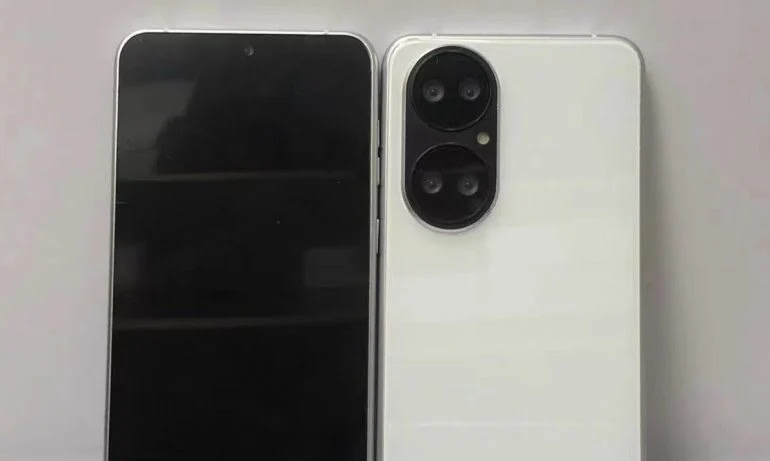
Alleged Huawei P50 Mockup Surfaces; Seemingly Confirming Prior Leaks Of Its Design

A photo featuring alleged mockups of Huawei’s upcoming P50 flagship smartphone has recently surfaced online. The image, shared by Slasheaks via Twitter, shows both the front and rear design of the device, which resembles the renders shared by Steve Hemmerstoffer (aka OnLeaks) back in March.

The P50’s display is shown to feature a large amount of screen real estate, surrounded by thin bezels. Located on the top centre is a single punch-hole cutout for its front-facing camera – indicating that Huawei have decided to drop the pill-shaped cutout from the phone’s predecessor. In terms of size, Hemmerstoffer’s earlier leak suggests that the standard P50 will come with a 6.3-inch display and features a dimension of 156.7 x 74 x 8.3mm.

The rear side of the phone appears to feature either a glass or plastic white panel, which will likely be available in more colour options at launch – whenever that may be. Then we have the massive dual circular glass housings for the P50’s camera system, arranged vertically on a cylindrical island on the top left corner of its back.

Thanks to this alleged leaked mockup, we now know that each circular housing features two cameras – totalling up to four shooters on the device. Strangely enough, all the cameras shown are similar in size and type – something that could potentially change in the final version. OnLeaks says that the P50 may be equipped with an unannounced IMX800, Sony’s rumoured 1-inch sensor for mobile phones.

Also not forgetting that a potential high specced variant of the device may be in the works. According to a separate leak by Hemmerstoffer prior to this, the alleged Huawei P50 Pro will feature the same rear camera array design as the vanilla version, but features a curved front display instead.

As usual, we highly advise that you take the information provided through leaks such as these with a grain of salt. With its mockup now seemingly revealed, there’s a chance that Huawei may be gearing up to introduce its P50 flagship smartphone sometime in the coming weeks or even months.

Monday, May 3, 2021

Huawei Vision S Now Available For Pre-Order In Malaysia For As Low As RM 2,799

Huawei today officially launched the Vision S smart display in Malaysia which is said to be the first market outside of China to receive the Harmony OS-based device. Powered by the company’s own Honghu 818 processor, it can be obtained with either a 55 or 65-inch screen.

Alongside 3GB of RAM and 32GB internal storage, the Vision S also comes standard with a 4K LCD panel with a Direct LED backlight that has a 120Hz refresh rate and a maximum brightness level of 350 nits. Additionally, Huawei also stated that the panel has DCI-P3 colour gamut coverage of 92% alongside low blue light and flicker-free technology.

In terms of audio, the Vision S relies on two 10W speakers together with another two 10W tweeters. The smart display also comes with Huawei Histen sound enhancement alongside the support for Dolby Atmos and DTS contents.


Outside of these hardware features, a lot of additional features within Vision S do require a supporting Huawei phone or tablet though. One such example is the OneHop Projection in which users can swiftly mirror their Huawei device to the display by tapping on its NFC-equipped remote control.

Similarly, Vision S also supports Huawei Share which allows users to wireless share contents from their phone with the smart display. Additionally, you can also use your device to control the Vision S itself.

Another interesting feature of the Vision S is its 13MP camera that can be easily attached and detached from the display. Through the camera, users can make high-resolution video calls through Huawei’s MeeTime platform.


As for the pricing in Malaysia, the 55-inch variant of Vision S goes for RM 2,999 although pre-order customers can purchase it for RM 2,799 from now until 12 May. This particular offer can only be obtained through Huawei Store Online and Huawei’s official store on Shopee.

On another hand, the 65-inch model is priced at RM 3,999 and Huawei will be providing the first 1,000 pre-order customers with a free Huawei Wi-Fi AX3 router. If customers choose to pre-order their Vision S through Huawei Store Online and Huawei’s official store on Lazada by 2 May 2021, they will also receive a Huawei FreeLace Pro.


The actual release date for the Vision S 65-inch variant will be on 3 May before followed by the 55-inch model on 13 May. If you need further information, do check out Huawei Malaysia’s official website right here.

Sunday, May 2, 2021

EU Court Favours Huawei In Logo Spat With Chanel

An EU court has overruled Chanel’s objections to a logo that Huawei plans to use for its computer hardware. The French fashion house had argued that the logo was too similar to its own.

But the EU General Court in Luxembourg found that, while the logos were similar in some ways, their visual differences were significant, a BBC report said.

“Chanel’s marks have more rounded curves, thicker lines and a horizontal orientation, whereas the orientation of the Huawei mark is vertical. Consequently, the General Court concludes that the marks are different,” the court said.


The BBC noted that in 2017, Huawei applied for EU trademark protection for a logo it wanted to use for computer hardware, but ran into opposition from Chanel.

Then in 2019, the EU Intellectual Property Office rejected the fashion house’s claim, concluding that the logos were different and the public weren’t likely to confuse the two. Chanel appealed that ruling, leading its defeat at the aforementioned General Court.

Still, the company may seek further appeal at the European Court of Justice, which is the EU’s highest court when EU law is concerned.

Tuesday, April 20, 2021

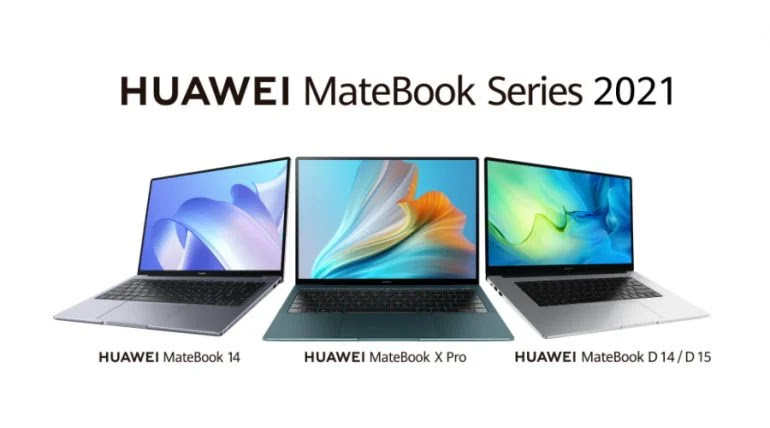
Huawei Is Set To Launch Five New MateBook Models In Malaysia


It was only back in February that Huawei had released a new MateBook model into our market. As it turns out, more are on their way to Malaysia real soon as the company has recently revealed the list of 2021 MateBook laptops that it will launch next week.

One of them is the 2021 MateBook D 14 which looked exactly like the MateBook D 14 Intel Edition that Huawei has just launched in Malaysia less than two months ago. In fact, the 2021 variant is still powered by the same Intel Core i5-10210U processor.

However, the variant that is coming to Malaysia will no longer carry the NVIDIA MX250 GPU though. Instead, it will rely on the integrated Intel UHD Graphics 620 GPU.

The 2021 MateBook D 14 continues to feature a 14-inch Full HD IPS display, and 512GB solid state drive but the laptop does have more RAM than its 2020’s counterpart at 16GB and it also supports Wi-Fi 6 too. Additionally, the 2021 model also features a dual thermal heatsink if the picture on Huawei’s site is to be believed.


In a rather curious decision, Huawei has also decided to bring two versions of the 2021 MateBook D 15 into Malaysia. One is being powered by an Intel Core i5-10210U processor while another is equipped with an Intel Core i5-1135G7 although both laptops still feature 16GB of RAM and 512GB SSD.

On paper, the 11th Gen version of the laptop has a slight advantage in terms of having newer hardware and the support for Wi-Fi 6. Other than that, another major difference is likely their respective price tags although this will only be known next week.

Moving on, another new model on the list is the 2021 MateBook 14 which also carries the Intel Core i5-1135G7 processor. Equipped with a QHD touch display, Wi-Fi 6 support alongside 16GB RAM and 512GB SSD are once again standards on this 1.5kg laptop.

The fifth new 2021 MateBook model that Huawei will launch in Malaysia next week is its flagship MateBook X Pro. Launched in China earlier this year, Huawei has decided to let go of NVIDIA GeForce MX graphics from this year’s model and has opted to use the integrated Intel Iris Xe Graphics within the Intel Core i5-1135G7 processor in the laptop.


Aside from the new 11th Gen Intel Core processor and Wi-Fi 6 support, the 2021 model is generally identical to its 2020’s predecessor. This includes the 13.9-inch 3:2 aspect ratio touch display with 3000 x 2000 resolution together with its sleek metal chassis.


As stated earlier, Huawei has promised to unveil more information regarding these new 2021 MateBook laptops next week. If you are interested, do stay tuned for their launch day on 19 April for further details.

Sunday, April 18, 2021

Huawei Is Pouring US$1 Billion Into Car Tech R&D This Year


Huawei announced over US$1 billion (~RM4.1 billion) investment into researching and developing self-driving and electric car technologies, following in the footsteps of other Chinese tech companies eager to make a name in the automotive business.

According to Bloomberg, Huawei’s Deputy Chairman and Rotating Chairman Eric Xu noted that the company’s self-driving technology is ahead of Tesla in allowing cars to cruise for over 1,000km without human intervention.

Xu also said that the company would initially collaborate with three automakers to produce self-driving cars with the Huawei name as a sub-brand. This is apparently akin to how Intel has its logo on PCs. Huawei’s three partners are BAIC Group, Chongqing Changan Automobile Co, and Guangzhou Automobile Group Co.


Naturally, Huawei is very optimistic about its chances in the Chinese market.

“China adds 30 million cars each year and the number is growing. Even if we don’t tap the market outside of China, if we can earn an average CNY 10,000 (~RM 6,315) from each car sold in China, that’s already a very big business for Huawei,” Xu said.

But it may soon find itself in a very crowded market. Rival Chinese smartphone maker Xiaomi is already working on a smart electric vehicle (EV). And Chinese search giant Baidu has partnered with Geely to make electric cars as well.


Huawei has been aggressively trying to diversify out of the smartphone business after being pummelled by continuing US sanctions. Just last month, the Biden administration tightened 5G restrictions on its US suppliers. While Huawei recently admitted the damage it suffered from sanctions, but once again reiterated that it doesn’t answer to Beijing.

Thursday, March 25, 2021

Huawei FreeBuds 4i with ANC To Be Available In Malaysia For As Low As RM 319


It seems that many brands believe that this week is a good time to introduce new products into our market including Huawei. The company has revealed that its brand new true wireless earbuds (TWEs), the FreeBuds 4i will be available in Malaysia this coming Saturday, 27 March.

At a glance, the FreeBuds 4i carries a brand-new physical design for its charging case which now looked much closer to its higher-end sibling, the FreeBuds Pro. Huawei claimed that the case would enable up to 22 hours of total playback time while on their own, the earbuds can deliver up to 10 hours although this is with the active noise cancellation (ANC) off.

The FreeBuds 4i also comes with a quick charge feature that enables its earbuds to obtain 4 hours of playback time with just 10 minutes of charging time. As per many TWEs with ANC on the market right now, the new model from Huawei also features the Awareness mode that allows users to hear their surroundings.

In terms of internal components, Huawei said that each earbud is equipped with a 10mm dynamic coil driver that also has a polymer composite diaphragm, alongside two MEMS microphones with beamforming and AI noise reduction technology. At the same time, both earbuds also come with capacitive touch sensors that users can use to control playback, phone calls, and ANC/Awareness modes.


Price-wise, the Freebuds 4i goes for RM 379 although you can obtain it at RM 319 as Huawei is now giving out RM 60 discount voucher specifically for the new TWEs on its online store. However, do note that you need to grab and utilize the voucher by 31 March.

Xiaomi Shows Off Physical Concept Of Vision Gran Turismo

At the very tail end of last month, Xiaomi unveiled the Vision Gran Turismo. The car was revealed as a digital hypercar, and one that’s made...