Showing posts with label Capable. Show all posts

Sunday, October 31, 2021

Next-Gen PCIe Power Connector For GPUs Allegedly Capable Of Handling Up To 600W

While graphics cards from both team NVIDIA and AMD have become more powerful over each generation, their cards have been fettered by one factor: the aging 8-pin PCIe power connector that connects the GPU to the PSU. NVIDIA tried to move on from the medium with its 12-pin MOLEX with its Founders Editions RTX 30 series cards but sadly, not all of its AiB partners have been willing to switch.

However, that could all evolve soon, especially if reports of NVIDIA’s RTX 3090 Ti are to be believed. According to a report by the German tech site, Igor’s Lab, AiB partners for NVIDIA may finally ditch the current 8-pin PCIe connector, in favour of a new 12-pin connector. Officially, the new MOLEX port is known as 12VHPWR and it is reportedly set to be part of the upcoming PCIe 5.0 interface and standard that will be introduced with the launch of Intel’s 12th generation Alder Lake later this month.

Specs-wise, the 12VHPWR connector is 3mm wide, making it slightly smaller than even the standard 8-pin connector. Further, it has four contact plugs on the underside, designed to carry sideband signals, as well as to latch on to the PCB securely, ensuring that the connector doesn’t shake loose.
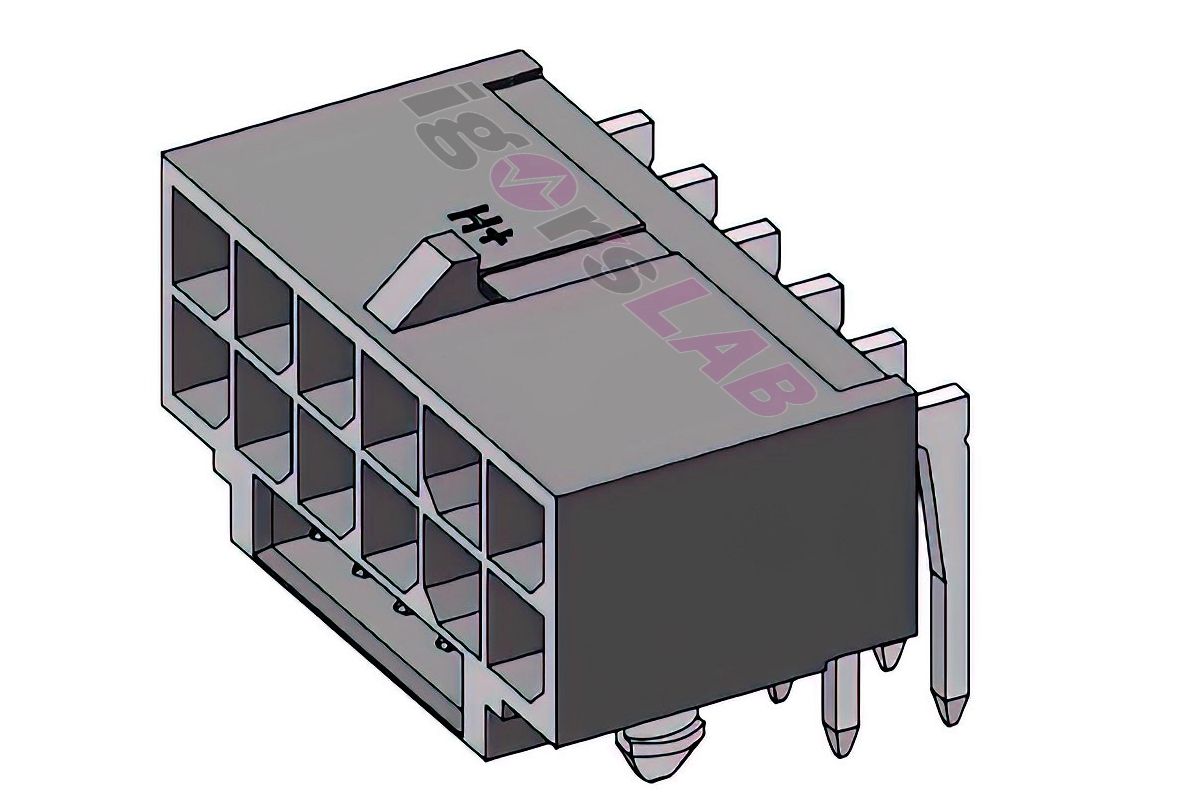

The main takeaway from the report, however, is that the new connector could channel up to 600W of power in a single cable, which is a lot. In contrast, even the most power-hungry graphics card on the current market, the RTX 3090 pulls 350W off the wall, while even the unconfirmed RTX 3090 Ti is expected to have a TDP of 450W. To that end, it can be said that the arrival of the 12VHPWR connector heralds the likelihood of more power-consuming, yet powerful in the near and immediate future.

On that note, there’s still no news as to which graphics cards will be the first to use the 12VHPWR connector, and even if there was, it’s unlikely that the GPU itself will be pulling the full 600W directly from the PSU. Given the required 10% redundancy protocol.

Friday, October 1, 2021

New USB-C 2.1 Revision Appears; Capable Of Delivering Up To 240W

The USB-C medium has been both the default and industry standard for a long while. While known for its ultra-fast file transfer speeds, it’s also known for its ability to conduct power delivery simultaneously, albeit at varying power levels between 60W and 120W. Now it appears that the power delivery ceiling will soon increase to 240W, based on a new USB-C 2.1 revision.

According to the paper published by the USB organisation, a new USB-C 2.1 port would support up to 48V at 5A, effectively giving users a peak wattage of 240W. For comparison, current USB-C connectors are only able to deliver wattage as high as 120W, due to them only supporting 20V at 5A.

This increase in power delivery also means that pretty soon, gamers with powerful gaming laptops may be able to ditch the machine’s accompanying power bricks and simply allow their portable machines to be charged and completely powered by a single USB-C cable, including more heavy-duty and demanding activities, such as gaming. As it stands, gaming laptops such as the ASUS ROG Zephyrus G14, Zephyrus G15, and as well as the Razer Blade Stealth 13 already support 100W USB-C charging, on top of their dedicated power adapters. Of course, it goes without saying that the new cables will also new Extended Power Range (EPR) cable, and not just the Standard Power Range (SPR) cables that we have. 


Sadly, there’s no indication when the new USB-C 2.1 revision will physically be available but hopefully, it’ll be soon.

Tuesday, February 23, 2021

New Aya Neo Reviews Show Handheld Console Capable of Running Crysis Remastered


Remember the Aya Neo? The AMD Ryzen 5 4500U-powered, portable handheld gaming machine first made its debut back nearing the end of last year, but lacked any proper demonstration of its gaming prowess.

The good news is that the Switch-inspired portable console recently began shipping out to its first batch of consumers, with some of them actually posting up their first impressions and in-depth reviews of the machine. In one video review posted by ETA Prime, the YouTuber shows off the Aya Neo’s synthetic benchmarks, along with a laundry list of high-end PC games. And yes, that list includes Crysis Remastered.

Now, it goes without saying that the Aya Neo wasn’t crushing it in the graphics department with all the titles. In the case of Crysis Remastered, ETA Prime says that they were only able to get the game running “smoothly” at the 30 fps average mark, and that’s through a combination of low-medium settings.

Additionally, Youtuber Taki Udon also demonstrated the Aya Neo’s capability at running older PlayStation titles via an emulator and more specifically, playing them at wattages as low as 5W. Ultimately, Taki Udon shows that the console is more than capable of maintaining between 30 fps and 60 fps – the framerate cap is different for each title – across the board, and that includes some PC gaming titles.


To recap on the specs, The Aya Neo features a 6-core Ryzen 5 4500U processor, with onboard Vega graphics cores housing 834 Stream Processors. Additional hardware include 16GB LPDDR4X RAM running at 4266MHz, a 512GB NVMe SSD, and a 47WHr battery. For connectivity, there are three USB-C ports, a 3.5mm audio jack, and built-in Wi-Fi 6 support.

On another note, the Aya Neo isn’t the first Chinese-made handheld console to be released out in the wild. Some of you may have heard of the One Gx1 Pro and GDP Win3 handheld consoles, but the difference between those two and the Aya Neo is the chip they run on; unlike the Aya Neo, both the One Gx1 Pro and GDP Win3 are powered by Intel’s Tiger Lake CPU and Xe Graphics.

In terms of price, the Aya Neo Founders Edition costs 3999 Yuan (~RM2502). At the time of writing, there is no indication as to whether or not the console will arrive in Malaysia.

Xiaomi Shows Off Physical Concept Of Vision Gran Turismo

At the very tail end of last month, Xiaomi unveiled the Vision Gran Turismo. The car was revealed as a digital hypercar, and one that’s made...