Showing posts with label GPUs. Show all posts

Sunday, October 31, 2021

Next-Gen PCIe Power Connector For GPUs Allegedly Capable Of Handling Up To 600W

While graphics cards from both team NVIDIA and AMD have become more powerful over each generation, their cards have been fettered by one factor: the aging 8-pin PCIe power connector that connects the GPU to the PSU. NVIDIA tried to move on from the medium with its 12-pin MOLEX with its Founders Editions RTX 30 series cards but sadly, not all of its AiB partners have been willing to switch.

However, that could all evolve soon, especially if reports of NVIDIA’s RTX 3090 Ti are to be believed. According to a report by the German tech site, Igor’s Lab, AiB partners for NVIDIA may finally ditch the current 8-pin PCIe connector, in favour of a new 12-pin connector. Officially, the new MOLEX port is known as 12VHPWR and it is reportedly set to be part of the upcoming PCIe 5.0 interface and standard that will be introduced with the launch of Intel’s 12th generation Alder Lake later this month.

Specs-wise, the 12VHPWR connector is 3mm wide, making it slightly smaller than even the standard 8-pin connector. Further, it has four contact plugs on the underside, designed to carry sideband signals, as well as to latch on to the PCB securely, ensuring that the connector doesn’t shake loose.
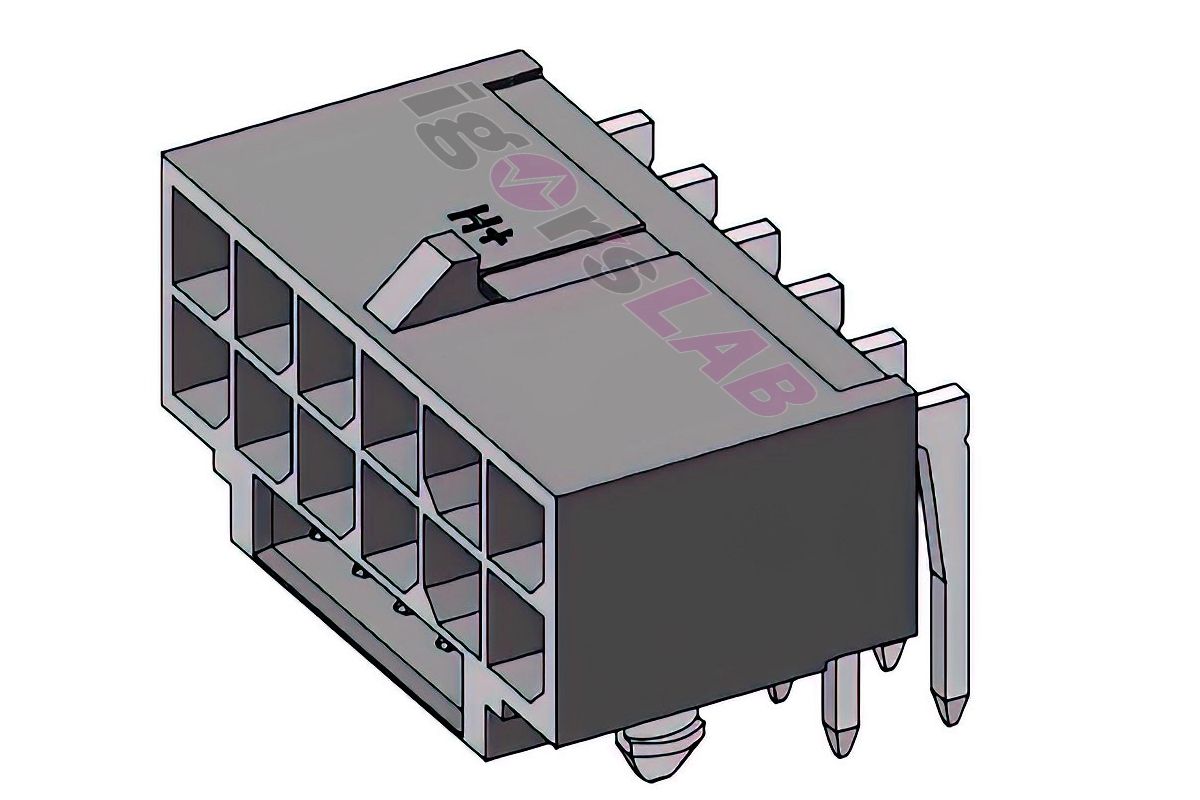

The main takeaway from the report, however, is that the new connector could channel up to 600W of power in a single cable, which is a lot. In contrast, even the most power-hungry graphics card on the current market, the RTX 3090 pulls 350W off the wall, while even the unconfirmed RTX 3090 Ti is expected to have a TDP of 450W. To that end, it can be said that the arrival of the 12VHPWR connector heralds the likelihood of more power-consuming, yet powerful in the near and immediate future.

On that note, there’s still no news as to which graphics cards will be the first to use the 12VHPWR connector, and even if there was, it’s unlikely that the GPU itself will be pulling the full 600W directly from the PSU. Given the required 10% redundancy protocol.

Wednesday, September 22, 2021

NVIDIA Reportedly Begins Selling Repurposed GA104 GPUs As GeForce RTX 3060 Cards

NVIDIA repurposing its higher-tier GPUs for lower-tier graphics card models isn’t groundbreaking news, by any measure of the definition. The GPU maker usually does this whenever it has a surplus of GPU dies in question and the higher-ups in the company decide to sell them to AIBs, who then sell them to customers directly.

Recently, a discovery by Twitter user Matthew Smith (@T4CFantasy) showed that NVIDIA has begun selling its GA104 GPUs in the shape and form of GeForce RTX 3060 cards. As a quick recap, the RTX 3060 shifted out with a GA106 GPU but that said, both GA104 and GA106 GPUs actually have similar designs when it comes to their pin layouts. Also, it was the RTX 3070 and RTX 3060 Ti that originally shipped out with the GA104 GPU, thus making this the first GA104-powered RTX 3060 with more than 8GB GDDR6 graphics memory.

On paper, the GA104-powered RTX 3060 still retains the same 3584 CUDA cores, as well as the same 12GB of GDDR6 graphics memory and 192-bit memory bus. However, to ensure that the card’s performance still falls within the parameters of an entry-level or mid-range card, approximately 42% of the GPU’s potential will be disabled. Versus the 7% of disabled cores in a GA106-driven RTX 3060.

As for when and where the card will be made available, there are no specific dates but Videocardz speculates that the GA104-based RTX 3060 could make its way into the North American and European markets first, before other countries in Asia (except China) begin receiving it. 

Wednesday, September 8, 2021

Hacker Group Reportedly Selling Rootkit That Plants And Hides Malware Within GPUs

Reports of a new rootkit that allows hackers to hide malware within GPU memory are beginning to surface. The most recent news was reported by Bleeping Computers, who allegedly discovered the rootkit being peddled across several of these forums.

Specifically, the hackers were selling a proof-of-technique concept that enables threat actors to store their malicious code within the GPU memory buffer, instead of hiding it within the RAM, as most malware is typically hidden. Doing this enables the malware to stay hidden from antivirus software, as said programs usually do not scan the memory buffer of the GPU.

This isn’t the first time that a malware of such nature has been created either. Six years ago, a hacker group called Team Jellyfish create the world’s first GPU-based malware, aptly named JellyFish. The rootkit was Linux-based and served as the foundation of other GPU-based rootkits that exist on the market.


As for which GPU the rootkit works on, the seller says that it only works on Windows systems supporting Open CL 2.0. In addition, the GPUs that were tested with the rootkit include Intel’s UHD 620 and 630 integrated graphics, NVIDIA’s GeForce GTX 740M, GTX 1650, and AMD’s Radeon RX 5700.

At the time of writing, the code had already been sold and that the seller is preparing a demonstration, in order to show how it works publicly.

Tuesday, August 31, 2021

Cloud Mining Company Wins Chinese Court Case; Regains More Than 485000 AMD Radeon GPUs

Genesis Mining, An Iceland-based cloud mining outfit, recently won a lawsuit in a Chinese court, against a Chinese hosting provider, Chuangshiji Technology Limited. By decree of China’s Supreme Court, the defendant was ordered to return the Radeon RX 470 8GB GPUs it seized from Genesis Mining and by all, we mean all 485681 units.

Genesis Mining’s legal woes began in 2018, when it took Chuangshiji Technology Limited to court, over multiple monetary issues with the latter. The lawsuit, which stretched over a span of several years, was filed in 2019, after the defendant began withholding said RX 470 GPUs, presumably purchased by Genesis Mining. The Genesis lawsuit specifically demanded that Chuangjishi hand over more than 560000 GPUs, along with 60000 ASIC miners after the company terminated its agreement with the company.

Naturally, things didn’t go according to plan for Genesis; Chuangjishi refused to comply and instead, began selling its ill-gotten gains, all without Genesis’ consent.


Sadly, Genesis’ victory in the Chinese court is a Pyrrhic one; while the Icelandic cloud-based mining company may have won back its nearly half a million RX 470 GPUs, China’s recent crackdown on cryptominers and their farms means that the company will have to consider two alternatives: shift its operations out of China and into a country where cryptomining isn’t banned or find new homes for them, the latter being an arduous task, given the age of the RX 470 and its GPU core.

That said, selling them to actual gamers might actually net Genesis a tidy profit, especially given the ongoing chip and GPU shortage that is happening around the world.

Saturday, May 15, 2021

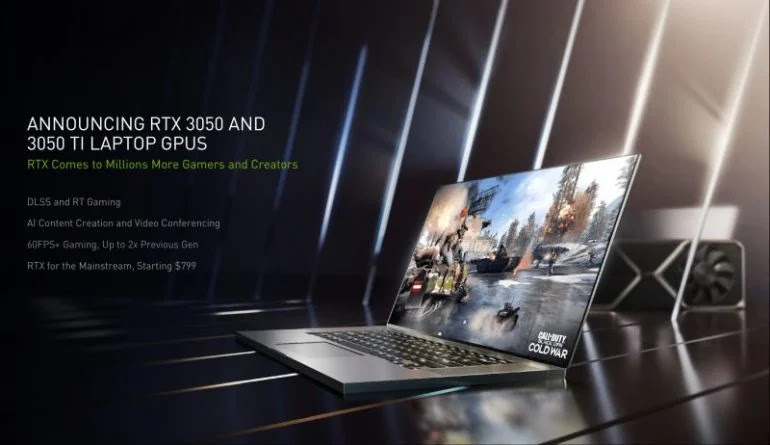
NVIDIA Launches GeForce RTX 3050 Series GPUs For Laptops


After months of speculations and wild rumours, NVIDIA is finally breaking its silence and making the GeForce RTX 3050 series official. As per earlier reports, the series comprises two GPU models, the RTX 3050 Ti and RTX 3050, and will only be available as laptop GPUs.

Specs-wise, both the RTX 3050 Ti and RTX 3050 are based on NVIDIA’s Ampere architecture and feature 4GB GDDR6 graphics memory. Additionally, both cards utilise a 128-bit memory bus and like all RTX 30 series GPUs, they are able to make full use of the PCIe 4.0 interfaces.

As they are part of NVIDIA’s RTX family, both the RTX 3050 Ti and RTX 3050 are also capable of real-time ray-tracing and also support the GPU maker’s DLSS anti-aliasing technology.


There are, obviously, parametres that set both cards apart from each other; the RTX 3050 Ti comes with 80 Tensor Cores, 20 RT Cores, and a maximum boost clock of 1695MHz. For the RTX 3050, the GPU has 64 Tensor cores, 16 RT Cores, and a maximum boost clock of 1740MHz.

NVIDIA’s GeForce RTX 3050 GPUs should be available starting this month, with the GPU maker’s brand partners launching their latest gaming laptops that are also being launched right now. To that end, these laptops are also being paired with Intel’s latest 11th generation Tiger CPU lineup.

Saturday, April 17, 2021

Hong Kong Customs Seize 300 NVIDIA CMP 30HX Mining GPUs During Bust


Hong Kong Customs recently seized a large batch of NVIDIA Cryptocurrency Mining Processor (CMP) GPUs, in a failed smuggling attempt in the island city. The seized batch reported contained 300 CMP GPUs, all of which were the lower-end CMP 30HX model.

As a quick primer, NVIDIA announced in February that it would launch its CMP miner GPUs, in the hopes that it would stem the tide of scalpers and bot buyers snatching up all of its GeForce RTX 30 series card in order to use them for mining cryptocurrencies – Ethereum, mainly – and starving bonafide gamers of the component in the process.

The CMP HX can be divided into four variants. These include the 30HX, 40HX, 50HX, and 90HX, and a supposed 170X. The 30HX, in particular, is said to be based on the GeForce RTX 1660 Super and even has more or less identical internals. In terms of hashrate, NVIDIA says that the card should be able to mine Ethereum at 26MH/s.


Getting back on point, the seizure of the cards come at a time when China has already implemented a ban on mining farms that made their profits off China’s cheap electricity. As mentioned by Videocardz, the cryptomining craze led to a surge in demand for electricity in Inner Mongolia that essentially led to China having to supply the excess power to its neighbour.

Oddly enough, the original report doesn’t actually mention why these particular cards were seized, nor where and who they were meant to go to. Suffice to say, whoever it was, they’re probably weeping about it right now.

Tuesday, March 2, 2021

High-End NVIDIA CMP Mining GPUs Reportedly Based On GA102 Ampere GPU


Earlier last month, NVIDIA announced the Cryptocurrency Mining Processor (CMP), a GPU made specifically for mining cryptocurrency, with a total of four variants to be made available throughout the year. Now, there are reports detailing their alleged mining prowess.

According to Videocardz, it seems that the two lower-tier CMP HX models, the 30HX and 40HZ, will be based on NVIDIA’s previous generation Turing GPU, which made its debut back in 2018. Specifically, the Turing TU116 and TU106. As for the CMP HX50, that mining card will be based on the TU102, which if you’re familiar with the lingo, is the top-tier variant of the Turing architecture.

As for the CMP 90HX, reports hint at this particular mining card to be based on the current Ampere GPU lineup and more specifically, the GA102. For context, that’s the same GPU used in both NVIDIA’s GeForce RTX 3080 and RTX 3090 graphics cards.

Another interesting point mentioned is that it is likely that the GPUs used to make these CMP cards did not “meet the specifications or standards” required of a GeForce. As such, these cards could effectively be sporting “broken Tensor, RT, TMUs, or ROPs that renders them unfit for the GeForce badge”.

Thursday, February 18, 2021

NVIDIA Announces CMP GPUs Made Specifically For Mining Cryptocurrency


In light of the renewed interest in GPU mining and the massive rally of cryptocurrencies such as Bitcoin and Ethereum, NVIDIA is announcing its Cryptocurrency Mining Processor, or CMP for short. As its name suggests, the new product lineup is both dedicated and made specifically for mining cryptocurrency.

To be absolutely clear, CMP is not a graphics card and will not do graphics; NVIDIA explicitly states that CMP units do not meet the necessary specifications or requirements of a GeForce graphics card and therefore should not impact the availability of said Ampere-powered GPUs. Sending that point home is the fact that CMP units are also devoid of any display outputs for better airflow, as well as possess lower peak core voltage and frequencies.

This isn’t the first time NVIDIA released GPUs dedicated to cryptomining. Back in 2018, when Bitcoin experienced its first rally, the company began releasing mining-specific variants of its Pascal GPU architecture at the time, with one such example being the P102-100. Now, with Bitcoin’s average value breaking past the RM200000 barrier and Ethereum hovering nearer to RM8000, coupled with the ongoing scarcity of GeForce RTX 30 series cards for gamers. There is little wonder why NVIDIA has decided to restart production of mining-dedicated GPUs.

NVIDIA’s official announcement is admittedly devoid of information of CMP, but a quick link takes us to a page detailing four CMP HX units: 30HX, 40HX, 50HX, and 90HX. The lowest-tier unit, the 30HX, is seemingly able to mine Ethereum at a Hash Rate of 26MH/s, while the top-tier model, the 90HX mines Ethereum at 86MH/s.

As for availability, NVIDIA says that CMP should be available via its authorised partners, including ASUS, Colorful, EVGA, Gigabyte, and MSI. The 30HX and 40HX should be available within the first quarter of this year, while the 50HX and 90HX will be available starting from the second quarter of 2021 onwards.

Xiaomi Shows Off Physical Concept Of Vision Gran Turismo

At the very tail end of last month, Xiaomi unveiled the Vision Gran Turismo. The car was revealed as a digital hypercar, and one that’s made...