Showing posts with label Govt. Show all posts

Wednesday, June 9, 2021

Microsoft Says Russian Hackers Going After Govt Agencies, Think Tanks, NGOs


Microsoft said that the Russia-based hacker group designated Nobelium has this week targeted government agencies, think tanks, consultants, and non-governmental organisations. Nobelium is also blamed for the notorious SolarWinds cyberattacks that breached multiple departments of the US federal government last year.

In a blog post, the Redmond-based software giant revealed that the hackers went after 3,000 email accounts at over 150 different organisations in at least 24 countries – although the organisations in the US took the brunt of the cyberattacks. At least a quarter of the affected organisations worked on international development, humanitarian, and human rights issues.

The hackers apparently began their attacks by obtaining access to the Constant Contact account of USAID, the US government agency responsible for foreign aid and developmental assistance. Then they sent out phishing emails with a link that, when clicked, installs a backdoor that Microsoft calls NativeZone, which can be used for a variety of actions like stealing data or infecting other computers on a network.


Hackers backed by the Russian government have been blamed for quite a few high-profile breaches in the US. For example, they’re suspected to have stolen thousands of emails from the US State Department, and penetrating the National Nuclear Security Administration – which oversees the US nuclear weapons stockpile.

Earlier in the year, Microsoft blamed China-backed hackers for compromising its mail server software Microsoft Exchange in order to access email accounts. That breach was so serious that the FBI eventually decided to access private computers in the US to purge them of backdoors.

Monday, May 10, 2021

Govt To Implement Nationwide Ban On Interstate and Inter-District Movements From 10 May Onwards

Aside from having premises that are listed by the HIDE system to be closed immediately, the government has also decided to ban all interstate and inter-district movements throughout the country. The decision was announced by Senior Minister for Defence, Ismail Sabri Yaakob earlier today.

The new directive will be enforced throughout the country starting from this coming Monday, 10 May 2021 and will last for the next four weeks until Sunday, 6 June 2021. This is regardless of whether the area is within the Movement Control Order (MCO), Enhanced MCO (EMCO), Conditional MCO (CMCO), or Recovery MCO (RMCO) zones.

An exception will only be given to those that have received approvals from the police. However, the minister didn’t provide any details regarding activities that can be greenlighted by the police.


That being said, Minister Ismail did say that all social, education, and economic activities that can cause mass gatherings or public congestions will be prohibited starting from this Monday as well. The same restriction also applies to all official and social events as well as face-to-face activities within the government and private sector.

Even though these restrictions will last until early June, they will be reviewed again by the authorities after two weeks according to the minister. Given that there are so many things that are still very unclear about the new directive, we expect further clarifications to be announced tomorrow. So, stay tuned.

Govt Unveils The First Set of High-Risk Locations Detected By HIDE COVID-19 Early Warning System

(UPDATE – 10:46 PM): The government has since directed HIDE locations to be shut down for three days immediately. More details here.

ORIGINAL STORY (12:30 PM):

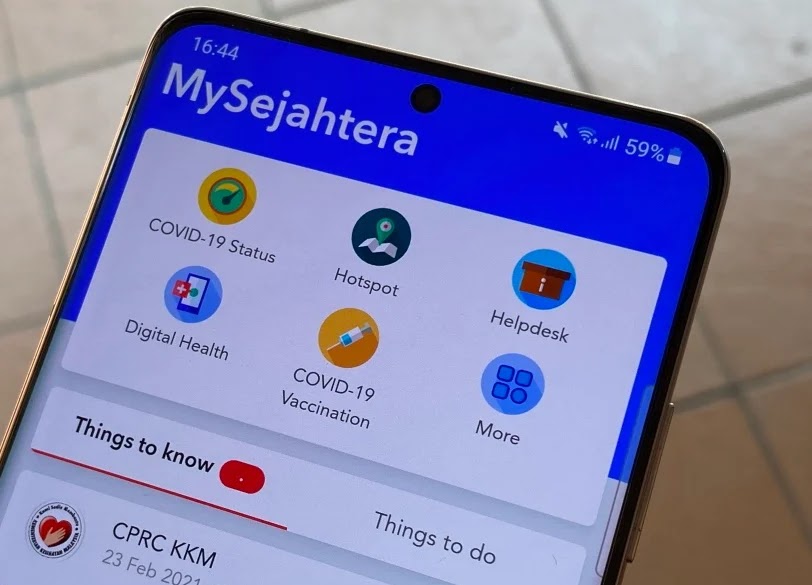
The government has released the first list of high-risk locations that could potentially turn into COVID-19 hotspots. Originally scheduled for release yesterday, these locations were determined using the newly introduced Hotspot Identification for Dynamic Engagement (HIDE) system which is developed and managed by a unit under the Ministry of Health called CPRC Analytics.

Here is the list in full as provided by the National Security Council (MKN) Telegram channel this morning:


According to the general FAQ that was also listed in the channel, HIDE is an early warning system that utilises big data analytics and artificial intelligence to perform predictions on locations that have the potential to become COVID-19 hotspots within seven days.

The FAQ further pointed out that these predictions are done using the check-in data from MySejahtera and the existing medical database. However, locations that are listed by the HIDE system are not yet deemed as COVID-19 clusters and they will not be asked to temporarily shut down their operations.


That being said, authorities do recommend the owners under the locations listed by HIDE to increase their awareness, perform COVID-19 tests on their staff, and impose a more stringent crowd control method at their premises. Premises will be taken off from the HIDE  list once the system deemed them as safe enough after seven days.

If you have visited any of the locations listed by HIDE, you are advised by the authorities to minimise your contact with other people in the next seven days. Additionally, you also should perform a COVID-19 test if you develop any related symptoms within 14 days of your visit to the locations.

The authorities have also advised the general public to avoid visiting the locations listed by HIDE for the time being. If you still have to go there, do follow the guidelines provided by the premise owners and continue to perform social distancing as well as wear your face mask properly, and wash your hands often.

Wednesday, May 5, 2021

Govt To List Out COVID-19 Hotspots Detected Via HIDE System On Friday

Minister of Science, Technology and Innovation Khairy Jamaluddin has revealed that the government will list out potential COVID-19 hotspots this Friday on 7 May 2021. The list will be published by the Health Ministry’s Crisis Preparedness and Response Centre (CPRC) – however, its method of delivery has yet to be announced.

These potential locations have been identified via the Hotspot Identification by Dynamic Engagement (HIDE) system, which relies on information from CPRC’s health database and MySejahtera check-in data. The minister explained that the variables used by HIDE to determine if a location is a hotspot include the number of cases in the area, exposure time, area size, and also whether it is well ventilated.

“At the moment, some of the large hotspots in Kuala Lumpur and Selangor are shopping malls, F&B (food and beverage) outlets and bazaars,” the minister said during the press conference yesterday. He also revealed that HIDE recently recorded 1,660 areas in the country that can potentially become new clusters if left unchecked. 

In addition, Khairy is hoping that business owners can take pre-emptive measures once these hotspots are identified. This could include instructing employees to undergo COVID-19 tests, lowering the number of occupants, applying strict social distancing practices, and so on. “The transparency will also help the people make informed decisions and practise self-control,” he added.

The minister stressed that the HIDE system is intended to prevent any new potential clusters, as well as the need to implement a large-scale Movement Control Order (MCO) for areas. “We don’t want to have a full-blown shutdown, which is why we came up with this targeted intervention that is predictive,” he said.

As mentioned earlier, the government has yet to reveal how it plans to distribute the list of potential hotspots identified by HIDE this Friday. Chances are, the public will likely be receiving this crucial update via the MySejahtera app, among other possible approaches.

Regardless, with the number of cases still rising in Malaysia as of late, we would like to kindly remind our readers to comply with the SOPs, maintain social distancing, and practice good hygiene. Stay safe.

Sunday, March 14, 2021

Govt Imposes Fine Of Up To RM100,000 For Fake News On COVID Or State Of Emergency


Using its emergency powers, Putrajaya is imposing a fine of up to RM100,000 and/or a maximum jail term of three years on those guilty of spreading fake news on COVID-19 or the emergency proclamation. This takes effect today, 12 March.

Emergency (Essential Powers) (No.2) Ordinance 2021 defines “fake news” as “any news, information, data and reports, which is or are wholly or partly false relating to COVID-19 or the proclamation of emergency, whether in the form of features, visuals or audio recordings or in any other form capable of suggesting words or ideas.”

If that doesn’t sound quite clear to you, you’re not alone. Bar Council president Salim Bashir raised concern over the new law’s “imprecise definition” of fake news and further pointed to the worrisome nature of some of its provisions, Free Malaysia Today (FMT) reported.


Section 15, he told FMT, “means that if an authorised officer comes to your house and simply takes your documents to be used as evidence, you cannot question the manner in which they obtain it, and whether it was done illegally.”

The ordinance threatens a fine of RM500,000 and/or a maximum jail term of six years for directly or indirectly funding the spread of fake news. It also shields the government and authorised officers from lawsuits in regards to their enforcement of this law.

Since the new law was created via emergency powers, it doesn’t require parliamentary approval. Opposition parties and even some government MPs have been calling for Parliament to sit since the Yang di-Pertuan Agong’s declaration that the legislative body may convene during the emergency.

Tuesday, March 2, 2021

Govt: Personal Data Of Vaccine Recipients Will Not Be Shared With Manufacturers


The government is assuring vaccine recipients that their personal data, which are registered under the National COVID-19 Immunisation Programme (PICK), will not be shared with pharmaceutical companies. This was announced by Khairy Jamaluddin, the coordinating minister of PICK, last night during the “Sembang Vaksin” video programme organised by a group of doctors and health personnel under MedTweetMY via Zoom.

“The people need not worry, we (the government) will not reveal their personal data to the vaccine manufacturing company and will only be shared in cases of AEFI,” he said. For those unfamiliar,  adverse events following immunisation (AEFI) – as described by the World Health Organization (WHO) – is any unexpected medical occurrence which follows immunisation and which does not necessarily have a casual relationship with the usage of  the vaccine. These include unfavourable or unintended signs such as side-effects, and abnormal laboratory findings, symptoms or diseases.

Khairy also assured that the arrangement between Malaysia and Pfizer-BioNTech is unlike the situation between the company and Israel, where personal data of vaccine recipients in the country are shared. According to Reuters, Israel agreed to provide its citizens’ health data to Pfizer as part of the vaccination supply deal, but says that patient identity will be kept anonymous. The Washington Post, meanwhile, noted that the Israel-Pfizer contract was made public in early January, but specifics mentioning costs and data sharing were redacted.

The first phase of the National COVID-19 Immunisation Programme was launched on 24 February 2021. A total of 15,923 individuals had already received the first dose of the vaccine as of 6:30pm on 28 February, the minister revealed.

Xiaomi Shows Off Physical Concept Of Vision Gran Turismo

At the very tail end of last month, Xiaomi unveiled the Vision Gran Turismo. The car was revealed as a digital hypercar, and one that’s made...