Showing posts with label Via. Show all posts

Wednesday, November 29, 2023

Samsung Internet Browser Now Available On PC Via Microsoft Store


If you have a Samsung smartphone of any kind, chances are you’ve at least noticed the default, preinstalled browser, if not used it straight up. On the flip side, you probably have not hoped that there’s a PC equivalent. But if you have, then it looks like your prayers have been answered. Samsung Internet is now available on PC, and you can get it via the Microsoft Store.

For the most part, the PC version of the Samsung Internet browser behaves just as you’d expect from most other browsers. The basics like dark mode and an incognito mode equivalent are all there, plus some extras like a built-in ad blocker, which seems to work reasonably well from limited testing.


That being said, some quirks from the mobile version does carry over. One example is when changing video resolution on YouTube for instance. This sees the video stop abruptly as the browser buffers the video in the new quality rather than gradually changing.

One reason someone would use the Samsung Internet browser is probably so that they can sync their bookmarks and browsing history from the mobile version. Though it’s worth noting that this is not the only way to do it, as you can already to this with an extension for both Google Chrome and Microsoft Edge.


Ultimately, the addition of the PC version of Samsung Internet is another browser alternative that has been made available. Competition is, as they say, good. Though it remains to be seen if this can make anyone move from their mainstay browsers. If you want to give it a try, you can hit the link below, as it may not appear when you search for it on the store itself.

Tuesday, September 14, 2021

Apple Addresses Critical Security Loopholes Across All Devices Via Latest Firmware Updates

Apple today has rolled out a series of firmware updates for all supported devices under its ecosystem. According to the respective support pages published on the company’s website, these contain security-based fixes for the CoreGraphics and WebKit vulnerabilities that potentially allows for a “zero-click” installation of malicious software onto affected Apple products.

Malware that exploits these vulnerabilities are capable of infecting a device without requiring the victim to do anything, hence the term “zero-click”. One such example of this is the Pegasus hacking platform, a spyware tool developed by an Israeli firm known as the NSO Group.

If both of these names sound familiar, this is because they have been associated with several attacks on platforms including Apple’s iMessage, as well as Facebook’s encryption-based private messaging service WhatsApp. The Pegasus tool is alleged to be capable of committing various privacy breaching acts such as compromising user data and passwords, as well as remote activation of a device’s onboard microphone or camera.

Security researchers at Citizen Lab reports that NSO may have likely been relying on the CoreGraphics loophole – an exploit also first discovered by the research group –  to gain access and install the Pegasus spyware onto a target’s device. Apple credited Citizen Lab for the crucial discovery in the patch notes that are included together with the series of recently released firmware updates.

Meanwhile, Apple notes that this particular WebKit vulnerability addressed in the new update was discovered by an anonymous researcher. Prior to the fix, the exploit is reported to have affected devices under the company’s iOS and macOS Big Sur platforms. For the uninitiated, WebKit is the web browser engine used by various Apple first party applications such as Safari, Mail, and App Store. This isn’t the first time a vulnerability was discovered in the engine, as the company has addressed three other similar issues back in March, May and July of this year.


Apple users are highly advised to update their devices with today’s newly released firmware upgrades. These latest versions include iOS 14.8 for the 7th gen iPod touch and iPhone models from 6s onwards; iPadOS 14.8 for all iPad Pro models, iPad Air 2 onwards, iPad 5th gen onwards, and iPad mini 4 onwards; macOS Big Sur 11.6 for all supported Mac devices; and finally, watchOS 7.6.2 for Apple Watch Series 3 onwards.

Wednesday, June 16, 2021

Google To Launch AI Tool That Can Help Identify Skin Problems Via Phone Camera

Are you a little worried about a rash on your arm or leg? At its annual developer conference I/O, Google announced that it intends to launch later this year an AI-powered tool that can help identify skin problems just through pictures taken by a smartphone camera.

According to Google, once launched, the tool will require you to take three pictures of the skin, hair or nail issue from different angles. Then you’ll be asked questions about your skin type, duration of the issue (how long you’ve had it), and other symptoms that will help the tool narrow down the possibilities.

The AI model crunches all this information and draws from its database of 288 conditions to provide you a list of possible matching conditions. Every matched condition will come with dermatologist-reviewed information and answers to frequently asked questions, along with similar matching pictures from the web.

However, Google said the tool isn’t meant to provide a formal diagnosis or replace professional medical advice as many conditions require review by doctor, in-person examination, or additional testing like a biopsy. That being said, the tech giant also pointed out that two billion people worldwide suffer from dermatologic (skin) issues while specialists are in short supply.

The company described the tool as the culmination of over three years of machine learning research and product development. It uses many of the same techniques that detect diabetic eye disease or lung cancer in CT scans.

Wednesday, May 5, 2021

Govt To List Out COVID-19 Hotspots Detected Via HIDE System On Friday

Minister of Science, Technology and Innovation Khairy Jamaluddin has revealed that the government will list out potential COVID-19 hotspots this Friday on 7 May 2021. The list will be published by the Health Ministry’s Crisis Preparedness and Response Centre (CPRC) – however, its method of delivery has yet to be announced.

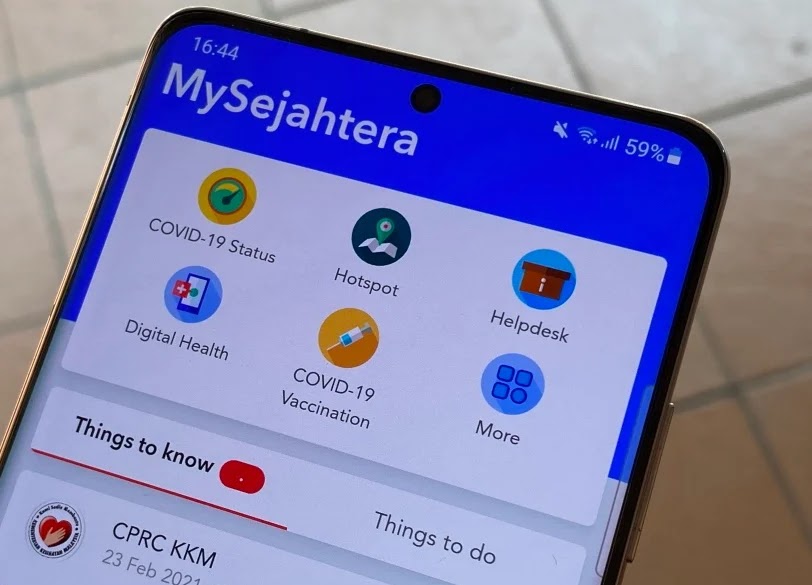
These potential locations have been identified via the Hotspot Identification by Dynamic Engagement (HIDE) system, which relies on information from CPRC’s health database and MySejahtera check-in data. The minister explained that the variables used by HIDE to determine if a location is a hotspot include the number of cases in the area, exposure time, area size, and also whether it is well ventilated.

“At the moment, some of the large hotspots in Kuala Lumpur and Selangor are shopping malls, F&B (food and beverage) outlets and bazaars,” the minister said during the press conference yesterday. He also revealed that HIDE recently recorded 1,660 areas in the country that can potentially become new clusters if left unchecked. 

In addition, Khairy is hoping that business owners can take pre-emptive measures once these hotspots are identified. This could include instructing employees to undergo COVID-19 tests, lowering the number of occupants, applying strict social distancing practices, and so on. “The transparency will also help the people make informed decisions and practise self-control,” he added.

The minister stressed that the HIDE system is intended to prevent any new potential clusters, as well as the need to implement a large-scale Movement Control Order (MCO) for areas. “We don’t want to have a full-blown shutdown, which is why we came up with this targeted intervention that is predictive,” he said.

As mentioned earlier, the government has yet to reveal how it plans to distribute the list of potential hotspots identified by HIDE this Friday. Chances are, the public will likely be receiving this crucial update via the MySejahtera app, among other possible approaches.

Regardless, with the number of cases still rising in Malaysia as of late, we would like to kindly remind our readers to comply with the SOPs, maintain social distancing, and practice good hygiene. Stay safe.

Sunday, April 18, 2021

Apple Accidentally Leaks Unannounced Event Date… Via Siri


Assistants aren’t perfect. Sometimes they get your coffee wrong, or schedule an appointment on the wrong date. But what about digital voice-activated ones? Well… Siri kind of slipped up for Apple, according to MacRumors. And rather than the usual misheard instructions kind of mistakes, Apple’s famed voice assistant supposedly spilled the beans on an unannounced event which is slated to happen later this month.

The publication said that it simply asked Siri “When is the next Apple Event?”, to which it responded with “The special event is on Tuesday, April 20th, at Apple Park in Cupertino, CA.” Not realising its mistake, Siri continued with “You can get all the details on Apple.com“. Clicking the link will take you to Apple’s event landing page but the event itself has not been listed yet, MacRumors added.

For those in Malaysia who are thinking of asking the poor unsuspecting voice assistant with the same question, then you’re out of luck. Our chief editor Chapree did just that, but was met with a different response. Siri instead asked him to refer to Apple’s website for any information, which we did check. No dice, unfortunately.

According to The Verge, only those with a US Apple ID are able to receive the same response as MacRumors. But chances are, Apple may have already tweaked Siri’s “error” by this time.

Being a slip of a digital tongue, not much is known about this supposed Apple “special event”. Some believe that we may finally see the launch of new iPad Pro models which, according to a  Bloomberg report, will feature Mini LED screens – a first for any Apple product. Other potential debuts alongside the Pro is the 2021 version of the iPad mini, and the ever elusive AirTags product.

We’ll eventually find out if such an event will be held on the aforementioned date next week. But should this information be accurate, there’s a big possibility that we’ll be hearing an official announcement from Apple soon enough.

Thursday, March 11, 2021

Aya Neo Enters Crowdfunding Via Indiegogo


The Aya Neo is a handheld PC that’s powerful enough to run Crysis Remastered. The AMD Ryzen-powered handheld was first announced back in November last year in its Founder’s edition. At the time, the company mentioned making the device available internationally via Indiegogo. And it finally happened over the weekend.

The international version of the Aya Neo is also actually slightly improved over the Founder’s edition. On its Indiegogo page, the company says that the new model features an improved operating system, rumble motors, screen quality, and buttons. And despite the many improvements, it also manages to be lighter than the original, which is pretty amazing.

But to quickly go over its specs, the Aya Neo packs an AMD Ryzen 5 4500U processor with onboard Vega graphics, 16GB of LPDDR4X RAM, a 47Wh battery, and an option of either 500GB or 1TB SSD for storage. You won’t be able to play the latest games on max settings, naturally. But you should be able to play some older titles at a comfortable-ish 30fps – 60fps.

As for the price, the Indiegogo campaign is asking for HK$6750 (~RM3569) for the 1TB model, or HK$7446 (~RM3937) for some extra accessories thrown in. If you want the model with less storage space, then you’re out of luck, as they have all been claimed.

Thursday, February 25, 2021

Sony Confirms Days Gone Coming To PC Via Steam This Spring


Open world survival game Days Gone which was originally released on the PlayStation 4 (PS4) in 2019 will be coming to PC this spring, as revealed by Sony and the game’s developer Bend Studio. It is the second first-party title from the company to be ported over from the PS4 after the release of Horizon: Zero Dawn (HZD) to the PC platform in August of last year.

Sony promises to offer a lot of PC-specific features and improvements for the port, including various visual improvements and customisations, unlocked frame rates and ultra-wide monitor support, as well as an FOV slider – pretty much what was also featured on the PC version of HZD. Hopefully, unlike the latter, Days Gone’s release on Steam will come with better hardware optimisation and little to no bugs at launch.

Speaking of hardware, you can find the system requirements for Days Gone via its official Steam page which has recently gone live. According to it, the minimum specs required to get the game running on PC includes an Intel Core i5-2500K, 8GB of RAM, NVIDIA GeForce GTX 780, DirectX 11, and 70GB of storage space. Interestingly, the developers also listed an SSD as a part of the requirements, but as an optional component rather than mandatory.

Besides that, Sony confirmed that all of Days Gone’s post-launch content from the PS4 will also be carried over to PC. These include later additions and DLCs such as New Game Plus, Survival Mode, Challenge Mode, and various skins for the playable character’s bike.

In a recent interview with GQ, PlayStation boss Jim Ryan said fans can expect more first-party games from Sony to be ported to PC in the near future. However, he did not mention any specific titles that are planned after the upcoming release of Days Gone on Steam.


Prior to HZD’s launch on PC, the thought of PS-exclusive titles making its way over to the platform felt like mere fantasy for most fans. Thankfully, this is now possible due to the company’s decision to have its games to be more accessible to those who do not own a PlayStation console. Maybe one day we’ll get to see titles such as the Uncharted series and Ghost of Tsushima to be available on Steam, although it may take a long while for Sony to greenlight such decisions.

Saturday, February 6, 2021

Android Users Can Soon Measure Heart Rate Via A Phone’s Rear Camera


Google has introduced new health tracking features to its Fit app, which allow users to measure their heart and respiratory rate by using a phone’s rear camera. The company noted on its recent blog update that these new additions will be first rolled out to its Pixel smartphones, and will eventually come to more Android devices in the future.

To measure heart rate, users are required to place their finger on the rear camera for scanning. Through this, the app will track colour changes in the skin as blood moves through the finger tip. If this sounds familiar, Samsung previously introduced this method years back on its Galaxy smartphone series, up until the Galaxy S20.

The respiratory tracking feature, on the other hand, relies on the selfie camera to monitor a person’s breathing pattern. Users will need to position their handsets so their head and upper torso are visible to the camera for scanning. Google explains that this feature employs a machine learning technique that mimics a doctor’s procedure of checking a patient’s respiratory rate by watching their chest rise and fall when breathing.

The company added its internal studies claim that heart rate readings via the app were accurate within 2%, while the respiratory rate monitoring function is accurate within one breath per minute. The features were tested on people with different skin tones for the studies, which yielded similar results in terms of accuracy. 

As mentioned earlier, Google has plans of expanding the availability of these features to other Android smartphones outside of its own Pixel line-up. However, the company did not reveal when the roll-out is expected to happen.

Tuesday, February 2, 2021

Upcoming iOS 14.5 Update Let Users Unlock iPhones Via Apple Watch; Adds DualSense Controller Support


Apple has recently released the iOS 14.5 developer beta that comes with new features for iPhones. These include an alternative way for users to unlock their handsets while wearing a mask and also adds support for next generation video game console controllers, among others things.

Since face masks have become a necessity for every individual as of late, the upcoming update introduces a new method for users to easily unlock their iPhones via their Apple Watch. According to a report by Engadget, the feature acts more like a 2-step verification process rather than a remote unlocking ability. Specifically, unlocking the paired Watch device will then activate the iPhone’s Face ID system that uses a lower facial recognition accuracy to identify its owner. 

This helps to speed up user verification especially when they are wearing a mask. The paired Watch will also provide a brief buzz to notify that the unlocking is successful. Apple previously added an update to Face ID which allows it to verify users even when they have their face protected. This upcoming feature, on the other hand, acts as an additional layer of security to that – ensuring that only the owner is able to unlock their iPhones.

The iOS 14.5 developer beta also included full support for the PlayStation 5 DualSense and Xbox Series X/S controller on iPhone devices, as well as third party AirPlay 2-equipped smart TV compatibility for Apple’s new Fitness+ service. This version also debuted the company’s App Tracking Transparency measures, which require developers to request for a user’s consent before enabling any of their app’s data tracking abilities for whatever purposes.

Seeing that the beta was just recently released, it may take some time for these new features to be publicly available. On a related note, Apple had recently released iOS 14.4 for iPhone users just last week and includes critical fixes for existing security exploits.

Monday, February 1, 2021

Google Says North Korea Hackers Are Targeting Cybersecurity Research Via Social Media


Google recently made a startling discovery revolving around North Korean hackers and cybersecurity researchers. According to the search engine’s Threat Analysis Group, the former is targeting the latter and going after them via a variety of social media platforms.

The alleged hackers supposedly work their con by posing as researchers, while also created several fake social media profiles on platforms that include Twitter and LinkedIn. If that wasn’t enough, they also set up fake blogs that they then get the unsuspecting researcher to write guest posts about software bugs that they’ve encountered.

The deception doesn’t stop there either. Once enough trust has been gained, the hacker would then make the step to ask the researcher if they would work together. If they agreed, the hacker would then share “collaboration tools” with them; unbeknown to the researcher, those tools actually contain malicious codes that, once opened, installs malware on to the researcher’s system.

Google says that one likely reason behind North Korea’s decision to target cybersecurity researcher is also one of the most obvious: it’s so that the country and its team of hackers can gain insight into security vulnerabilities and then exploit them for their own nefarious purpose.

It goes without saying and we’re sure that you all know, that this isn’t North Korea’s first time both under the spotlight and on the cybersecurity stage. The company has proven its cyber prowess in the past, the most prominent case in recent memory being the hacking of Sony Pictures in 2014. Because of the movie, The Interview, which featured a satirical adaptation of Kim Jong Un, the current communist dictator and ruler of the country.


The country has also been known to engage in cyber thievery, the most common among them having been the alleged theft of Bitcoin over the past several years.

Xiaomi Shows Off Physical Concept Of Vision Gran Turismo

At the very tail end of last month, Xiaomi unveiled the Vision Gran Turismo. The car was revealed as a digital hypercar, and one that’s made...