Block, previously known as Square, has confirmed plans to build an open-source Bitcoin mining system to making cryptocurrency mining more accessible. CEO Jack Dorsey previously laid out his vision for this system back in October, and now it seems that his company is working towards making it a reality.
Block’s general manager for hardware, Thomas Templeton, explained the company’s plans, saying that its goal is to “make mining more distributed and efficient in every way, from buying, to set up, to maintenance, to mining.” Previously, Dorsey claimed that the system would be based on custom silicon and open-source for individuals, as well as businesses.
Templeton went on to say that the system will tackle the issue of availability, saying that not everyone can afford a mining rig and that delivery is unpredictable. Block also plans on making its system able to last longer than mining rigs, be more power efficient, and not become a noise pollutant.
Dorsey, who recently left his role at Twitter, is a vocal proponent of blockchain technology, hence Square’s name change to Block. The company lets users buy and sell Bitcoin through its subsidiary, Cash App, and is also working on a physical Bitcoin wallet. With cryptocurrency being on a decline as of late, only time will tell if Dorsey’s big bet will pay off.
We’ve previously seen the supposed release date of Alan Wake Remastered of 5 October, as revealed ahead of schedule by a Taiwanese retailer. The developers at Remedy Entertainment has since put out an FAQ page for the game. It not only confirms the release date, but also lists the PC system requirements for the remaster.
Starting with the minimum specs, we’re looking at an Intel Core i5-3340 or AMD Ryzen 3 1200 CPU, and Nvidia GeForce GTX 960 or AMD Radeon RX470 GPU and 8GB of RAM. The only other option listed is recommended, which is a Core i7-3770 or Ryzen 5 1400 CPU, GeForce GTX1060 or Radeon 5600XT GPU, and 16GB of RAM.
All in all, it looks like the Alan Wake Remastered isn’t too demanding when it comes to PC requirements. Though it’s worth noting that the game will only come in x64, and supports only DX12. For Nvidia users, there’s support for DLSS, but not raytracing, which requires an RTX card either way.
Then again, it’s not entirely surprising. After all, this is a remaster and not a remake. Which means that while it will look prettier, it is still mostly the same game. Though interestingly, on the PS5, there’s DualSense support, which makes the torchlight shine brighter if you squeeze the L2 button harder.
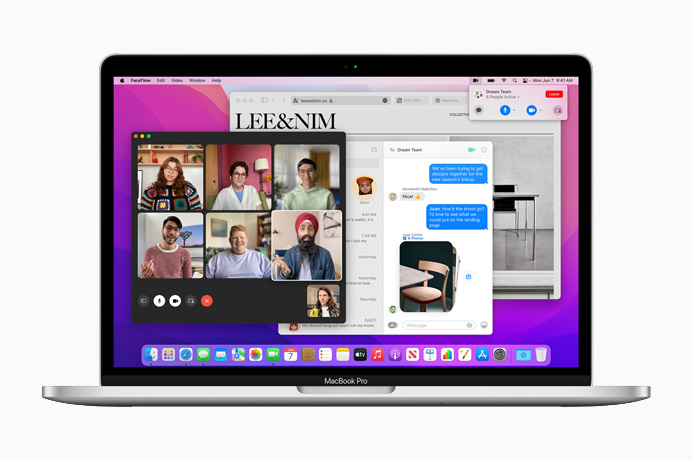
Last year, Apple announced a pretty major update for its macOS in the form of Big Sur. This year, the company announced the next macOS, called Monterey, during its WWDC event.
All in all, macOS Monterey is probably not as massive as the Big Sur that came before it. That being said, it’s still the culmination of the many other improvements announced on other fronts during WWDC. One example is Universal Control, which takes the company’s Continuity feature to the next level. By extension, the Mac running this new OS also acts almost like the control centre for all your Apple devices.
While Universal control is the biggest improvement that macOS sees with the introduction of Monterey, it’s not the only one. Other improvements include the FaceTime improvements, including SharePlay, as well as the Quick Notes we saw with the iPadOS 15.
And then there’s Shortcuts, which is what Apple calls the start of automation on Mac. There will be a number of prebuilt ones, but you are free to make your own. These can allow you to open multiple apps, and even play music, with a single click.
As before, macOS Monterey is available today in developer beta. The public beta will come in July, and the full release sometime by the end of the year.
Elon Musk, Bitcoin aficionado and CEO of Tesla, recently held the launch for his company’s latest car, the Model S Plaid. As you’d expect, the electric vehicle is loaded with the latest state-of-the-art technology on the current market, the most important piece of technology for us perhaps being its new and improved infotainment system.
Specifically, the Model S Plaid’s infotainment system is powered by AMD’s Navi 23, a GPU that was initially rumoured to make its debut with the parent company’s alleged Radeon RX 6600GPU series. To that end, the launch marked the first time the GPU’s power was being demonstrated and during a non-AMD keynote to boot.
Details of Navi 23 is still scarce but from what we know, the GPU is expected to have up to 2048 Stream Processors and support up to 8GB GDDR6 graphic memory on both the RX 6600XT and RX 6600. As for its performance, Musk went as far as to say his car’s infotainment system was as powerful as a Sony PlayStation 5 (PS5).
That wasn’t an empty boast either; putting his money where his mouth is, Musk gave a live demonstration of his car’s Navi 23-powered infotainment system running Cyberpunk 2077 with the console’s 17-inch display as the output and at its maximum resolution of 2200 x 1300 pixels.
Signal, the privacy-focused messaging app, said it tried to run Instagram ads to highlight how much information Facebook collects about users. Facebook, in turn, accused Signal of pulling a disingenuous “stunt”.
Signal said it tried to run a “multi-variant targeted ad” on Instagram, using Facebook’s own advertising tools to show people how they’re being targeted by ads. Facebook has been frequently bashed for collecting and using reams of personal user data for advertising purposes.
According to Signal, Facebook rejected the ads and disabled its ad account. “Facebook is more than willing to sell visibility into people’s lives, unless it’s to tell people about how their data is being used,” the messaging app said.
Facebook, on the other hand, denied it shut down Signal’s ad account and claimed that the latter didn’t even try to actually run the ads in question, a CNBC report said.
“If Signal had tried to run the ads, a couple of them would have been rejected because our advertising policies prohibit ads that assert that you have a specific medical condition or sexual orientation, as Signal should know. But of course, running the ads was never their goal — it was about getting publicity.”
Signal, of course, disputed this, reiterating on Twitter that the ads were indeed rejected and providing screenshots of their disabled ad account.
(UPDATE – 10:46 PM): The government has since directed HIDE locations to be shut down for three days immediately. More details here.
ORIGINAL STORY (12:30 PM):
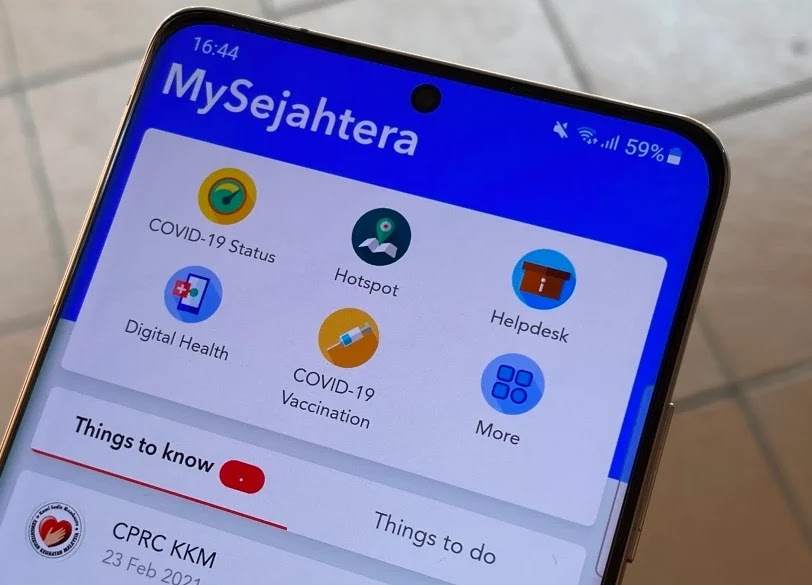
The government has released the first list of high-risk locations that could potentially turn into COVID-19 hotspots. Originally scheduled for release yesterday, these locations were determined using the newly introduced Hotspot Identification for Dynamic Engagement (HIDE) system which is developed and managed by a unit under the Ministry of Health called CPRC Analytics.
According to the general FAQ that was also listed in the channel, HIDE is an early warning system that utilises big data analytics and artificial intelligence to perform predictions on locations that have the potential to become COVID-19 hotspots within seven days.
The FAQ further pointed out that these predictions are done using the check-in data from MySejahtera and the existing medical database. However, locations that are listed by the HIDE system are not yet deemed as COVID-19 clusters and they will not be asked to temporarily shut down their operations.
That being said, authorities do recommend the owners under the locations listed by HIDE to increase their awareness, perform COVID-19 tests on their staff, and impose a more stringent crowd control method at their premises. Premises will be taken off from the HIDE list once the system deemed them as safe enough after seven days.
If you have visited any of the locations listed by HIDE, you are advised by the authorities to minimise your contact with other people in the next seven days. Additionally, you also should perform a COVID-19 test if you develop any related symptoms within 14 days of your visit to the locations.
The authorities have also advised the general public to avoid visiting the locations listed by HIDE for the time being. If you still have to go there, do follow the guidelines provided by the premise owners and continue to perform social distancing as well as wear your face mask properly, and wash your hands often.
Signal, the privacy-focused messaging app, said it tried to run Instagram ads to highlight how much information Facebook collects about users. Facebook, in turn, accused Signal of pulling a disingenuous “stunt”.
Signal said it tried to run a “multi-variant targeted ad” on Instagram, using Facebook’s own advertising tools to show people how they’re being targeted by ads. Facebook has been frequently bashed for collecting and using reams of personal user data for advertising purposes.
According to Signal, Facebook rejected the ads and disabled its ad account. “Facebook is more than willing to sell visibility into people’s lives, unless it’s to tell people about how their data is being used,” the messaging app said.
Facebook, on the other hand, denied it shut down Signal’s ad account and claimed that the latter didn’t even try to actually run the ads in question, a CNBC report said.
“If Signal had tried to run the ads, a couple of them would have been rejected because our advertising policies prohibit ads that assert that you have a specific medical condition or sexual orientation, as Signal should know. But of course, running the ads was never their goal — it was about getting publicity.”
Signal, of course, disputed this, reiterating on Twitter that the ads were indeed rejected and providing screenshots of their disabled ad account.
Minister of Science, Technology and Innovation Khairy Jamaluddin has revealed that the government will list out potential COVID-19 hotspots this Friday on 7 May 2021. The list will be published by the Health Ministry’s Crisis Preparedness and Response Centre (CPRC) – however, its method of delivery has yet to be announced.
These potential locations have been identified via the Hotspot Identification by Dynamic Engagement (HIDE) system, which relies on information from CPRC’s health database and MySejahtera check-in data. The minister explained that the variables used by HIDE to determine if a location is a hotspot include the number of cases in the area, exposure time, area size, and also whether it is well ventilated.
“At the moment, some of the large hotspots in Kuala Lumpur and Selangor are shopping malls, F&B (food and beverage) outlets and bazaars,” the minister said during the press conference yesterday. He also revealed that HIDE recently recorded 1,660 areas in the country that can potentially become new clusters if left unchecked.
In addition, Khairy is hoping that business owners can take pre-emptive measures once these hotspots are identified. This could include instructing employees to undergo COVID-19 tests, lowering the number of occupants, applying strict social distancing practices, and so on. “The transparency will also help the people make informed decisions and practise self-control,” he added.
The minister stressed that the HIDE system is intended to prevent any new potential clusters, as well as the need to implement a large-scale Movement Control Order (MCO) for areas. “We don’t want to have a full-blown shutdown, which is why we came up with this targeted intervention that is predictive,” he said.
As mentioned earlier, the government has yet to reveal how it plans to distribute the list of potential hotspots identified by HIDE this Friday. Chances are, the public will likely be receiving this crucial update via the MySejahtera app, among other possible approaches.
Regardless, with the number of cases still rising in Malaysia as of late, we would like to kindly remind our readers to comply with the SOPs, maintain social distancing, and practice good hygiene. Stay safe.
Clubhouse has launched its first monetisation feature for content creators, and it is simply known as “Payments.” The audio-based social media app said the feature would be the first of many upcoming additions to allow creators to earn money directly on the platform.
If you’re on Clubhouse, you’ll already be able to send payments to members, but the company is gradually rolling out the ability to receive payments – starting with a small test group. The platform said it wants to first collect feedback, make necessary adjustments , and then release it to all users.
Those who want to try Payments can tap on the profile of a creator who has the feature enabled and tap “Send Money”. Users would then have to specify how much they’d like to send via a credit or debit card. Clubhouse claims it will take nothing from the transaction, though a small card processing fee will go to its processing partner, Stripe.
With potential competitors chomping at its heels, it seems Clubhouse is eager to attract a solid base of content creators before they do. Spotify, LinkedIn, Facebook, and ByteDance are all reported or rumoured to be working on their own clones of the application.
The advertising space is a very competitive one among the big names in tech. Among them is the internet search giant Google. The company is allegedly gaming the ad market to give its own an advantage.
The Wall Street Journal reports that this program, known as Project Bernanke was revealed via court documents filed in an antitrust lawsuit in Texas. Under the project, Google makes use of historical data from publishers’ ad servers to undercut the competition. The internet search giant claims that this is comparable to data maintained by other buying tools.
That being said, the potential problem lies with the fact that Google is both the operator of a major ad exchange as well as a representative of buyers and sellers in the very same exchange. The company itself is also an ad buyer in the space. The combination of all these leads to the allegations that it can game the system to its advantage. More specifically, this allows it to not only undercut the competition, but also pay publishers less on winning bids. This amounts to insider trading, as the Texas court claims.
Incidentally, documents submitted to the Texas court were also unredacted. This may reveal the more secretive elements of the Google ad business. The company has been given the chance to refile a more “properly-redacted” version.
Still reeling from last night’s event which saw the launch of the expanded family members of Mi 11 Series that includes Mi 11 Ultra, Mi 11 Pro, Mi 11i, Mi 11 Lite 5G, and Mi 11 Lite, the Day 2 of Xiaomi Mega Launch has several significant revelations in tow as well. In addition to announcing its entry into the electric vehicle market, the Chinese tech giant has also unveiled its first-ever foldable device, the Mi Mix Fold.
Xiaomi is positioning its foldable debutant as a flagship device and apt enough, it is powered by the Qualcomm Snapdragon 888 processor. Adopting a similar form factor as per Samsung Galaxy Fold, the Mi Mix Fold is equipped with an 8.01-inch 60Hz WQHD+ flexible OLED display on the inside while there is also a 6.5-inch 90Hz AMOLED display with 2520 x 840 resolution on the outside.
In order to ensure the phone’s reliability especially its U-shaped hinge design, the company claimed that the Mi Mix Fold has been subjected to extreme tests that involved up to 1 million bends. Supporting 5G and Wi-Fi 6, the phone offers up to 16GB of LPDDR5-3200 RAM and 512GB UFS 3.1 internal storage.
The launch of Mi Mix Fold also marked the arrival of the company’s Surge C1 ISP chip which apparently took two years to be developed. The new chip apparently provides an improved 3A algorithm and enhanced the phone’s low-light focusing capabilities which also improved its autofocus, exposure, and white balance that subsequently allows the Mi Mix Fold to deliver high-quality image output.
Not only that, Xiaomi has also claimed that Mi Mix Fold is the first device in the world to feature a rather interesting optics technology called Liquid Lens. Paired with an 8MP sensor, the company said that the lens is really made from transparent liquid and its curvature is being controlled using a high-precision motor that allows users to access telephoto capabilities from 3x optical zoom up to 30x maximum zoom.
Aside from that, the 8MP Liquid Lens camera can also act as a macro camera with a focusing distance as close as 3cm. Other than that, Xiaomi has also equipped the new Mi Mix Fold with a 108MP Samsung ISOCELL HM2 sensor for its main camera and 13MP ultra-wide camera as well as a 20MP selfie camera.
Comes standard with a quad-speaker system that has been tuned by Harman Kardon and boosted by a 15V Smart PA amplifier, the Mi Mix Fold’s fingerprint reader is integrated into the phone’s side-mounted power button. Completing its basic specifications is a 5020mAh battery that can gain back its full capacity in just 37 minutes via a 67W wired fast charger.
The Mi Mix Fold’s international launch date is not yet known at the moment although it will be released in China in the middle of April with a price range of between CNY 9,999 (~RM 6,320) to CNY 12,999 (~RM 8,192). We will keep you posted if the new foldable is going to make its way to Malaysia, so stay tuned.