Showing posts with label Without. Show all posts

Friday, April 14, 2023

Cyberpunk 2077 RT: Overdrive Mode Seemingly Cripples RTX 4090 Without DLSS 3


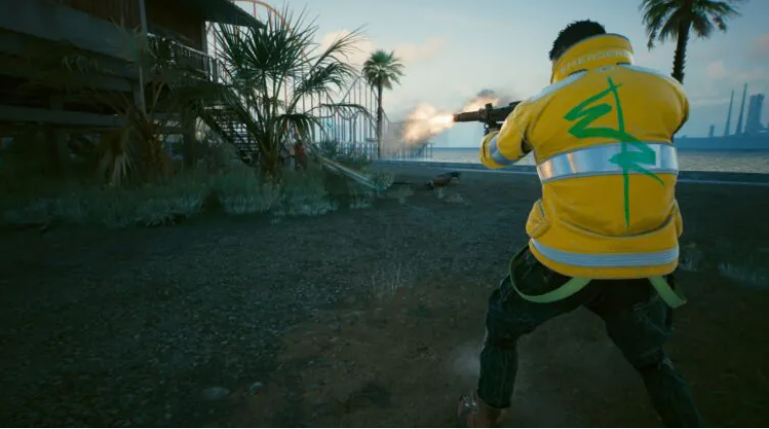
It’s been a couple of years since CD Projekt Red (CDPR) launched Cyberpunk 2077 and in spite of a rocky launch riddled with bugs, glitches and unplanned disappearing acts of vehicles, the studio has already brought the game up to an acceptable enough level, and is still constantly adding on new improvements, patch after patch. In fact, in its next update, the game will be getting a patch that gives players access to an upgraded version of ray-tracing mode, known as RT: Overdrive Mode.

We first wrote about RT: Overdrive Mode back in March, when GDC 2023 was in full swing, and both NVIDIA and CDPR gave a technical session regarding the technology. The mode, also known as Full ray-tracing, which is also known as path-tracing, is actually just one of the two popular methods used by game developer whenever they wish to simulate the behaviour of light in-game. With the more conventional ray-tracing, the in-game engine traces the path of light rays and their interaction with different objects; this processing method requires a lot of graphical power but the end results are images and environments with very accurate reflections, refractions, and shadows.


With path-tracing that is used by the RT: Overdrive Mode, the lighting calculation is randomly computed and involves the path of lights that are sampled within an environment. It’s a less complex and demanding process but as a trade-off, the final product is an image with higher noise levels. NVIDIA, in this case, seems to have successfully mitigated that issue, as evidenced by its latest teaser video, showing off the mode in all its glory. In the brand’s words, “full ray-tracing models all properties of light from an unlimited number of emissive sources, delivering physically correct shadows, reflections, and global illuminations on all objects.”

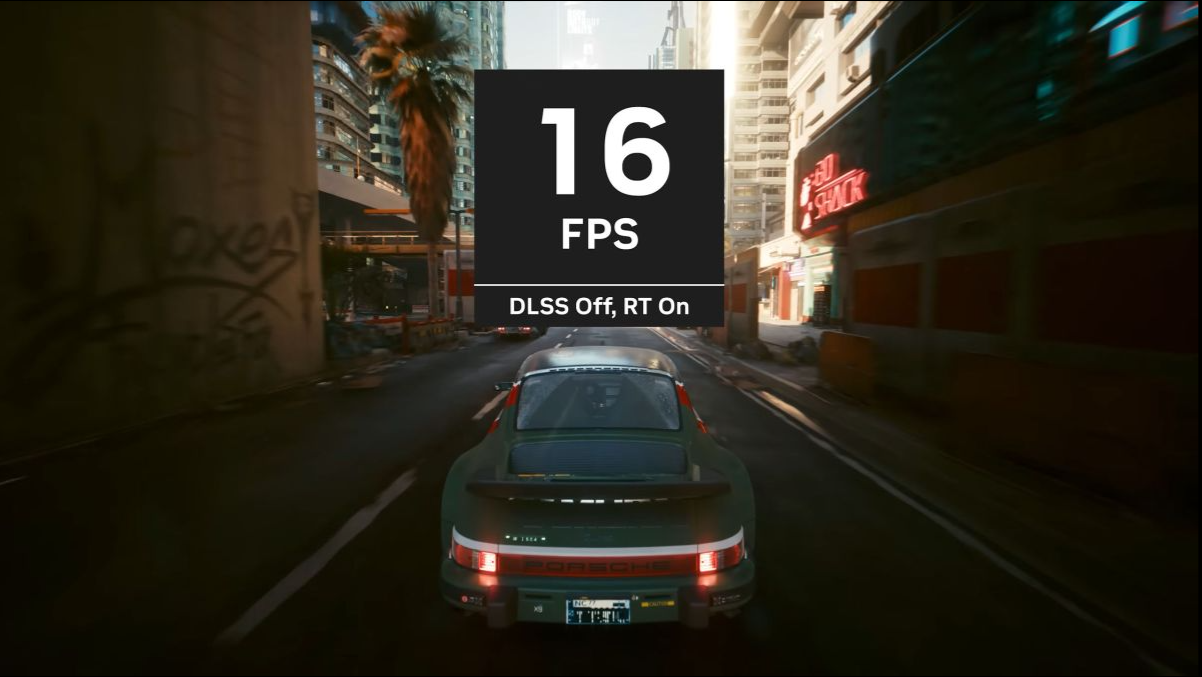
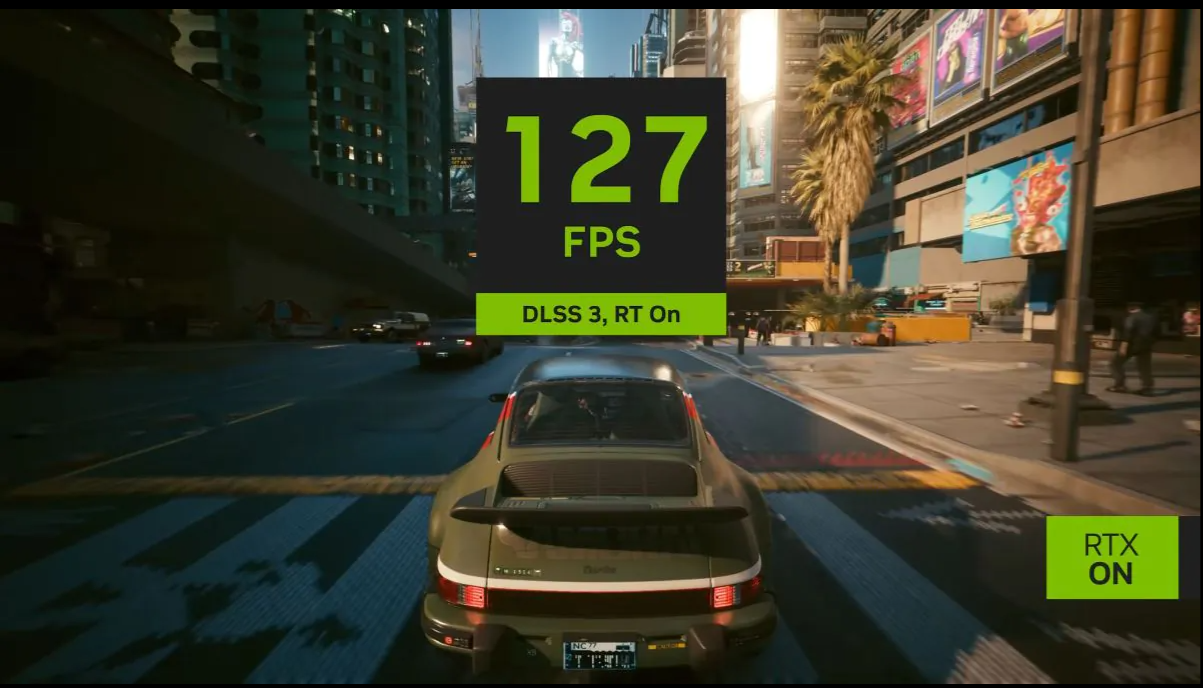
There is a very clear and obvious trade-off for the new RT: Overdrive mode, and that’s an increased strained or processing power by the GPU, and NVIDIA actually shows it in the product demo. With full ray-tracing activated and its DLSS upscaling technology turned on, the feature effectively kneecaps an RTX 4090, with the GPU just able to churn out 16 fps on average, and at 4K resolution. Of course, flip the switch on the brand’s DLSS 3, and the framerate ratchets back above the 100 fps mark and stays there for the remainder of the short tech demo. Honestly, we’re not sure if that massive drop in frames is actually legitimate, but if it is, it does feel a bit soul-crushing, especially given the power a GPU such as the RTX 4090 commands.
Monday, November 8, 2021

Twitter Now Lets You Remove Followers Without Them Knowing

As part of the company’s effort to filter potentially offensive content and users from its platform, Twitter has officially launched its “soft block” feature that lets you remove troublesome followers. The feature was already being tested last month but is now being rolled out to the general public.

If you’re wondering how soft blocking is different from regular blocking, it actually doesn’t block users at all, but rather quietly makes the unwanted follower “unfollow” you. Twitter says that such users won’t be notified of the action taken on them.


Keep in mind that while you’re essentially removing yourself from their feed, they’ll still have access to your profile and your public tweets. Moreover, they can still follow you back if they realise they’ve been removed. This might be useful if you think that blocking someone just for being annoying is a bit extreme but of course, Twitter still recommends you to do so for harassers.

To use this feature, you can go to your Followers list, pick an account, click on the three-dot icon, and click “Remove this follower”. The social media giant says that this is only going to be available for web users for now, with no word on when it will come to iOS or Android apps.

Twitter has been developing a suite of features to increase safety and reduce toxicity on its feeds. One of them includes the ability to set who can reply even after a Tweet has been published. Another that’s being tested is an algorithm that automatically blocks users for you if it detects that they’re repeatedly posting offensive replies.

Friday, October 29, 2021

Intel ARC Graphics Cards Will Ship Without Anti-Crypto Mining Software

Intel’s ARC Alchemist desktop graphics cards are not slated for launch until sometime within the second quarter of 2022, and as it stands, the chipmaker is reportedly focusing on its mobile ARC GPUs first. Interestingly, when asked if the GPUs will have some form of cryptomining prevention, the answer was, surprisingly, a shaky no.

During an interview with Gadgets 360, Roger Chandler, vice president and general manager for Client Graphics Products and Solutions, Intel, told the news site that Intel has no plans on implementing such mechanisms into its graphics lineup. Simply put, the man said that such measures were not a priority for the chipmaker and that it was not designing a “product or building any features at this point that specifically target miners”.

That last bit is crucial as it could swing interest for Intel ARC graphics cards towards the cryptomining community when they are readily available next year. Of course, it’s still too early to tell if that will be the case, considering that no engineering sample or full-fledge ARC Alchemist graphics cards are even out in the wild for testing.


Beyond that, the interview saw Chandler and Raja Koduri, senior vice president and general manager for Accelerated Computing Systems and Graphics (AXG) Group at Intel, also said on the subject of supply that, while he couldn’t promise Intel’s adequate supply of ARC Alchemist cards next year, neither could his competitors, NVIDIA and AMD.

You can check out the transcript in the source, should you wish to read the interview in-depth.

Monday, May 3, 2021

Apple Patent Describes Showing 3D Images On Flat Screens Without Need For Glasses

Getting 3D images to work on consumer devices, especially without the need for specialised glasses, is not easy. But an Apple patent describes a method that the company is considering using to make it happen. But while it answers that half of the equation, it raises more on the other.

The Apple patent describes getting a flat screen, presumably that of an iPhone or iPad, to show 3D images for VR and AR content. But this doesn’t involve having two screens for the way VR and AR headsets work. Instead, it will alternate rows of pixels in a screen, so that one set of pixel rows show one image, and the other shows the second.


But as mentioned earlier, the patent only describes the way the screen will simulate the overlapping of two images for the 3D effect. What the patent doesn’t mention is the user side of things. Like the way this will help users create the 3D depth without the help of glasses or goggles. Nor does it say if there’s any supporting tech, like gaze detection that we see on the Nintendo 3DS.

As is always the case with patents, having one filed doesn’t mean Apple will actually make something with this tech. And considering the challenges behind it, it probably won’t be anytime soon until we see it, if ever.

Xiaomi Shows Off Physical Concept Of Vision Gran Turismo

At the very tail end of last month, Xiaomi unveiled the Vision Gran Turismo. The car was revealed as a digital hypercar, and one that’s made...