Showing posts with label Electric. Show all posts

Wednesday, May 12, 2021

Uber And Arrival To Develop Electric Car Specifically For E-Hailing Industry

E-hailing pioneer Uber will be partnering with UK electric vehicle (EV) company Arrival to develop an affordable electric car specifically made for e-hailing drivers. The new vehicle is expected to enter production in the third quarter of 2023 (Q3 2023).

Arrival said it would be involving Uber drivers in the design process over the coming months to ensure the vehicle meets the needs of working drivers and their passengers. The company expects to unveil the final design for the car before the end of this year.

Uber’s involvement here seems natural, given the launch of its Clean Air Plan two years ago. The company said it has raised over £135 million (~RM775.8 million) to help drivers with the cost of switching to a fully electric vehicle. It has committed to becoming a fully electric mobility platform in London by 2025 and across North America and Europe by 2030.

The e-hailing pioneer recently launched Uber Green in London, allowing passengers to select a fully electric vehicle at no extra cost, while drivers pay a lower service fee. The company wants to double the number of drivers in EVs by the end of this year as part of its efforts to make all cars on its app fully electric by 2025.

Sunday, May 2, 2021

Thailand Plans To Sell Only Electric Vehicles By 2035


Thailand has set a goal of selling only zero-emission electric vehicles (EVs) by the year 2035. The government also wants to have EVs account for half of all new car registrations by the end of this decade, up from 30% previously.

“We can see the world is heading in that direction so we have to move quickly,” Kawin Thangsupanich, who advises the Thai Energy Ministry’s national policy committee, told Bloomberg in an interview.

With a target date set for the phasing out of non-electric cars, Kawin said the government would now have to push the transition along. This means offering tax incentives, rolling out the necessary infrastructure, and writing regulations that promote EV production as well as incentivising people to buy the cars.


Kawin observed that letting EV adoption occur naturally could take too much time. He linked the country’s ambition to be a major EV production centre to its existing supply chains.

The automotive industry is vital to Thailand at large. According to Bloomberg, it represents about 10% of the economy, employs 850,000 workers, and supports industries like iron, steel, petrochemicals, and plastic. Roughly half of the cars made there are exported to countries like Malaysia, the Philippines, and Indonesia.

Thailand’s probably taking notice of the fact that demand for electric vehicles has surged dramatically in Asia – especially in China. Inspired by Tesla’s success in the country, Chinese tech companies have been tripping over themselves to enter the EV market.

Friday, April 16, 2021

Xiaomi Officially Begins Working On Smart Electric Vehicle


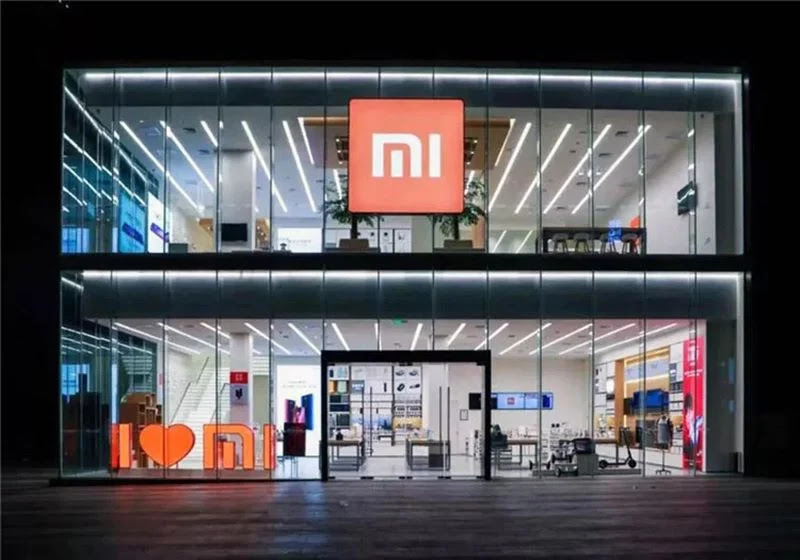
Known for its phones and smart devices, Xiaomi has officially begun working on smart electric vehicle (EV). This confirmation was made through an announcement for the Stock Exchange of Hong Kong earlier today.

To kick off its smart EV effort, Xiaomi has established a new EV subsidiary with an initial investment of CNY 10 billion (~RM 6.3 billion). While the amount seems quite substantial, the company said that the estimated total investment for the EV project over a period of 10 years will be USD 10 billion (~RM 41.5 billion).

Xiaomi has also announced that its co-founder as well as current Chairman and CEO, Lei Jun will also become the CEO of the new EV subsidiary. However, the company didn’t address the recent rumour regarding Great Wall Motor in the announcement today.

The Chinese tech giant also didn’t provide any information regarding its EV production timeline, so it seems likely that it is going to take a while before we can see Xiaomi’s first-ever EV on the road. Nevertheless, we still look forward to seeing if Xiaomi is able to disrupt the EV industry and repeat its achievements within the smartphone world over there.

Tuesday, March 30, 2021

Xiaomi Will Start Making Electric Vehicles Using Great Wall Motor Factory


Following in the footsteps of Baidu and others, it appears that Xiaomi is getting into the electric vehicle (EV) business. The Chinese firm is set to produce EVs using a third-party factory, sources told Reuters.

The factory is owned by Great Wall Motor (GWM), China’s largest pickup truck maker, which will also provide engineering consultancy to accelerate the project, one source said. Earlier in the year, GWM launched a standalone brand for electric and smart vehicles.

According to a source close to Reuters, Xiaomi wants to launch its first EV by 2023, which will predictably be able to connect with other devices in the company’s product ecosystem, such as its smartphones.


Targeted by US sanctions and largely dependent on smartphone sales, the Chinese firm may be looking to diversify its sources of income. It’s been hurt by the global chip shortage and recently announced quarterly revenue below market expectations.

Also, EVs are the hottest thing right now – search giant Baidu recently formed a joint venture company with automaker Geely to produce “intelligent” EVs with autonomous driving technology. Their planned launch date is roughly around the same time – about three years from now.

Another Reuters source said both Xiaomi and GWM intend to unveil their partnership as soon as early next week.


We’d like to point out that GWM vehicles are currently being sold in Malaysia. So would you fancy buying a Xiaomi car in the near future? Let’s not get ahead of ourselves though – like Geely’s Zeekr, Xiaomi might be planning to focus first on the massive Chinese market.

Thursday, March 25, 2021

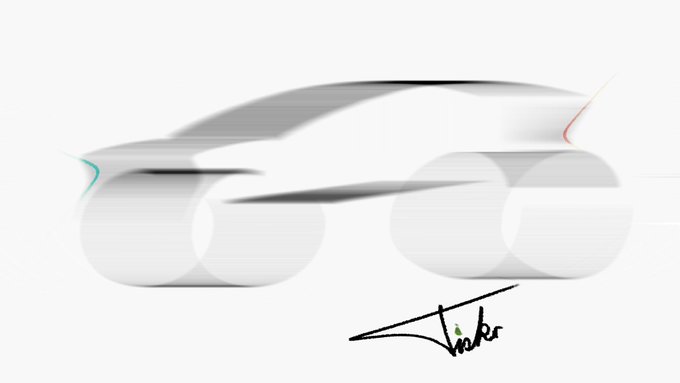
Geely Forms New Electric Car Company Called Zeekr


Chinese automaker Geely announced that it has established a new electric car company called Zeekr. Positioned towards the higher end of the EV (electric vehicle) market, Zeekr is aimed at challenging the dominance of US-based rival Tesla, Reuters said.

Geely expects the first vehicles from its subsidiary to be delivered in the third quarter of this year. Zeekr apparently wants to deliver one new electric vehicle to market every year for the coming five years. And in case you’re wondering, the Chinese name of Zeekr is Ji Ke.

The new electric car company will be a 51%-49% joint venture between Geely and its parent Zhejiang Geely Holding Group, with an initial investment of 2 billion yuan (~RM1.3 billion). Zeekr will focus on the Chinese market at first and then explore opportunities for exports.

It has been an extremely busy year for the automotive industry, with carmakers as well as tech giants making a mad dash for the rapidly growing EV market. Geely itself earlier formed an electric car company with the Chinese search giant Baidu. The carmaker also teamed up with Taiwanese contract manufacturer Foxconn to provide automakers with consulting services on EV technologies.

News of Zeekr’s formation comes after Geely announced its financial results for last year. Profits dropped by a hefty 32% compared to 2019 – a trend largely driven by the COVID-19 pandemic. Still, the company may be finding that the traditional car market is slowly but surely drying up.

Sunday, March 21, 2021

Foxconn Discussing Electric Car Partnership With Vietnam’s VinFast


Taiwanese manufacturer Foxconn is engaged in early discussions with Vietnamese automaker VinFast over a potential electric vehicle (EV) partnership, sources told Reuters.  Speaking anonymously, they revealed that Foxconn is keen to buy VinFast’s EV production lines.

VinFast, which is Vietnam’s first fully-fledged domestic carmaker, is a fairly young automaker as it only founded in 2017. That being said, the company has a solid background since it is a subsidiary of Vingroup JSC which is a massive conglomerate founded by the country’s first billionaire, Phạm Nhật Vượng.

But one source said that VinFast is instead leaning towards a partnership – the company wants to brand itself as an eco-friendly automaker and keep its EV business. While Foxconn apparently declined to comment on this matter, a VinFast’s spokesperson has told Reuters that it has indeed received proposals from the Taiwanese manufacturer but nothing has been set on the stone at the moment and the discussion towards batteries as well as electric car parts.

Known by many for its work on iPhone, Foxconn has recently been making aggressive forays into the automotive market. In January, it linked arms with Chinese automaker Geely to provide contract manufacturing and electric vehicle consulting services for other carmakers.

Then, last month, it reached a deal codenamed “PROJECT PEAR” to build electric vehicles for US electric car company Fisker.


Foxconn Chairman Liu Young-way said in October last year that the company wants to provide components or services to 10% of the world’s electric vehicles by 2025 to 2027, Reuters noted.

Apple itself is eager to enter the electric vehicle market, reportedly planning a 2024 launch for its car project. To that end, Apple allegedly entered talks with carmakers like Hyundai and Nissan, but those discussions have fizzled out for now.

Tuesday, March 2, 2021

Honda, KTM, Piaggio And Yamaha Form Swappable Electric Batteries Consortium For Motorcycles


Honda recently announced the formation of a swappable electric batteries consortium together with other motorcycle makers KTM, Piaggio and Yamaha. Through this new partnership, the companies will collaborate on producing a universal battery cell that can be used across all of their future electric motorcycles and light electric vehicles.

As explained by Honda’s press release, the consortium aims to define the standardised technical specifications of swappable battery systems for vehicles belonging to the L-category, which includes mopeds, motorcycles, tricycles and quadricycles. In addition, founding members of the group will also be working closely with interested stakeholders, as well as national, European and international standardisation bodies in the development of the system’s international technical standards.

The introduction of a swappable battery would enable ease of use and obtainability for future vehicles released by consortium members. This also allows riders to have backups at the ready, and is particularly handy for instances such as the lack of nearby charging stations. Furthermore, thanks to its compatibility across different makes, users would not need to specifically seek out a certain brand’s service centre in order to change batteries or buy backup units. With this, the power source is also likely to be available at third-party and consortium authorised workshops as well as stores in the foreseeable future.

Current electric-based motorcycles rely on batteries that are mostly exclusive to each manufacturer, and are often unremovable without the help of specialists. Unlike cars, smaller EVs such as bikes are unable to be equipped with high-capacity power sources – at this current time, at least. Therefore, owning several of these upcoming swappable batteries for a single electric motorcycle would greatly increase its range, without having to make multiple charging stops during a journey – provided that all of the units are fully charged, of course.

As exciting as this sounds, it will still take some time until we see such electric-powered motorcycles and other L-category vehicles on the road. The new consortium will only begin activities in May 2021, and Honda added that invitations to join their initiative have also been sent out to other manufacturers.

Saturday, February 6, 2021

Indonesia to establish electric battery corporation in H1 this year


 Indonesia is gearing up for establishing an electric battery company to meet the country's prospective development of electric vehicles including motorcycles, cars and buses.

The Indonesian State Owned Enterprises Ministry has been preparing a holding company that would build a battery industry for electric vehicles, which was expected to be completed in the first half of 2021.

The corporation will involve four state enterprises, including the company specializing in aluminium smelting PT Indonesia Asahan Aluminium or MIND ID, mining firm PT Aneka Tambang, oil and gas giant PT Pertamina, and electricity company PT Perusahaan Listrik Negara (PLN).

"We hope the Indonesia battery corporation as a holding company can be formed in the first semester of this year," Deputy Minister of State-Owned Enterprises Pahala Mansury told a virtual press conference on Tuesday.

He explained that MIND ID and PT Aneka Tambang will play a role in the upstream process from mining to smelting and processing of raw mineral materials.

The official added that PT Pertamina and PT PLN will be on the downstream side in the process of producing precursors, cathodes, battery cells and battery packs to their storage.

According to him, the Indonesia battery corporation would have joint venture companies or potential partners that could be from China, South Korea, the United States or Europe.

He hoped that those potential partners would serve as main global players to provide capital, technology and markets for Indonesia's electric battery industry.

Mansury pointed out that the development of the electric vehicle battery industry is estimated to add to the national economy of 25 billion U.S. dollars in 2027.

Pertmina alone has begun preparing the production of electric batteries (battery packs) for electric motorbikes in an effort to accelerate the development of electric vehicle ecosystem in Indonesia.

Heru Setiawan, president Director of PT Pertamina Power Indonesia, told a virtual press conference in Jakarta on Tuesday said it would be easier to convert to electric vehicles starting from two-wheeled vehicles, which is very large in number in the country.

Setiawan said considering that the new battery cell factory would only be completed in 2025, Pertamina will import battery cells for battery pack production.

"Even though the battery cell factory has not yet been completed, we are trying to make battery packs, but battery cells are imported in limited quantities as an introduction product, and we make batteries for motorbikes," he was quoted by Antara news agency as saying.

Once the battery cell factory is completed, the battery cells can be supplied from domestic production, he said, adding that Pertamina would also invite other parties to support the production of electric batteries for motorbikes.

In developing the electric battery industry, Pertamina will be involved in the intermediate stage, namely in the production of precursors, cathodes, battery cells and battery packs, he said, citing that the company has prepared an investment for the construction of the factory.

Setiawan further said the capacity of the battery cell factory is targeted to reach 140 GWh (Gigawatt hours) based on the nickel potential in the upstream area of 15 million tons per year.

Production of battery cells is expected to enter the global supply chain and be supplied to electric car manufacturers in Europe, the United States and Asia-Pacific, he noted.

"Of course we will also participate with technology providers that already master the technology as well as the market so that there is technology transfer in this cooperation," he said.

Meanwhile, the Ministry of Industry said Indonesia is ready to produce electric buses with a capacity of 1,200 units per year.

Currently there are three industries that are ready to produce with a capacity of 1,200 per year, namely PT Mobil Anak Bangsa, PT INKA, and PT Indonesian Electric Vehicles, Taufiek Bawazier, the ministry's Director General of Metal Industry, Machinery, Transportation Equipment and Electronics, said on Tuesday.

According to him, Indonesia's readiness to produce electric buses is in line with technological developments and strengthening environmental aspects as well as reducing carbon.

He said the technology used for electric buses has also been on a roadmap prepared by the Ministry of Industry.

In addition, the government is also preparing a charger station network for electric vehicles, and electric vehicle battery factories as well as strengthening infrastructure for electric-based vehicles.

Bawazier hoped the national bus industry could contribute to the national economy given the considerable potential.

Indonesia, with a population more than 270 million people, 34 provinces, 451 districts and cities, needs large vehicles, such as buses for daily life in addition to such sectors as tourism, government and commerce, he said.

Xiaomi Shows Off Physical Concept Of Vision Gran Turismo

At the very tail end of last month, Xiaomi unveiled the Vision Gran Turismo. The car was revealed as a digital hypercar, and one that’s made...