Showing posts with label Xiaomi. Show all posts

Friday, October 1, 2021

Xiaomi Unveils Its Own Smart Glasses

Beyond phones, Xiaomi has made just about every other smart device under the sun. So it was only a matter of time before the company gave smart glasses a go. And it looks like that has finally happened, as the company announced the simply named Xiaomi Smart Glasses.

On the face of it, the company’s smart glasses works just about as you’d expect. As Xiaomi describes it, the company’s smart glasses uses MicroLED for its display, which is claimed to be longer lasting and has higher pixel density than OLED. It also works in quite the non-conventional way. Rather than just projecting an image in front of your eye, this pair of smart glasses uses a neat combination of reflection and refraction to direct images to the wearer’s eye, all with a single lens. 

While the Xiaomi Smart Glasses has its display on the right lens, the left side houses its 5MP camera. Compared to the smartphones of today, the pixel count is pretty modest. But it is still enough to allow for more than just taking photos. With it, you can get text translations in real time. For those worried about privacy, the camera also has an indicator light to let other people know that it is in use.

Overall, the Xiaomi Smart Glasses looks to be the smallest one among its kind, being just slightly bulkier than your average eye wear. It also weighs in at 51g. Though all that being said, the company did not say if it will actually be selling these smart glasses to the average consumer.

Xiaomi Civi Now Official: Features 120Hz Display, Snapdragon 778G, 32MP Selfie Camera

Xiaomi has just launched the first Civi smartphone, its purported replacement for the aesthetics-focused CC series. For starters, the new phone sports a 6.55-inch Full HD+ OLED display with curved edges and super-thin 2.55m bezels.

At the same time, the screen on the Civi also offers a 120Hz refresh rate and in-display fingerprint scanner, as well as the support for Dolby Vision and HDR10+. Housed within the top centre part of the display is a 32MP selfie shooter which features autofocus and a “beautification” filter that uses sophisticated machine learning that reportedly “re-depicts” the original picture pixel-per-pixel to maintain skin texture while getting rid of imperfections such as blemishes and acne:


The Civi also features a three-camera setup on its back which includes a 64MP primary, an ultrawide lens with a 120-degree field-of-view, and a 2MP macro camera. Meanwhile, the rumour of photo/electrochromic back cover on the phone proved to be inaccurate as Civi’s sparkly rear uses anti-glare glass instead.

Runs on a Qualcomm Snapdragon 778G alongside up to 12GB LPDDR4x RAM and 256GB internal storage, the new phone also supports Wi-Fi 6 and Bluetooth 5.2. Also equipped with Dolby Atmos stereo speakers, there is no 3.5mm audio jack on the Civi though.


Not to forget, the phone is powered by a large 4500mAh battery which Xiaomi claims to have the longest battery life of any smartphone it’s releasing this year. While it comes with 55W rapid charging, it seems to be missing wireless charging.

Running on MIUI 12.5 which is based on Android 11, the new Civi starts from CNY2,599 (~RM1,684) and goes all the way to CNY3,199 (~RM2,073) for the top configuration. Unfortunately, the phone is only launching in China for now, with no word yet on availability in other countries.

Tuesday, September 28, 2021

Xiaomi Watch 2 Launches In China; Retailing At CNY1000

Launched alongside the new Xiaomi Civi smartphone yesterday is the brand’s next generation smartwatch, the Xiaomi Watch 2 (known as Watch Color 2 in China). Typical of any sequel device, the new wearable comes with upgrades such as a larger display and new health tracking features, among other things.

The Xiaomi Watch 2 comes with a circular 1.43-inch AMOLED display with 326 ppi pixel density. The wearable is offered in three colourways – white, black, and gray – which can be combined with over 200 watch faces and 6 strap colours including black, blue, white, green, yellow and orange. Like its predecessor, it is also water resistant up to 5 ATM.

Features-wise, the new smartwatch comes with dual-band GPS support, 24/7 heart rate, Sp02, sleep and menstrual health tracking capabilities, as well as over 110 sports tracking modes. The Watch 2 does not run on the new Wear OS platform but instead uses Xiaomi’s proprietary smartwatch-based operating system, which supports a fair number of third-party apps. 

The device has a battery capacity of 470mAh, which is a decent upgrade over the 420mAh capacity of its predecessor. The company claims that this is enough for 30 hours of continuous GPS tracking, and up to 12 days of regular use on a single charge. With Extended Mode switched on, the new smartwatch is said to be able to last up to 24 days.


The Xiaomi Watch 2 is slated to ship out in China on 30 September 2021 and will retail at CNY1,000 (~RM648). However, the company has yet to announce the new smartwatch’s expected availability in other regions outside of its home country.

Monday, August 16, 2021

Xiaomi Now Has Its Own Robotic Dog: Powered By NVIDIA and Intel

Some think of quadrupedal robots as a marvel of science and engineering but there are those who feel that they are the stuff of nightmares. Whatever you think of them, you most probably would be surprised to know Xiaomi has decided to come out with its own four-legged robot.

Revealed alongside the new Mix 4 phone, it is hard not to be reminded of the Boston Dynamics’ Spot when we saw Xiaomi CyberDog for the first time. Powered by NVIDIA Jetson Xavier NX, the CyberDog also comes with servo motors developed by Xiaomi itself that are said to have a maximum torque of 32N⋅m and 220rpm maximum rotation speed.


Xiaomi also claimed that the CyberDog has a maximum walking speed of 3.2m/s and is able to perform complex actions such as backflips. The robot also carries a variety of sensors including touch sensors, a 13MP AI interactive camera, a 2MP ultra wide-angle camera, an ultrasonic sensor, six microphones, and a GPS sensor alongside Intel RealSense D450 Depth module, 8GB RAM, 16GB eMMC storage, and 128GB solid state drive.

All the hardware that Xiaomi has equipped into CyberDog allows it to have autonomous object tracking, obstacle avoidance, and navigation. Designed to carry a payload of up to 3kg, the robot is also able to follow its owner and can also be controlled via the accompanying remote control or smartphone app.


Running on Ubuntu 18.04 and Robot Operating System (ROS) 2, Xiaomi has also added three USB-C ports and one HDMI port to allow developers to craft their own add-on hardware or software for CyberDog. Comes standard with a 5.2Ah 112.3Whr battery, the 14kg quadrupedal robot has a battery life of around 1 hour.

In terms of pricing, Xiaomi is selling the CyberDog for RMB9,999 (~RM6,522) although only 1,000 units are being made available at launch.

Sunday, July 4, 2021

Samsung Display Providing Foldable Screens To Vivo And Xiaomi


Recently, Korean news outlet ETNews reported that Samsung is selling its ultra-thin glass (UTG) to Google for an upcoming foldable phone. Now, another Korean news outlet, TheElec, reports that the company is also supplying foldable OLED displays to two other brands. They are Vivo and Xiaomi, which are also poised to release their own foldable phones.

The report states that Google’s device will make use of a 7.6-inch panel that folds inwards. No mention of a secondary display for this one as of yet. As for Vivo’s model, it is said to be getting an 8-inch main screen and a 6.5-inch secondary screen. No details on the new Xiaomi foldable phone, though.

Among the three brands now buying displays from Samsung, only Xiaomi has experience in making a foldable phone. The company announced the Mi Mix Fold back in March. Chances are we will see something similar when the new model gets released.

Incidentally, the report also says that the OLED panel production for all three companies will only start in October. The report goes on to say that all three will be revealed in the fourth quarter of the year. With both display production and announcement happening in the same time window, their availability seems unlikely to be within 2021.

Sunday, June 20, 2021

Samsung Display Providing Foldable Screens To Vivo And Xiaomi


Recently, Korean news outlet ETNews reported that Samsung is selling its ultra-thin glass (UTG) to Google for an upcoming foldable phone. Now, another Korean news outlet, TheElec, reports that the company is also supplying foldable OLED displays to two other brands. They are Vivo and Xiaomi, which are also poised to release their own foldable phones.

The report states that Google’s device will make use of a 7.6-inch panel that folds inwards. No mention of a secondary display for this one as of yet. As for Vivo’s model, it is said to be getting an 8-inch main screen and a 6.5-inch secondary screen. No details on the new Xiaomi foldable phone, though.

Among the three brands now buying displays from Samsung, only Xiaomi has experience in making a foldable phone. The company announced the Mi Mix Fold back in March. Chances are we will see something similar when the new model gets released.

Incidentally, the report also says that the OLED panel production for all three companies will only start in October. The report goes on to say that all three will be revealed in the fourth quarter of the year. With both display production and announcement happening in the same time window, their availability seems unlikely to be within 2021.

Wednesday, June 9, 2021

Xiaomi Showcases 200W Wired And 120W Wireless Charging Tech


Xiaomi now features the world’s fastest charging technologies for both wired and wireless approaches, as recently revealed via a video it posted on Twitter. Coming in at a whopping 200W and 120W respectively, these have easily surpassed OPPO’s 125W wired and 65W wireless charging tech that were introduced almost a year prior.

As demonstrated in the video, Xiaomi’s 200W charger is shown to fully charge a handset’s battery to 100% in just 8 minutes, which is around 12 minutes faster than its rival’s technology. It’s also worth noting that both companies claim that they’ve used their own 4,000mAh-equipped smartphone for their respective tests, thus making it easier for us to compare charging speeds. 

Meanwhile, the company’s 120W wireless charging tech is revealed to be able to fully charge the same Xiaomi handset in around 15 minutes, the fastest of its kind for now, via a prototype dock. It is not known if the company plans to implement this to future versions of its remote wireless charging technology (aka the Mi Air Charge) that was unveiled in January.


That being said, Xiaomi did not reveal when it is expected to commercially debut the new technologies either. At this current time, the only smartphone to feature its existing 120W wired fast charging support is the Mi 11 Ultra. Therefore, it wouldn’t be surprising to see the new tech to only be introduced with the company’s next generation flagship device, which would be sometime by the end of the year or the first quarter of 2022.

Wednesday, May 12, 2021

Xiaomi Gets Out Of US Blacklist Following Lawsuit


Earlier in the year, Chinese tech giant Xiaomi sued the US government, asking to be taken of the blacklist by the previous administration. It looks like that has finally happened, as an agreement has been reached between the two.

Bloomberg reports that while the main point of contention has been addressed, no details like conditions for removal were disclosed by the filing. Both parties will file a separate joint proposal by 20 May after negotiating specific terms.

Being on the blacklist meant that US investors were banned from investing in the company. Beyond that, investors will also have to divest all their holdings. Xiaomi was first put there due to suspicions of it having links to the Chinese military.


This marks one of the few times a Chinese company escapes the Trump administration’s crosshairs relatively unscathed. Video platform TikTok got out back in September, but at the cost of owner ByteDance having decreasing control over it.

Huawei, the first and hardest hit, has been slapped with another set of restrictions in March. And it’s worth noting that the new restrictions are being put in place by the new Biden administration. So it looks like Xiaomi is not exactly a barometer for relations between the US and Chinese companies.

Monday, May 10, 2021

Xiaomi Reportedly Working On Three New Premium Tablet Models

Chinese tech brand Xiaomi is reportedly working on new premium tablet models, according to leakster Kacper Skrzpek (@kacskrz) via XDA. With the last product from that category being the Mi Pad 4 series (pictured above) back in 2018, the company seemingly had stopped releasing newer tablets ever since.

The leakster claims that data regarding three new Xiaomi tablets were discovered in the alpha build of MIUI Home 12.5. All three were listed under code names inspired by ancient Mesopotamian myths such as “nabu”, “enuma” and “elish”. 

Upon further research, Skrzpek found that “nabu” – which features a model number ending in K82 – will be powered by Qualcomm’s SM8150 platform. This could mean that the tablet could feature a Snapdragon 855 or 860 series chipset. It will also feature a 8,720mAh battery, the leakster added. Being the only device listed to have the aforementioned model number, it is believed that “nabu” will be an independent tablet from the latter two.

Speaking of which, “enuma” and “elish” is said to feature the model numbers K81 and K81A respectively, which suggests that the duo may be part of a series. Unlike “nabu”, the leakster revealed both tablets will feature Qualcomm’s SM8250 SoC platform – possibly the Snapdragon 865 or 870 models. “Enuma” is noted to also feature LTE or 5G connectivity.

In terms of display, Skrzpek says that all three devices will come with IPS LCD screens with 2560 x 1600 px resolution, 16:10 aspect ratios and 120Hz refresh rates. Size-wise, “nabu” is said to feature a 10.97-inch diagonal display but unfortunately, no information regarding the screen size for “enuma” and “elish” were provided.


While the possibility of Xiaomi taking another jab at the tablet market sounds interesting, we still can’t disregard the chances of this information of being inaccurate. Regardless, the company will definitely announce these new devices in the near future, should this leak be proven true in the end.

Friday, May 7, 2021

Xiaomi May Introduce A New Extended RAM Feature For Its Smartphones

Those with Xiaomi smartphones with low-specced RAM configurations will be delighted to know that the company might be working on a way to upgrade its capacity. Thanks to a recent discovery by tipster Kacper Skrzpek on Twitter, a code to what appears to be an “extended RAM” feature was spotted on an unspecified version of Xiaomi’s MIUI system.

This concept isn’t actually entirely new and is quite similar to the Virtual Memory approach on PC operating systems such as Windows. What this feature does is allocate a certain amount of physical memory aka Read Only Memory (ROM) from the device’s storage, and converts it into Random Access Memory (RAM). This also means that after the conversion, the allocated ROM will be completely unusable for usual storage purposes – that is, until the user decides to reverse the action.

Xiaomi isn’t the first brand to introduce the extended RAM feature on smartphones, albeit allegedly. The honour belongs to fellow Chinese smartphone maker Vivo, who recently debuted it along with its latest handset in Malaysia: the Vivo V21. The latter’s device provides users the option to boost its onboard 8GB RAM up to 11GB by converting 3GB from its 128GB internal storage capacity.

If Skrzpek’s information is proven accurate, Xiaomi’s version functions somewhat similarly to that of Vivo’s. From the screenshots provided by the tipster, the former’s alleged feature is shown to be able to convert 1GB of storage into RAM – although it’s quite possible the amount may change depending on the memory configurations on different Xiaomi phones. Also provided that if the brand is planning to include this ability on all of its future or current devices.

There’s no word on when Xiaomi is planning to debut this feature on its MIUI system or smartphones. Nevertheless, it is going to be a very handy feature to improve multitasking and also gaming, especially for users who are on entry-level handsets from the company.

Friday, April 16, 2021

Xiaomi Officially Begins Working On Smart Electric Vehicle


Known for its phones and smart devices, Xiaomi has officially begun working on smart electric vehicle (EV). This confirmation was made through an announcement for the Stock Exchange of Hong Kong earlier today.

To kick off its smart EV effort, Xiaomi has established a new EV subsidiary with an initial investment of CNY 10 billion (~RM 6.3 billion). While the amount seems quite substantial, the company said that the estimated total investment for the EV project over a period of 10 years will be USD 10 billion (~RM 41.5 billion).

Xiaomi has also announced that its co-founder as well as current Chairman and CEO, Lei Jun will also become the CEO of the new EV subsidiary. However, the company didn’t address the recent rumour regarding Great Wall Motor in the announcement today.

The Chinese tech giant also didn’t provide any information regarding its EV production timeline, so it seems likely that it is going to take a while before we can see Xiaomi’s first-ever EV on the road. Nevertheless, we still look forward to seeing if Xiaomi is able to disrupt the EV industry and repeat its achievements within the smartphone world over there.

Tuesday, March 30, 2021

Xiaomi Will Start Making Electric Vehicles Using Great Wall Motor Factory


Following in the footsteps of Baidu and others, it appears that Xiaomi is getting into the electric vehicle (EV) business. The Chinese firm is set to produce EVs using a third-party factory, sources told Reuters.

The factory is owned by Great Wall Motor (GWM), China’s largest pickup truck maker, which will also provide engineering consultancy to accelerate the project, one source said. Earlier in the year, GWM launched a standalone brand for electric and smart vehicles.

According to a source close to Reuters, Xiaomi wants to launch its first EV by 2023, which will predictably be able to connect with other devices in the company’s product ecosystem, such as its smartphones.


Targeted by US sanctions and largely dependent on smartphone sales, the Chinese firm may be looking to diversify its sources of income. It’s been hurt by the global chip shortage and recently announced quarterly revenue below market expectations.

Also, EVs are the hottest thing right now – search giant Baidu recently formed a joint venture company with automaker Geely to produce “intelligent” EVs with autonomous driving technology. Their planned launch date is roughly around the same time – about three years from now.

Another Reuters source said both Xiaomi and GWM intend to unveil their partnership as soon as early next week.


We’d like to point out that GWM vehicles are currently being sold in Malaysia. So would you fancy buying a Xiaomi car in the near future? Let’s not get ahead of ourselves though – like Geely’s Zeekr, Xiaomi might be planning to focus first on the massive Chinese market.

Monday, March 15, 2021

US District Judge Grants Preliminary Injunction To Xiaomi


The Trump administration, during its last days of the former US president’s term in January, had placed Xiaomi in the US Department of Defense’s (DoD) ban list, accusing the Chinese tech company of being a “Communist Chinese Military Company” or CCMC. Originally slated to be imposed with trade restrictions by the DoD, the move against Xiaomi was blocked by US District Judge Rudolph Contreras last Friday, who issued the company a preliminary injunction.

A preliminary injunction is a temporary order made by a court at the request of one party that prevents the other from pursuing a particular course of conduct until the conclusion of a trial on the merits. In Xiaomi’s case, is the US Department of Defense’s now-barred restrictions which were supposed to be placed in effect next week. Contreras said that such actions will likely bring “irreparable harm” to the company.

The judge expressed doubts that Chinese civilian companies such as Xiaomi are in any way affiliated with China’s military, and commented there is no evidence indicating that company is sharing information with the Chinese government. He also added that Xiaomi’s CCMC designation by the DoD was “likely made in violation of the APA (Administrative Procedure Act)  in that it was arbitrary and capricious”.

Via a press statement issued not long after Contreras’ ruling, Xiaomi expressed relief upon receiving the injunction which now exempts it from any potential restrictions by the US government – for the time being, at least. The company also revealed that it will continue to appeal to the US District Court for the permanent removal of the “Communist Chinese Military Company” designation by the US Department of Defense.

Thursday, March 4, 2021

ByteDance Reportedly Developing A Clubhouse-Like App, While Xiaomi Launches China-Only MiTalk


The current popularity of Clubhouse is very apparent – to the point that major social media players such as Facebook and Twitter are introducing their own spin of the app’s invite-only chatting feature to their respective platforms. Not excluded from this equation are Chinese companies including TikTok owner ByteDance which, according to Reuters, is developing its own Clubhouse clone.

Individuals familiar with the matter told the news agency that the company’s unnamed app is in the early stages of development, but further details are still kept under wraps. One source said that discussions regarding TikTok and ByteDance on Clubhouse sparked interest in the genre from the Chinese company’s executives, including CEO Zhang Yiming. It is also not known if this upcoming app will be released globally or is intended to be a China exclusive. 

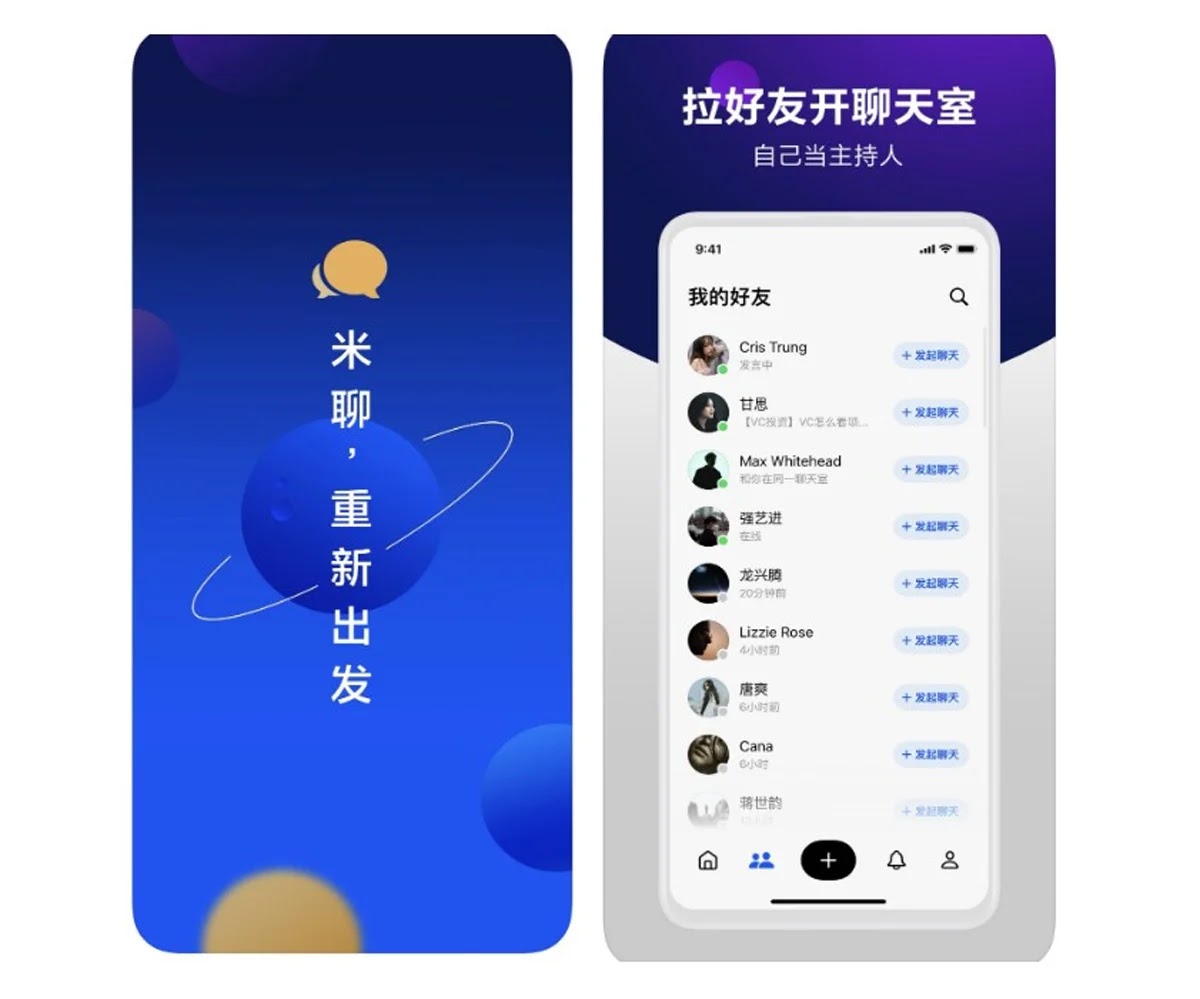
Other than ByteDance, Xiaomi had recently relaunched its China-only MiTalk app as a competitor to the US-made chatting platform. As expected, the app also offers chat rooms that require an invite in order to participate – a huge turn in direction from its original approach which mirrors regular chatting apps such as WeChat and WhatsApp.

The sudden (and inevitable) surge of Chinese companies wanting to replicate Clubhouse’s success and popularity with their own clones is interesting yet peculiar, especially in terms of privacy in China. As previously reported, the country recently cracked down on the US-made app and banned it outright as it was reportedly discovered that Chinese users were using its chat rooms to discuss subjects that are considered taboo and controversial.

The question remains: what are the steps that ByteDance and Xiaomi are required to take in order to prevent such scenarios from repeating on their own respective apps? And of course, there’s also the concern of chat logs and user data potentially being snooped upon by the Chinese government for the purpose of censorship.

Friday, February 26, 2021

Xiaomi Launches Redmi K40 Flagship Series In China


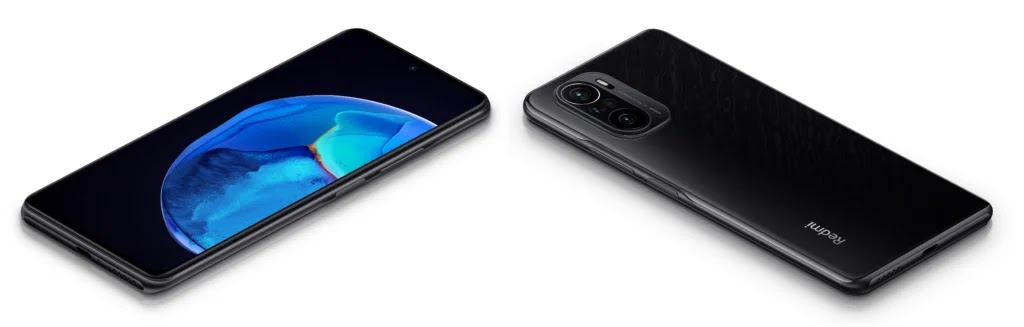
Xiaomi has recently launched three models of the new Redmi K40 flagship series in China. These consist of a standard K40 model, a Pro version and a high-end Pro Plus – all of which are equipped with Qualcomm’s Snapdragon 800 series chipsets.

All three variants share the same display across the board, which is a Gorilla Glass 5-protected Samsung E4 6.67-inch AMOLED flat panel with 1080 x 2400 px resolution, 120Hz refresh rate and 360Hz touch sampling rate. The Redmi K40 trio features a side-mounted fingerprint sensor on the power button, Dolby Atmos tuned stereo speakers, sub-6 GHz 5G and Wi-Fi 6 connectivity, Bluetooth 5, NFC, an IR blaster, and a 4,520mAh battery with 33W fast charging via USB-C. Concurrently, all three are also certified IP53 for dust and water resistance.

Both the Redmi K40 Pro and Pro Plus are equipped with the same Snapdragon 888 chipset, but differ in terms of RAM and storage configurations. Specifically, the former comes with up to 6GB RAM and up to 256GB of storage, while the latter is offered only with 12GB RAM and 256GB storage. The standard K40, on the other hand, is powered by a Snapdragon 870, along with RAM and storage options of up to 12GB and 256GB respectively. It’s also worth pointing out that the 870 is a revamped version of Qualcomm’s last flagship, the Snapdragon 865, now featuring a clock speed of 3.2 GHz and an Adreno 650 GPU.


The Redmi K40 trio comes with a triple rear camera setup which features the same 8MP ultra-wide and 5MP telephoto macro sensors. What sets each model apart is their main cameras; where the Pro Plus features a 108MP sensor, the Pro gets a 64MP, and the standard version features a 48MP sensor instead. Video-wise, the two high-end variants are capable of recording in 8K at 30fps, while the vanilla’s maximum video resolution is capped at 4K/30fps. All three models come with a 20MP front-facing camera housed in the punch-hole cutout in the main display.


In terms of pricing, the standard Xiaomi Redmi K40 model retails at RMB2,000 (~RM1,252) for the 6/128GB configuration, RMB2,200 (~RM1,377) for 8/128GB, and RMB2,500 (~RM1,565) for 8/256GB. Meanwhile, the K40 Pro is priced at RMB2,800 (~RM1,753) for the 6/128GB, RMB3,000 (~RM1,878) for 8/128GB and RMB3,300 (~RM2,066) for 8/256GB. Lastly, the K40 Pro Plus – as mentioned earlier – is only offered in one configuration at 12/256GB, which retails at RMB3,700 (~RM2,316).

While the new Redmi phones (especially the Pro Plus model) do share some similarities with Xiaomi’s own Mi 11 flagship, they are clearly aimed towards users of the brand’s ecosystem  series that are considering a more affordable alternative. Provided that they don’t mind going with a flat display panel, and slightly smaller battery capacity.


All three smartphones will be on sale in China on 4 March, but their global availability has not been confirmed at this time. However, sources say a recent discovery in the IMDA (Infocomm Media Development Authority) listing suggests that the standard variant of the Redmi K40 may be sold globally under Xiaomi’s other subsidiary brand POCO instead.

Saturday, February 6, 2021

Xiaomi Believes Future Phones Don’t Need Ports; Unveils One with Quad-Curved Waterfall Display


After revealing the Mi Air Charge Technology, Xiaomi has decided to showcase yet another conceptual product in the form of the quad-curved waterfall display concept smartphone. This particular concept device is pretty much an attempt by Xiaomi’s engineers to design a phone that is almost fully covered by the glass screen.

Xiaomi stated that among the challenging aspect of this project is to craft the hyper-curved glass panel which has an angle of 88-degrees and requires a long list of complex procedures to make it a reality. The company also claimed that it finally managed to come out with the final product after thousands of attempts.


Since all sides of the concept phone are covered by glass, the functions that were traditionally performed by physical buttons have been taken over by touch gestures. One such example shown in the video released by Xiaomi is how users just need to slide their fingers on the side of the concept phone to adjust its volume.

What made the concept phone even more interesting is the fact that it has no port as well which the company believes is a new direction for future phones. Xiaomi claimed that it has plenty of solutions that can make this happen including piezoelectric ceramics, flexible display acoustic technology, under-display camera, wireless charging, pressure-sensitive touch sensors, eSIM, and many more.


In fact, the new concept device was made possible through the usage of the company’s 46 patented technologies that were developed in-house. While Xiaomi has a habit of releasing its concept phone into the market, this particular model is likely not ready for the public as the company not only didn’t provide any details regarding its specs and availability but there is no product name for it as well.

Monday, February 1, 2021

Xiaomi Sues US Government, Demands To Be Removed From Trump-Era Blacklist


Xiaomi is suing the US government, demanding to be removed from a Trump-era investment blacklist. In its court filing, the company again strenuously denied having any links to the Chinese military, arguing that its inclusion on the list was thereby incorrect and illegal.

“More than 75% of the voting rights in the company under a weighted voting rights structure are held by co-founders Lei Jun and Bin Lin. Xiaomi is not owned or controlled by or otherwise affiliated with the Chinese government or military, nor is it owned or controlled by any entity affiliated with the Chinese defence industrial base,” read its legal complaint.

Xiaomi also noted that three of its top ten holders of ordinary shares were US institutional investors, namely BlackRock, Inc., The Vanguard Group, Inc., and the State Street Corporation – this in addition to having many US individuals as shareholders.


The smartphone maker argued that its inclusion on the blacklist violated the US Constitution’s key guarantees of due process as well as property and liberty rights. When it was placed on the list, Xiaomi said it got no advanced notice from the Trump administration and was given no opportunity to respond.

Xiaomi has been on that blacklist since 14 January this year. Companies on the list were designated by the Trump administration as having links to China’s military establishment and security apparatus. Not only are US investors banned from investing in companies on the list, but they must also divest all their holdings in those companies by November 2021.

Xiaomi Shows Off Physical Concept Of Vision Gran Turismo

At the very tail end of last month, Xiaomi unveiled the Vision Gran Turismo. The car was revealed as a digital hypercar, and one that’s made...