Showing posts with label Google. Show all posts

Wednesday, November 29, 2023

Google Drive Files Gone Missing Due To a Bug In The Desktop App


Google Drive is one of the best cloud storage options available and is open to the public. However, according to a trending support thread on Google’s support forums, users have reported that some of their files have started to disappear from the service in recent months. Furthermore, since none of these files were deleted manually, they don’t appear in the platform’s recycling bin feature and thus cannot be recovered (so far).

Early on in the investigation, many speculated that the files vanished due to a hacker attack, but this isn’t the case. According to a thorough investigation, it has been concluded that the issue stems from the Google Drive app for desktop, which affects users regardless of whether their system is Windows or Mac. With that said, users on the browser variation of the service can rest easy.


It was also discovered that the bug would eliminate the data from the account, almost reverting the account back to a state before that data was made. Unfortunately, there’s no explanation for it so far, but Google has confirmed that this problem is related to a syncing issue seen in the recently rolled-out v84.0.0.0 through 84.0.4.0 of Drive.


Although this issue affects – as Google puts it – a “limited subset of Drive for desktop users,” it is recommended to backup all important files and documentation. Furthermore, the company has warned users to avoid disconnecting their Google account from the Drive on desktop, and that they should not tamper with the “DriveFS” folder that’s locally found on their machines in any way, shape, or form.

Tuesday, July 25, 2023

Google says Apple employee found a zero-day, but did not report it


Google fixed a zero-day in Chrome that was found by an Apple employee, according to comments in the official bug report. While the bug itself is not newsworthy, the circumstances of how this bug was found and reported to Google are, to say the least, peculiar.

According to a Google employee, the bug was originally found by an Apple employee who was participating in a Capture The Flag (CTF) hacking competition in March. But that Apple employee did not immediately report the bug, which at the time was a zero-day — meaning Google wasn’t aware of the bug and no patch had been issued yet. The bug was instead reported by someone else who also participated in the competition, didn’t actually find the bug themselves and wasn’t even on the team that found the bug.

“This issue was reported by sisu from CTF team HXP and discovered by a member of Apple Security Engineering and Architecture (SEAR) during HXP CTF 2022,” the Google employee wrote.

After this story first published, TechCrunch viewed a Discord channel where someone claiming to be the Apple employee who originally found the zero-day explained their side of the story, particularly the reason why they didn’t report the bug immediately, in response to Sisu, the person who reported the bug to Google.

“It took me 2 weeks working on it full time to root cause, write [the] exploit [Proof of Concept] and writeup the issue such that it can be fixed,” the person, who goes by Gallileo, wrote on July 6.

“It was reported on June 5th, through my company. Yes it was late, there are multiple reasons for that. I first had to find the person responsible, the report had to be signed off by people and then the person responsible was OOO. It’s commendable that chrome decided to fix it asap, but I think there wasn’t any real urgency. Only you and my team was aware of it and the issue is likely not that great in a real world scenario (doesn’t work on Android, pretty visible since it freezes the Chrome GUI for a few seconds),” Gallileo wrote.

Gallileo and Sisu did not respond to a request for comment.

Apple did not respond to a request for comment.

Google spokesperson Ed Fernandez told TechCrunch in an email that “our understanding is public in the bug.”

“We recommend reaching out to Apple for any further details,” Fernandez wrote.

It’s not uncommon for CTF teams and CTF players to find zero-days during competitions, especially in challenges of this type and competitions that are “high profile,” according to Filippo Cremonese, a researcher who participates in CTF competitions with the Italian team mhackeroni, which incidentally may be the best hacker team name ever.

What makes the story of this bug interesting is that it was apparently found by an Apple employee in a Google product, and — for some reason — that Apple employee decided not to report the bug at the time.

In the original report on March 26, the person who reported it said that the bug was found by someone on the team COPY during a CTF organized by the team HXP. The person, whose name is not disclosed in the report, said they decided to report it even if they didn’t find it themselves because they were “not 100% sure it was reported to the chromium team.”

“So I wanted to be safe,” the person wrote.

“Since you are the one disclosing this issue and there are no duplicates, it seems that the team that discovered this issue has chosen not to disclose it to us?” the Google employee wrote in another comment to the bug report.

The bug was fixed on March 29, according to the bug report. Google decided to award $10,000 as a bug bounty to the person who reported it, who, again, was not the one who found it.

UPDATE, July 20, 2:30 p.m. ET: This story was updated to include Discord messages posted by the person who claims to have found the bug originally.

UPDATE, July 24, 12:09 p.m. ET: Added clarification on twelfth paragraph.

UPDATE, July 24, 12:017 p.m. ET: On Friday, Sisu, who identified as Martin Radev, and is the person who first reported the bug to Google, published a timeline explaining his side of the story. Radev said that the Apple employee reported the bug in June. They also said they are in touch with the Apple employee to figure out what to do with the $10,000 bounty they received from Google. Radev wrote that “a donation is to be made.”

Wednesday, October 6, 2021

Google Pixel 6 And Pixel 6 Pro Officially Launching On 19 October

Google has just announced the date for the official launch of the long-awaited Pixel 6 phones. Scheduled to take place on 19 October, we should finally be able to know more details about Pixel 6 and Pixel 6 Pro including specs and pricing.

The tech giant unveiled some features of the lineup back in August, such as high refresh rate displays and the use of Google’s mysterious custom Tensor chip, which we expect to find out more about during the launch.  While the details under the hood have been mostly kept under wrap, Google already started airing ads and displaying the phones for public viewing at its physical store in New York City.

At the moment, we are already aware that both phones will feature an in-display fingerprint sensor with the base Pixel 6 lacking the Pro variant’s telephoto lens and 120Hz display. We still don’t know how big the sensors are going to be though but a string of code in Google’s Camera app suggest that the Pixel 6 may be using the 50MP Samsung GN1 sensor for its main shooter.

The launch could also potentially announce the official rollout for Android 12 on Pixel devices. Google released the stable update to the Android Open Source Project earlier this week but said that Pixel phones will only be getting it “in the next few weeks”.


As per most tech events for the past two years, the Pixel Fall Launch will take place virtually on 20 October at 1:00 AM Malaysian time. Stay tuned for more updates as we will keep you posted with all the details from the event next week.

Tuesday, September 14, 2021

South Korea Fines Google KRW207.4 Billion Over Android Dominance Abuse

South Korea recently passed its Anti-Google Law, which goes into effect today, 14 September 2021. Tangentially related is another fine the country is laying on the internet search giant which amounts to KRW207.4 billion (~RM735 million). This is allegedly because of the company’s abuse of the dominance of its Android mobile operating system.

The Korea Fair Trade Commission said that Google’s anti-fragmentation agreements (AFA) with phone makers prevents them from developing or using modified versions of Android. In addition to the fine, the commission also banned Google from making manufacturers sign new AFA contracts, and making it modify existing ones.


These moves are reportedly intended to spur competition by letting companies create more forks of Android. This then would allow each brand to modify the mobile OS to “target different device classes or use cases” without Google retaliating. Google, naturally, will be appealing the decision, saying that the ruling “will undermine the advantages enjoyed by consumers”.

All things considered though, it remains to be seen if this is really enough for there to be any real change to the status quo, at least on the mobile phone front. Things may be different on the smart TV or wearable sides of the market.

Wednesday, September 8, 2021

Google: We Want To Discuss Malaysia’s Cabotage Policy With The PM

Google and several tech companies have sent a letter to the office of Prime Minister Ismail Sabri Yaakob last week. Through the letter which apparently has been co-signed by Amazon, Facebook, and Microsoft, these companies are looking to meet up with the PM to discuss Malaysia’s cabotage policy.

This was confirmed by a Google spokesperson to Reuters last weekend. Words of its existence have been making rounds in the industry a few days before the confirmation although Reuters has noted that Amazon, Facebook, Microsoft, PM’s Office, and Ministry of Transport (MoT) have not yet responded to its queries regarding the letter.


Back in 2019, MoT was under the leadership of Anthony Loke who at the time allowed foreign ships to perform submarine cable repairs in Malaysian waters to help speed up such tasks. Subsequently, the move was also expected to make Malaysia more attractive to data centre operators.

However, the exemption was reversed in November 2020 by its successor, Ir. Dr Wee Ka Siong who apparently did so to protect the interest of the local shipping industry and national security. Aside from the four tech giants, others within the tech industry including Malaysia Internet Exchange (MyIX) and Malaysia Digital Economy Corporation (MDEC) have expressed their concern regarding the move.


In fact, many have blamed the cabotage issue as one of the possible reasons why Facebook and Google do not include Malaysia for its upcoming submarine cable network projects in Southeast Asia such as Echo, Bifrost, and Apricot. It remains to be seen whether things will actually change given that PM Ismail Sabri has made Dr Ka Siong in charge of MOT once again, we do hope that the issue will be resolved as soon as possible.

Thursday, July 22, 2021

Google Adds Warning For “Unreliable Search Results” On Emerging Issues

Google recently updated its search engine with an additional feature. Now, when people perform a Google search on a breaking story or a topic that is “rapidly evolving”, the search engine will alert them through pop-ups to the potential unreliability of its results.

The new prompt encourages users to take note that the topic in question is developing, so the search results are rapidly changing as new information is made available. The prompt, which appears above the search results, says, “If this topic is new, it can sometimes take time for results to be added by reliable sources.” Basically, the prompt is cautioning users to take everything with a grain of salt and wait for more information to come to light.

Google said its software systems will decide when the warning needs to be triggered by detecting rapidly developing topics that have a limited range of sources. “We’ll now show a notice indicating that it may be best to check back later when more information from a wider range of sources might be available,” Danny Sullivan, Google’s public liaison for search, wrote in a blog post.


According to a report from TechCrunch on Thursday, Google began testing this feature a week ago. However, the company stated at the time that only a small percentage of search results were showing the warning. The features will be rolled out to U.S. users over the coming months, the company said on Friday.

In recent years, Google has employed several fact-checking measures to prevent the spread of misinformation and include critical context for topics that go viral on the web. With all the focus on issues related to misinformation, extremism, and toxicity on its platforms, Google has developed several fact-checking features such as warning labels to image searches and knowledge labels to help fight these problems. Critics have ramped up their criticism of COVID-19, as well as elections since Silicon Valley giants have tried to combat their opponents’ claims regarding COVID-19, as well as other issues.

Sunday, July 4, 2021

Google To Let Other Search Engines Be The Default On Android In Europe


Google is making changes to the way its users in the European Union choose their default search engines. For one, it is increasing the number of available options that users will be able to select. Competitors will also be able to list their search engines for free.

Google is making changes to the way its users in the European Union choose their default search engines. For one, it is increasing the number of available options that users will be able to select. Competitors will also be able to list their search engines for free.

Back in 2018, Google was fined a massive US$5 billion in the EU for forcing its Search and Chrome browsers to be default on Android devices. Following that, Android users in the EU got to choose their default search engine every time they set up or reset their devices. Though as mentioned, this list only included three other options besides Google, and differs from country to country.

With the change, users in all of the EU will be able to see a list of up to 12 alternatives. Competing search engine providers will also no longer have to bid to appear on the list anymore. Though this only applies to general search engines that are available for free via the Google Play Store. In its blog post, Google says that these changes will take effect starting from September.

Wednesday, June 30, 2021

Google Kills Its AR Measure App Three Years After Project Tango


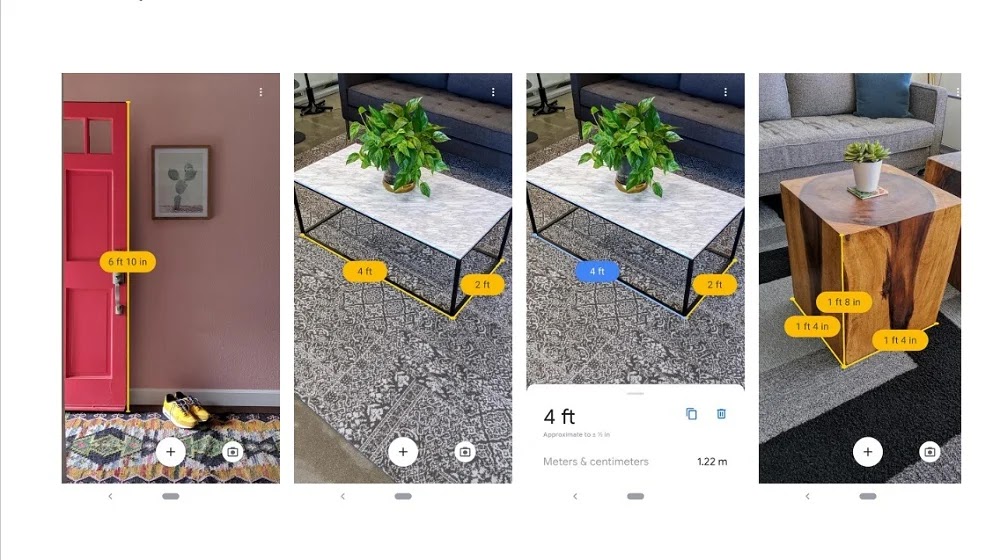
Google retired Project Tango in 2018 to make way for ARCore. Now, the AR app known as Measure will also be joining the Google Graveyard. For those whom have never downloaded it, it will never be found again. But for those who did download it at least once before, it “is no longer supported and will not be updated”.

Android Police noted the the app is no longer listed in the Google Play Store for accounts that did not previously download it. But for those that did, it should still work normally. And at the time of writing, the internet search giant still has Measure listed in its AR & VR experiences site. Chances are this will be removed soon.

For those who don’t know, Measure was one of the most compelling uses of AR back in the day. We’re talking about when the Lenovo Phab 2 Pro was first announced back in 2016, as the first phone that supported Project Tango. That being said, it’s safe to say that the idea was better than the implementation, as the app wasn’t exactly accurate. So while it was fun, to say that it was practical was probably  stretch.

AR tech on mobile phones are these days more used for location based games instead. You have the likes of Pokemon Go, Harry Potter: Wizards Unite, and even one for The Witcher. And they are all battery hogs, much like Measure was back in the day.

Sunday, June 20, 2021

Google Kills Its AR Measure App Three Years After Project Tango


Google retired Project Tango in 2018 to make way for ARCore. Now, the AR app known as Measure will also be joining the Google Graveyard. For those whom have never downloaded it, it will never be found again. But for those who did download it at least once before, it “is no longer supported and will not be updated”.

Android Police noted the the app is no longer listed in the Google Play Store for accounts that did not previously download it. But for those that did, it should still work normally. And at the time of writing, the internet search giant still has Measure listed in its AR & VR experiences site. Chances are this will be removed soon.


For those who don’t know, Measure was one of the most compelling uses of AR back in the day. We’re talking about when the Lenovo Phab 2 Pro was first announced back in 2016, as the first phone that supported Project Tango. That being said, it’s safe to say that the idea was better than the implementation, as the app wasn’t exactly accurate. So while it was fun, to say that it was practical was probably  stretch.

AR tech on mobile phones are these days more used for location based games instead. You have the likes of Pokemon Go, Harry Potter: Wizards Unite, and even one for The Witcher. And they are all battery hogs, much like Measure was back in the day.

Friday, June 18, 2021

UK Regulators Investigating Apple And Google For “Effective Duopoly”

The UK’s competition regulator is looking into what it views as Apple and Google’s “effective duopoly” in the mobile phone market. This comes as big tech companies face increasing scrutiny from governments across the world.

According to the BBC, Britain’s Competition and Markets Authority (CMA) is probing whether the US tech giants have been discouraging competition through their operating systems iOS and Android, respective app stores, and Safari and Chrome web browsers.

“The CMA is concerned this could lead to reduced innovation across the sector and consumers paying higher prices for devices and apps, or for other goods and services due to higher advertising prices,” the government authority said in a statement.


It’s also examining the companies’ market power over app developers, which obviously rely on Apple’s and Google’s app stores to reach consumers. As you might know, Apple itself is being sued by Epic Games for the allegedly anticompetitive nature of its App Store.

Having amassed powerful empires and extraordinary influence over whole industries, big tech companies have seen the admiration they used to command turn to suspicion and even fury.

The European Union’s highest court recently opened the door for more national-level scrutiny of these multinational giants. And in the US, there’s growing talk about breaking up the companies.

Wednesday, June 16, 2021

Google To Launch AI Tool That Can Help Identify Skin Problems Via Phone Camera

Are you a little worried about a rash on your arm or leg? At its annual developer conference I/O, Google announced that it intends to launch later this year an AI-powered tool that can help identify skin problems just through pictures taken by a smartphone camera.

According to Google, once launched, the tool will require you to take three pictures of the skin, hair or nail issue from different angles. Then you’ll be asked questions about your skin type, duration of the issue (how long you’ve had it), and other symptoms that will help the tool narrow down the possibilities.

The AI model crunches all this information and draws from its database of 288 conditions to provide you a list of possible matching conditions. Every matched condition will come with dermatologist-reviewed information and answers to frequently asked questions, along with similar matching pictures from the web.

However, Google said the tool isn’t meant to provide a formal diagnosis or replace professional medical advice as many conditions require review by doctor, in-person examination, or additional testing like a biopsy. That being said, the tech giant also pointed out that two billion people worldwide suffer from dermatologic (skin) issues while specialists are in short supply.

The company described the tool as the culmination of over three years of machine learning research and product development. It uses many of the same techniques that detect diabetic eye disease or lung cancer in CT scans.

Sunday, June 13, 2021

Google To Open Its First Ever Physical Retail Store


In the distant pre-Covid past, few events elicit as much as excitement as the opening of an official Apple retail store. Now, it looks like Google wants in on all that glamour too, announcing plans to open its first ever physical retail store in New York City.

As you’d expect, store visitors will be able to browse and buy Google’s products like Pixel phones, Nest smart home devices, Fitbit watches, and Pixelbooks. Customers can also shop using Google’s online store and then collect their orders from the physical store.

There’ll be staff on site to help people with things like product repairs, troubleshooting, and installation. Google will also hold how-to workshops throughout the year. None of this is surprising, of course.

Still, the retail store will be a historic achievement. Google has flirted with physical retail space in the past, only to abandon the idea later. In 2013, the company constructed two gargantuan barges to serve as high-profile showrooms, CNET said. Then in 2018, Google was reported to have plans to open a retail store in Chicago, according to the news website.

None of these (alleged) plans ever came to fruition.

This Google Store, however, will be part of the company’s urban campus in New York’s Chelsea neighbourhood, which is home to many of its 11,000 employees in the city.

Opening the store in the midst of a global pandemic is a curious choice, though it may have been unavoidable. We’ll see if it can match the famously snaking lines of Apple stores.

Thursday, June 10, 2021

Google Assistant Can Soon Turn Off Your Phone


The Google Assistant can do a fair number of things on an Android Phone. And soon, it looks like there will be a new ability added to the list of things that it can do. And that is powering down your phone.

This ability will be part of Android 12. The upcoming version of the mobile OS will have added the ability to invoke the Google Assistant with a long press of the power button. But this is the same action that you’ll normally use to turn off the phone. So the option to do so is being given to the virtual assistant since it’s taking over power button hold command.

Alternatively, another way to turn off a phone running Android 12 would be to hold the power button and the Volume Up button. Which would mean a lot of accidental screenshots in the process.


9to5Google reports that this assistant feature was found in the code of a beta version of the Google Search app. Though the power and volume up combo for turning off the phone doesn’t work yet. At least as of Android 12 Beta 1.

On one hand, it’s probably not a feature of the Google Assistant that most people will use. After all there’s no reason to turn off your phone under normal use case scenarios. Unless if you do so with relative frequency, then the process of doing so will be a little longer.

HONOR Confirms Return Of Google Mobile Services; HONOR 50 To Be First Device


HONOR, the brand that was once a subsidiary of Huawei, made an indirect announcement recently that Google Mobile Services will indeed be returning to its devices. According to the brand, the first device that is set to reflect the return in a post-Huawei world is the HONOR 50.

Confirmation of GMS’ return to the brand’s upcoming device was done via Twitter, through the brand’s official German account. The tweet is no longer available, but as per Android Authority, it came as a reply to one user’s query. In addition to GMS, HONOR Germany also confirmed that the phone will retain Magic UI, which is technically an off-shoot of Huawei’s own EMUI.

As a quick primer, news about Huawei potentially selling off HONOR first cropped up in November last year. Back then, it was reported that the Chinese telecommunications and smartphone brand would sell its sister brand to a Shenzhen-based consortium for a sum of US$15.2 billion (~RM63 billion). Within a week, the sale was confirmed.

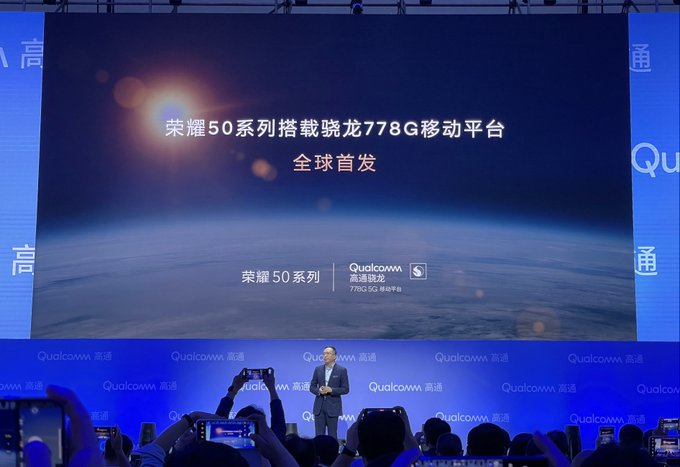
As for the hardware powering the HONOR 50, we know that the phone will be one of the first devices to be fitted with Qualcomm’s Snapdragon 778G 5G SoC, while the Pro version of it should house the top-tier Snapdragon 888. Camera-wise, the phone is expected to feature a 50MP main camera reminiscent of Huawei’s alleged main camera design of the P50. It will also reportedly include a 13MP ultrawide and 8MP ultrawide.


In addition, the phone is expected to sport a 6.79-inch AMOLED display with 120Hz refresh rate.

Sunday, May 2, 2021

Google Earth’s New Timelapse Feature Allows You To Watch As Malaysian Cities Grow, Change

Google Earth has a nifty new feature called “Timelapse” that can give you a bird’s eye view (or really, a satellite’s eye view) of cities and other places as they change across time.

The tech giant calls it the biggest update to Google Earth since 2017, incorporating 20 million satellite photos from the last 37 years. So you just type in a place you want to see (say “Kuala Lumpur” or “Johor Bahru”) and you can watch it change across nearly four decades.

It’s pretty cool, we have to admit – especially when applied to a city or town that you’ve grown up in. To begin, you can simply click here and use the search bar to find the place you want to see.

For example, here’s a view of Kuala Lumpur from 1984 to 2020.


If you prefer a more guided tour, you can open Google Earth and click on the ship’s wheel to find Timelapse in Google Earth’s storytelling platform, Voyager. While there, you can click on “Warming Planet”, for example, and watch the melting of an Alaskan glacier as the years pass – a worrying reminder of climate change.

Google has also helpfully uploaded a whole bunch of timelapse videos on this webpage and on YouTube. You’ll find videos of Kuala Lumpur, Johor Bahru, and Segamat along with predictable inclusions like New York and London.

Sunday, April 18, 2021

Paypal Co-Founder Peter Thiel Slams Google, Apple Over Their Links To China


Paypal co-founder and American billionaire investor Peter Thiel criticised tech giants Google and Apple over their respective links to China in a national security discussion with former Trump officials. Thiel, who sits on Facebook’s board of directors, slammed Google for refusing to work with the US military on AI technology, but working with Chinese universities and researchers instead.

He accused the company of “effectively working with the Chinese military” since there’s no clear separation between civilian and military spheres in the country. Puzzled by Google’s actions, he cited company insiders told him that “they figured they might as well give the technology out the front door, because if they didn’t give it – it would get stolen anyway.”

Google strongly denied Thiel’s claims and told CNBC, “We do not work with the Chinese military. We are proud to continue our long history of work with the U.S. government, including the Department of Defense, in many areas including cybersecurity, recruiting and healthcare.” Relatedly, former Google CEO Eric Schmidt chaired a government commission that recently urged the Biden administration to invest in AI-powered weapon systems to defend against China.

During the event hosted by the Richard Nixon Foundation, Thiel also pointed to Apple as “structurally a real problem”, noting that its iPhone supply chain is deeply embedded in China.

He called on the US government to apply “a lot of pressure on Apple with its whole labor force supply chain on the iPhone manufacturing in China.” It should be noted though that manufacturing of Apple products – including iPhones – has already begun to shift elsewhere, like India and Vietnam.

Saturday, April 17, 2021

Google Now Limiting Apps’ Ability To See Other Installed Apps On Android Devices


Google recently made some changes to its Developer Program Policy, in regards to the way installed apps are able to detect each other. From now on, certain apps may not be able to determine what other apps have been installed on an Android device.

According to XDA, Google made this change, with the search engine stating that the full list of installed apps on a user’s device is considered to be entirely personal and may contain sensitive information. As such, the search engine will be restricting the number of apps that can request the “QUERY_ALL_PACKAGES” permission in Android devices running Android 11 or later.

Specifically, the “QUERY_ALL_PACKAGES” permission will only be permitted when the app developer can “sufficiently justify” why it needs to determine the number of installed apps on the phone through said process, instead of using a less intrusive method to determine app visibility.


If a developer fails to meet the new criteria, they must then remove the permission from the app’s manifest, in order to comply with Google’s Play policy. Even if the app does meet the necessary requirements, developers will now be made to sign a declaration form in the Play console or be forcibly removed from the Play store.

Google And Samsung Reportedly Developing New Chipset For Upcoming Pixel Smartphones


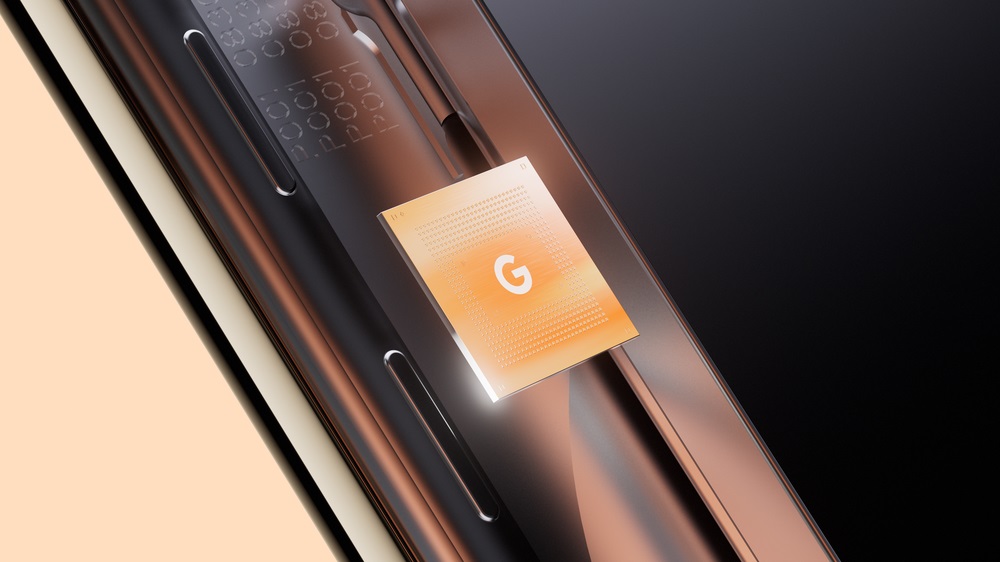
Companies such as Huawei and Apple have been developing their own smartphone chipsets in order to reduce reliance on those supplied by third-parties. According to 9to5Google, it appears that Google may soon be joining the ranks of the aforementioned brands, as it is reported that the firm is manufacturing its own system on chip (SoC) for its upcoming Pixel models.

The publication claims that the tech giant has partnered with Samsung to develop this new mobile processor, which is allegedly codenamed as “Whitechapel.” It also noted that the component carries the model number “GS101,” which it speculates that the letters “GS” is an acronym for “Google Silicon”. The new chipset is believed to be based on Samsung’s Exynos chipset, and is said to be developed with the company’s system large-scale integration (SLSI) division.

Other than that, 9to5Google added that Whitechapel is part of Google’s “Slider” project, which is said to be a “shared platform” for its first SoC. The project is linked to two others codenamed as “Raven” and “Oriole” – believed to be the upcoming Pixel smartphone models that are slated to launch in late 2021. Aside from powering handsets manufactured by the company, the report said that the new Google-Samsung chipset would be featured in upcoming Chromebooks as well.


For those unfamiliar, Google has equipped its flagship phones with Qualcomm developed SoCs since the first Pixel model, with the latest iteration – the Pixel 5 series – featuring the Snapdragon 765G. Whether the first-party Whitechapel chipset is capable of performing on par with its competitors or better, remains to be seen. Provided that this rumour is to be believed, of course.

Xiaomi Shows Off Physical Concept Of Vision Gran Turismo

At the very tail end of last month, Xiaomi unveiled the Vision Gran Turismo. The car was revealed as a digital hypercar, and one that’s made...