Showing posts with label Are. Show all posts

Wednesday, November 29, 2023

Chinese Companies Are Dismantling RTX 4090 Cards To Circumvent US Ban


Ever since the US ban that prohibits China from receiving anymore of NVIDIA’s GeForce RTX 4090 GPU, among other things, went into effect earlier this month, many Chinese companies have had no choice but get creative in the way they can sell the card. One such method involves them removing manufacturers’ cooler from the card and slapping on a blower-style cooler on it.

Of course, the dismantling process of these RTX 4090 is obviously a little more complicated than that; these companies are reportedly dismantling the GPU at scale, meaning that they are disassembling the GPU core from the PCB en masse, attaching them to different cards, and then slapped with blower-style coolers. Once completed, the new cards are then labelled as “AI Cards” to suggest that they are designed to be used in AI language model training.


As a quick reminder, the US export bans specifically forbids the distribution and sale of the AD102 GPU, which is part and parcel of the RTX 4090. Prior to the ban, NVIDIA had actually managed to rush a large-scale order of GPUs to its AIB partners in China. In anticipation of the ban, Chinese companies had also made a somewhat smart decision to stockpile as many GPUs as physically possible.

Several of the photographs that were taken in one of this “AI Cards” disassembly lines include RTX 4090s procured from brands such as ASUS, PNY, Colorful, Palit, and Zotac. This is undoubtedly an infuriating scenario for gamers that may have been looking forward to procuring said card in China.


Even after stripping the precious RTX 4090’s AD102 GPU from their original PCBs, these Chinese companies don’t appear to waste anything either. Supposedly, they resell the leftover components and naked PCBs as spare parts, which would be beneficial to individuals looking to just upgrade their coolers. For others, they serve as a morbid reminder of where said components originated from.

The unfortunate reality to this hoarding of the RTX 4090 is that, as it stands right now, what these Chinese companies are doing isn’t “technically” against the law in their own country. Further, it has become evident that virtually none of NVIDIA’s board partners actually put fail safes in place to prevent incidents such as this to take place. Worst, NVIDIA itself has a share of the blame for this, by virtue of the GPU brand having created the environment in which these unscrupulous characters are allowed to exist.

Wednesday, October 6, 2021

AirPods Pro and AirPods Max Are Finally Getting “Find My” Features


Apple has begun rolling out new firmware updates for the AirPods Pro and AirPods Max that includes a new “Find My” functionality. The feature, which was initially supposed to launch with iOS 15 but was delayed, makes it easier to find your headphones when they go missing.

The update lets the AirPods take advantage of the vast Find My network to locate them if they go missing. Prior to the update, the Find My function could only show you the earphone’s last known location, albeit being limited to the AirPods’ Bluetooth connection.


The update takes it a step further by finding out of range AirPods through the network of other nearby Apple devices. When Lost Mode is turned on, the headphones will send out a continuous Bluetooth beacon and when other people’s Apple devices detect the signal, they will report the location on the network for the owner to see.

The method is similar to how lost AirTags work but the lack of Apple’s U1 chip means that the AirPods won’t have that precise arrow-pointing location feature. It will, however, notify users when the earbuds are left behind or if their location is getting further away. Reported lost items can be attached with a message and contact details and can also be marked as found by the people who stumble upon them.

The new Find My tools are only available with the AirPods Pro and AirPods Max, so standard AirPods owners are out of luck. AirPods firmware updates are a bit tricky, as there’s no direct way to download the update.

Users will have to keep their charged AirPods in their case near a connected iPhone and hope that it will randomly transfer the update. You can check your AirPods’ firmware version in your iPhone settings to see if you already have it, the latest update with the new locating tools being version 4A400.

Sunday, September 5, 2021

CEOs are dooming business travel - maybe for good, No more outstation


Business travel as we’ve known it is a thing of the past. From Pfizer, Michelin and LG Electronics to HSBC and Deutsche Bank, businesses around the world are signalling that new communications tools are making many pre-pandemic-era trips history.

Take Akzo Nobel, Europe’s biggest paint maker, for instance. At its Amsterdam headquarters, Chief Executive Officer Thierry Vanlancker has spent the past year watching his manufacturing head, David Prinselaar, flap his arms, madly gesticulate and seemingly talk to himself while “visiting” 124 plants by directing staff with high-definition augmented-reality headgear on factory floors. A task that meant crisscrossing the globe in a plane before is now done in a fraction of the time — and with no jet lag. For Vanlancker, there’s no going back.

“Trips to drum up business could drop by a third, and internal meetings by even more,” he said in an interview. “It’s a good thing for our wallets and helps our sustainability targets. Our customers have had a year of training, so it’s not a social no-no anymore to just reach out by video... There’s an enormous efficiency element.”

A Bloomberg survey of 45 large businesses in the US, Europe and Asia shows that 84 per cent plan to spend less on travel post-pandemic. A majority of the respondents cutting travel budgets see reductions of between 20 per cent and 40 per cent, with about two in three slashing both internal and external in-person meetings. The ease and efficiency of virtual software, cost savings and lower carbon emissions were the primary reasons cited for the cutbacks. According to the Global Business Travel Association, spending on corporate trips could slide to as low as $US1.24 trillion by 2024 from a pre-pandemic peak in 2019 of $US1.43 trillion.

Business travel has “forever changed,” Greg Hayes, CEO of jet-engine maker Raytheon Technologies, said in July. About 30 per cent of normal commercial air traffic is corporate-related, but only half of that is likely mandatory, he said. While the market may eventually recover, sophisticated communication technologies have “really changed our thinking in terms of productivity,” Hayes said.

Having saved billions from slashed travel budgets during the pandemic with only a marginal impact on operations, companies, banks, consulting firms and government offices will be hard-pressed to explain why they’d return to their old ways. Kit Kat chocolate-bar maker Hershey said the pandemic showed that online meetings were a more efficient use of time and financial resources. Companies like Pfizer are grappling with questions about what one accomplishes with a trip that can’t be done virtually, Tina Quattlebaum, its director of global travel operations, said at the GBTA Mid-Year Virtual Summit in July.

“We don’t think business travel will ever return to 2019 levels,” said Will Hawkley, the global head of travel and leisure at KPMG. “Corporates are looking at their bottom-line, their environmental commitments, the demand from employees for more flexible working and thinking: Why do I have to bring that back?”

That’s a blow to the airline and hospitality industries — already among the biggest casualties of the pandemic. Business travellers, who buy premium-class or more-expensive refundable tickets, rang in as much as three-quarters of airlines’ pre-pandemic profits while accounting for only 12 per cent of seats, according to PwC. The hotels sector, which draws about two-thirds of its revenue from business travellers, could see a dip of as much as 18 per cent by 2022 as virtual meetings replace 27 per cent of corporate travel volumes, a Morgan Stanley study shows.

The world’s biggest airlines collectively lost a whopping $US126 billion in 2020 and are set to lose another $US48 billion this year, according to the International Air Transport Association, their lobby. As they wrestle with those losses and the huge debts racked up after coronavirus punctured a decades-long boom in travel, the last thing airlines need is corporate customers cutting back. Carriers like Lufthansa, Air France-KLM, Delta Air Lines and American Airlines, with thousands of staff and overhead to support, depend on business travellers returning.

“The effect of this structural decrease in business travel will be enormous for the industry, and especially for the airlines that are the most exposed to this category of traveller,” said Pascal Fabre, managing director in Paris for AlixPartners, a consulting firm.

Airlines are trying to stay optimistic. Delta CEO Ed Bastian said about 80 per cent of the carrier’s large corporate clients have indicated that as much as 90 per cent of their pre-Covid business travel will eventually return.

“I don’t expect we’re going to see a degradation in the aggregate of business demand over time,” he said in an interview. “The more people are connected in person, the more opportunities are created. I don’t see this being a significant body-blow to the industry as prognosticated by some.”

Travelling thousands of miles to meet with customers to discuss key issues across a table or over a meal made business sense before the pandemic and that hasn’t changed, said Warren East, the CEO of Rolls-Royce Holdings Plc, which makes aircraft engines.

“COVID-19 has definitely taught people that some of the mad regular dashes across the Atlantic hither and thither aren’t necessary,” he said, speaking at a net-zero event on June 17. “But when you peel back beyond that superficial analysis, you realise people were doing it because they thought it delivered real benefit to them.”

There may also be competitive pressures to keep flying, Air France-KLM CEO Ben Smith said in an interview. “I hear many of our corporate customers saying that the day they lose an account because they weren’t somewhere face-to-face will immediately bring them back to the way operations were before.”

Airlines are banking on a recovery sparked by pent-up demand after about 18 months when executives couldn’t visit customers — hopes that are being dented by the spread of the delta variant. Even if there is an initial burst of activity, it will start to stabilise and the structural change to business travel will become evident by around 2024, according to Fabre.

“In the past, it was seen as a good thing to go to the other side of the world to shake someone’s hand, but not anymore,” Augustin de Romanet, the CEO of Aeroports de Paris, which operates dozens of airports around the world, said in an interview. “Many things that have been done by conference call during the pandemic will stay that way, especially when it comes to far-flung countries. This will be for costs and the environment as well as people’s wellbeing.”

Company executives travel for many reasons — from business development and customer support to trade shows, conferences and meetings with local staff. Trips for intra-company activities will likely bear the brunt of the cuts “because client relationships aren’t at stake,” said AlixPartners’ Fabre.

“We have learned how to work, develop products, sign contracts without travelling,” he said.

Deutsche Bank’s global head of Investment Banking Coverage and Advisory, Drew Goldman, said that while the bank’s client-related business travel will return to about 90 per cent of pre-pandemic levels, trips for internal meetings will probably be a shadow of what they were before — at 25 per cent to 30 per cent.

Volkswagen is making employees jump through hoops before they can fly. Internal booking software steers them toward alternatives to flying, the most carbon-intensive form of travel. They’re also asked to justify why they can’t conduct the business online. At French defence and tech giant Thales, “trips will be for longer and probably less frequent in order to optimise costs, environmental impact and wellbeing,” said CEO Patrice Caine.

The world’s biggest airlines collectively lost a whopping $US126 billion in 2020 and are set to lose another $US48 billion this year, according to the International Air Transport Association, their lobby. As they wrestle with those losses and the huge debts racked up after coronavirus punctured a decades-long boom in travel, the last thing airlines need is corporate customers cutting back. Carriers like Lufthansa, Air France-KLM, Delta Air Lines and American Airlines, with thousands of staff and overhead to support, depend on business travellers returning.

“The effect of this structural decrease in business travel will be enormous for the industry, and especially for the airlines that are the most exposed to this category of traveller,” said Pascal Fabre, managing director in Paris for AlixPartners, a consulting firm.

Airlines are trying to stay optimistic. Delta CEO Ed Bastian said about 80 per cent of the carrier’s large corporate clients have indicated that as much as 90 per cent of their pre-Covid business travel will eventually return.

“I don’t expect we’re going to see a degradation in the aggregate of business demand over time,” he said in an interview. “The more people are connected in person, the more opportunities are created. I don’t see this being a significant body-blow to the industry as prognosticated by some.”

Travelling thousands of miles to meet with customers to discuss key issues across a table or over a meal made business sense before the pandemic and that hasn’t changed, said Warren East, the CEO of Rolls-Royce Holdings Plc, which makes aircraft engines.

“COVID-19 has definitely taught people that some of the mad regular dashes across the Atlantic hither and thither aren’t necessary,” he said, speaking at a net-zero event on June 17. “But when you peel back beyond that superficial analysis, you realise people were doing it because they thought it delivered real benefit to them.”

There may also be competitive pressures to keep flying, Air France-KLM CEO Ben Smith said in an interview. “I hear many of our corporate customers saying that the day they lose an account because they weren’t somewhere face-to-face will immediately bring them back to the way operations were before.”

Airlines are banking on a recovery sparked by pent-up demand after about 18 months when executives couldn’t visit customers — hopes that are being dented by the spread of the delta variant. Even if there is an initial burst of activity, it will start to stabilise and the structural change to business travel will become evident by around 2024, according to Fabre.

“In the past, it was seen as a good thing to go to the other side of the world to shake someone’s hand, but not anymore,” Augustin de Romanet, the CEO of Aeroports de Paris, which operates dozens of airports around the world, said in an interview. “Many things that have been done by conference call during the pandemic will stay that way, especially when it comes to far-flung countries. This will be for costs and the environment as well as people’s wellbeing.”

Company executives travel for many reasons — from business development and customer support to trade shows, conferences and meetings with local staff. Trips for intra-company activities will likely bear the brunt of the cuts “because client relationships aren’t at stake,” said AlixPartners’ Fabre.

“We have learned how to work, develop products, sign contracts without travelling,” he said.

Deutsche Bank’s global head of Investment Banking Coverage and Advisory, Drew Goldman, said that while the bank’s client-related business travel will return to about 90 per cent of pre-pandemic levels, trips for internal meetings will probably be a shadow of what they were before — at 25 per cent to 30 per cent.

‘Companies have acknowledged that reducing the level of flights is one way of reducing climate change. For the next 10 years, the best way to reduce emissions from aviation is to fly less.’
Andrew Murphy, aviation director at Transport & Environment

Volkswagen is making employees jump through hoops before they can fly. Internal booking software steers them toward alternatives to flying, the most carbon-intensive form of travel. They’re also asked to justify why they can’t conduct the business online. At French defence and tech giant Thales, “trips will be for longer and probably less frequent in order to optimise costs, environmental impact and wellbeing,” said CEO Patrice Caine.

In Singapore, United Overseas Bank, Southeast Asia’s third-biggest bank, plans to cut its travel budget by as much as half, and will limit trips to cases “where face-to-face interaction is essential,” said Dean Tong, head of group human resources. On New York-based Marsh & McLennan’s second-quarter earnings call, CEO Dan Glaser said, “companies, not just Marsh McLennan, will travel with more purpose and will be more thoughtful about travelling.”

Sophisticated technologies are enabling companies to do things they never imagined doing remotely. At French tire maker Michelin, new tools are already eclipsing the automatic reflex to make a trip, CEO Florent Menegaux said in an interview. The company recently used a drone for a virtual visit of its Campo Grande plant in Brazil by the top manufacturing brass in France. “We start machines remotely, have used drones to visit factories and train people from home,” Menegaux said. “We will continue to travel because human bonds are absolutely necessary to our activity, but we will most certainly have an overall reduction of about 20 per cent to 30 per cent in our travel costs.”

Royal Dutch Shell has created online control rooms with interactive 3D simulations of oil platforms and plants, giving engineers virtual access from home. In Troy, Michigan, Kevin Clark, the CEO of Aptiv, a former car parts unit of General Motors, is using drones and Oculus augmented-reality headsets to show customers the performance and manufacturing run rates of plants in Mexico, Hungary, or China.

“We won’t travel as much,” Clark said. “I think it’ll be more when we have to travel people will travel, versus, it’s nice to travel.”

For most companies, cost savings will be the primary driver to scale back, but carbon-footprint worries and employee wellbeing are not far behind, Fabre said.

Businesses globally are under pressure from investors and regulators to shrink their CO2 emissions. The European Commission rolled out an ambitious climate plan in July to force all industries to shift away from fossil fuels. Aviation has long been a target even though it accounts for only about 2.4 per cent of global human-induced CO2 emissions. That’s because the sector was growing rapidly before the pandemic and has other negative effects on the Earth’s upper atmosphere.

“Companies have acknowledged that reducing the level of flights is one way of reducing climate change,” said Andrew Murphy, aviation director at advocacy group Transport & Environment. “For the next 10 years, the best way to reduce emissions from aviation is to fly less.”

Airlines are providing companies tools to blunt the impact of CO2 emissions with carbon offsets and refreshing fleets with newer, more efficient planes. But with the tons of carbon dioxide they spew, airlines can’t do much to show that flying is a sustainable way to get around. Hydrogen-fuelled planes and electric commercial jetliners are decades away, and alternative aviation fuel isn’t widely available and jacks up ticket prices.

Carriers may have to modify aircraft configurations to cut business class seats and add more premium economy places. Premium economy costs less to operate than business class and takes up less space.

Air France, for instance, is developing its so-called leisure-business category for passengers who buy premium-class tickets for holiday travel, according to Steven Zaat, the group’s CFO. Thirty-two Air France 777s are fitted with “quick change” systems that allow the airline to reduce the size of its business-class cabin. The airline is still confident about a rebound in business travel, but “we can always reconfigure our planes if necessary,” Zaat said in a Bloomberg TV interview.

While airlines grapple with the possibility of fewer business customers, some of those clients are happy not to be zipping around the world all the time.

“A nice side effect of fewer long-haul business trips is less stress for the people who fly,” Hans-Ingo Biehl, the head of VDR, the German Business Travel Association, said in an interview. A study by the Baylor College of Medicine found frequent fliers have the same cancer risk as obese people. Also, companies have found that jet lag hurts productivity.

“There are a lot of myths and fantasy about travel, but it’s really very tiring,” said Michelin CEO Menegaux. “We should do it only when it’s absolutely necessary. I travel a lot and I can tell you it’s physically gruelling and takes a heavy toll.”


Wednesday, August 11, 2021

Malaysia Airports, Volocopter, and Skyports Are Looking Into Air Taxi’s Feasibility In Our Market

If you may recall, Volocopter last year had announced that it will be launching air taxi services in Singapore within the next few years. We have noted that the decision could have a spillover effect on our market given Malaysia’s proximity to the country and it turns out that could likely be the case indeed.

Malaysia Airports today announced that it has signed a memorandum of understanding with the German urban air mobility (UAM) company, as well as Skyports who is a designer and operator of “vertiport” which is essentially an airport specifically made for air taxis. Both of these companies have actually collaborated before to build VoloPorts in Singapore.


The first result of this MoU will be a feasibility study for the deployment of electric air taxi services at Sultan Abdul Aziz Shah Airport (LTSAAS) which is more fondly known to many of us as Subang Airport. Malaysia Airports are currently planning to turn the airport into a regional aerospace and business aviation hub within the next 5 years through the LTSAAS Regeneration Plan.

Malaysia Airports has also mentioned in the joint announcement that the study will also involve other locations throughout the country. However, don’t expect to be able to ride a Volocopter from Subang Airport anytime soon though because even if everything goes well, it is going to take years for that to become a reality.


Just take Singapore as an example: it actually took Volocopter around one year before the company were able to perform the first manned flight at Marina Bay and another year to officially announce its commitment to roll out air taxi services over there. As you may know, things are likely to be more challenging here in Malaysia but nevertheless, we will continue to closely monitor the development of this partnership as it progresses.

Tuesday, August 10, 2021

Study Finds That Cybercriminals Are Utilising Malaysian Servers To Launch Malware Attacks

Cybercriminals are utilising servers located in Malaysia to launch online threats such as malware, claimed a recent study by Kaspersky Security Network (KSN). The company explained that this is due to most companies being closed as a result of the ongoing pandemic, therefore leaving their systems to fall behind in terms of cybersecurity.

KSN noted that cyberattacks triggered by local servers have ballooned to an alarming rate of 150% uptick with 512,014 incidents in the second quarter of 2021. This is a significant rise over the 204,313 cases that were recorded by Kaspersky during the period of January to March. 

Company general manager for Southeast Asia Yeo Siang Tiong says that Malaysia’s digitalisation drive not only welcomes investments to build more data centers locally, but attracts cybercriminals as well. At the same time, he is advising companies to equip servers and systems with holistic cyber defenses in order to thwart any potential threats.

In the same study, KSN also noted that it has detected over 28 million unique internet-borne cyberthreats in the second quarter of 2021, with over 8 million threats recorded locally. The overall total is said to be a drastic increase over the 10 million attacks that were blocked during the first three months of the year.

Kaspersky says that these infection attempts are often used to penetrate systems, and would usually take place when users visit infected websites. The most worrying variant being file-less malware that plants a malicious code into Windows’ registry or Windows Management Instrumentation (WMI) subscription, leaving no object for static analysis on the disk.

Monday, July 19, 2021

Solar-Powered Adidas Headphones Are In The Works


Adidas is a global powerhouse that is known by many, mainly through its vast catalogue of sportswear and footwear. One of the brand’s latest projects still revolves around sports but comes in the form of audio equipment instead.

Some may not know this but Adidas has its own audio product lineup and we don’t mean those that the company have produced with Sennheiser before. Instead, what we meant is the Adidas Headphones family of products which are actually developed and designed by Zound Industries.

Based in Sweden, Zound was also responsible for bringing Marshall, who produced amplifiers used and adored by many musicians throughout the globe, into the world of consumer audio products in 2010. The partnership between Zound and Adidas is much recent though, as the initial batch of Adidas Headphones products was just launched in 2019.

Designed as the follow-up to the original Adidas RPT-01, what made the upcoming RPT-02 SOL rather interesting is the fact that it will be solar-powered, through the usage of Powerfoyle solar cell made by another Swedish company, Exeger. Aside from that, Zound will also be using recycled plastics in order to manufacture RPT-02 SOL.


As the story goes, this is not the first time that Zound and Exeger have collaborated together though. In fact, Zound has used Exeger’s Powerfoyle on another headphone called Los Angeles, that the company will release this month under its in-house brand, Urbanista.

However, the RPT-02 SOL will feature an on-ear design as opposed to the Los Angeles headphone which features an over-ear design instead. The fact that the Adidas-branded release is made for an active lifestyle, set them apart as well, given that the RPT-02 SOL will also be lighter than the Los Angeles headphone .


While the teaser video from Zound and Exeger has shown the general design outline of RPT-02 SOL, it is still going to be quite some time before consumers can get their hands on them though. At the moment, Zound plans to release the RPT-02 SOL within the first half of 2022 and are expected to have a price tag of between USD 199 (~RM 834) to USD 229 (~RM 960).

Monday, May 10, 2021

Movement Control Order 3.0 Goes Nationwide From Now Until 7 June: Here Are The SOPs


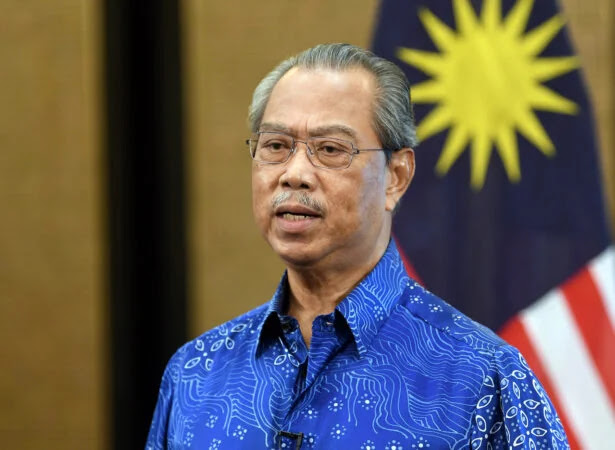
Prime Minister Muhyiddin Yassin has announced that Malaysia is now placed under the Movement Control Order (MCO). These also include locations that were previously designated as Conditional MCO and Recovery MCO which include states such as Penang, Johor, Sabah, Sarawak, Melaka and others. 

In the announcement, he pointed out that the country is now facing the third wave of COVID-19 infections which could potentially cause a national crisis. This wave is also discovered to include newer strains of the coronavirus that also has a high rate of infection.

PM Muhyiddin stressed that the country has exceeded 4,000 cases as of 10 May 2021, with a total of 37,396 active cases and 1,700 reported deaths related to COVID-19. He noted that the major cause of the increased number of cases is attributed to various public gathering activities which have caused difficulties in maintaining social distancing practices.

In light of this, the National Security Council (MKN) have decided to take drastic measures by implementing MCO nationwide, with hopes to curb the further spreading of COVID-19 in the country.

For clarity, here are all the SOPs as stipulated by PM Muhyiddin in his announcement:  

  • Interstate and interdistrict travel are not allowed. The exceptions being for emergency cases, or for health, work and economic related affairs, married couples who are located in different areas, or for vaccine appointments.
  • Public social gatherings such as weddings, tahlil, dinner receptions, birthdays, and events are not allowed. This also applies to official events, face-to-face meetings, seminars and study courses.
  • Marriage ceremonies are permitted but are required to adhere to the attendance restrictions and SOPs determined by JAIS for Muslims, and by the National Registration Department for non-Muslims. 
  • All sports and recreational activities involving multiple individuals are prohibited. However, personal activities such as jogging, cycling and regular exercises in public areas are allowed – provided that social distancing is maintained.
  • Educational institutions are required to close during MCO, but exceptions are given to students who will be sitting for international examinations. Meanwhile, daycare centres and kindergartens are allowed to operate with proper SOPs in place. 
  • Personal transportation, taxis and e-hailing services are only allowed to carry three individuals, including the driver. Meanwhile, the individual capacity for freight vehicles, as well as those used for economical and industrial purposes, are determined by the limit described on their respective business licences. 
  • As for public transportation, operators are required to maintain social distancing restrictions on their vehicles (LRT, MRT, buses) and also adhere to the SOPs that have been determined by the government.
  • The economic sector is allowed to operate throughout the duration of MCO. 
  • Dine-in at eateries is no longer allowed. Instead, the public is encouraged to rely on drive-thru, takeaways, and delivery approaches. 
  • Workplaces are required to instruct employees to Work From Home (WFH), and to also maintain not more than 30% of management staff to be in the office at all times. 
  • Open houses, house visits, and cemetery visits during Hari Raya Aidilfitri are not permitted. 
  • Mosques and suraus with a capacity of supporting more than 1,000 individuals are only allowed to host 50 attendees for Aidilfitri prayers, whereas those that could only support less than 1,000 may only allow a total of 20 attendees. 
  • Non-muslim places of worship will also see revised restrictions. These will be determined by the National Unity and Integration Department at a later date. 
  • Specific measures that are implemented in the states of Sabah and Sarawak, as well as the Federal Territory of Labuan, will resume accordingly.

The restrictions on inter-district and interstate movements as well as on social, sports, and education activities are already in place starting from today until 6 June, following the announcement made by the Senior Minister for Defense, Ismail Sabri Yaakob on 8 May.

As for other restrictions, they will be enforced on 12 May instead and will last until 7 June. Please keep in mind that the ones listed above are just a small number from a larger list of SOPs that is likely going to be revised by MKN.

Currently, other possible changes such as operating hours for premises and services such as food delivery and so on are still not known. It is quite likely that the complete list of updated SOPs from MKN will be issued to the public by tomorrow morning or so.

On that note, we’ll definitely keep you posted for any updates.

Friday, April 16, 2021

Fake Apple AirPods 3 Are Already Floating About


Frequent analyst of Apple products Ming-Chi Kuo said last month that the AirPods 3 will only enter production in Q3 of 2021. But it looks like that doesn’t stop counterfeits of the thing to break into the market early. Some have already ended up in the hands of consumers, too.

A couple of TikTok videos of the fake Apple AirPods 3 have already shown up on Twitter. And they look pretty much exactly as the images that have shown up online two months or so back. One of the videos even shows it being connected to an iPhone. It is even recognised as the “AirPods 4th generation”, bizarrely enough.

On one hand, it’s probably not all that surprising to find fake products in the wild. Even with unreleased stuff like the AirPods 3, making counterfeits are possible as long as images of them are floating about. But on the other, it is indeed strange than an iPhone recognises it as something that doesn’t officially exist.

At any rate, if you’re in the market for a new pair of TWS buds, definitely beware of counterfeits. And especially if you’re looking for the Apple AirPods 3 specifically, since they’re not actually even made yet, let alone out in the market.

Thursday, March 25, 2021

Elon Musk Rejects Claims That Tesla Cars Are Used For Spying On China


Tesla boss Elon Musk denied that the company’s cars, which come installed with cameras, are used for spying on the Chinese government or spying in general, Reuters and the BBC reported. His remarks, delivered to a major Chinese business forum via video link, come as the US government and US companies are increasingly accusing Beijing of cyber espionage.

Reuters earlier reported that China had banned Tesla vehicles from military facilities in a move reminiscent of US restrictions on Huawei. On notices about the new directive, the Chinese military apparently cited security concerns about the cameras installed on Tesla cars.

“There’s a very strong incentive for us to be very confidential with any information,” Musk said, according to Reuters. “If Tesla used cars to spy in China or anywhere, we will get shut down.”

According to BBC, he also questioned the point of spying. “Even if there was spying, what would the other country learn and would it actually matter?” Musk said.


Tesla made history in 2018 when it got approval for its Shanghai plant, making it the first foreign carmaker to have a wholly owned factory in China. Last year, the country contributed 30% of its total global car sales.

Unsurprisingly, Musk – a well-liked celebrity in China – called for greater mutual trust between China and the US. That’s probably a tall order, given that both countries are effectively engaged in what some would call as the “Second Cold War”.

In the meantime, Washington is ramping up restrictions on Chinese companies in the wake of a massive cyber breach blamed on China. And it looks like Beijing might be following suit.

Xiaomi Shows Off Physical Concept Of Vision Gran Turismo

At the very tail end of last month, Xiaomi unveiled the Vision Gran Turismo. The car was revealed as a digital hypercar, and one that’s made...