Showing posts with label Reportedly. Show all posts

Monday, December 19, 2022

Apple Reportedly Plans To Launch Updated MacBook Pro Lineup In Early 2023


Apple is expected to launch several new MacBook Pros and other Mac products with updated internals next year, along with a few external monitors in the works. This comes as the company seems to be failing to meet its 2022 deadline of completely transitioning its lineup of products away from Intel to its in-house Apple Silicon.

Reliable Apple leaker, Bloomberg’s Mark Gurman, claims that Apple will launch updated 14-inch and 16-inch MacBook Pros early next year, offering the highly-anticipated M2 Pro and M2 Max chipsets. Reports from earlier this month also hint at the updated models getting faster LPDDR5X RAM that would provide more bandwidth and consume less power.

Apple still only sells an Intel-powered high-end version of the Mac mini but that will apparently change soon as the tech giant reportedly plans to replace it with an M2 Pro-powered offering. The Mac Pro is expected to receive its long-delayed Apple Silicon treatment with a high-powered chip that Gurman speculates will be the M2 Ultra.

The report claims that the M2 Ultra is set to be equipped with up to 24 CPU cores, 76 graphics cores, and will be able to be configured with up to a whopping 192GB of memory. A higher-end variant dubbed the M2 Extreme would have offered double the amount of CPU and GPU cores, but Gurman says that this was scrapped because of the cost and complexity of fusing four M2 Max chips together, which would have apparently priced the Mac Pro at a minimum of US$10000 (~RM44220).
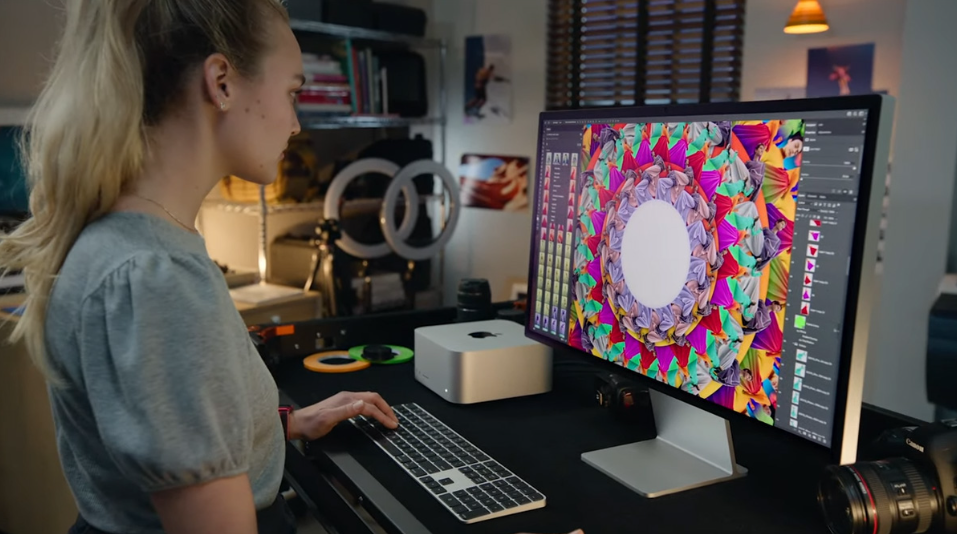

In related news, the Cupertino-based company is purportedly working on several new external monitors as an update to the Pro Display XDR. Just like this year’s Studio Display, the new monitors will be powered by Apple Silicon to use fewer resources from the attached machine.

The US$2 trillion (~RM8.84 trillion) firm is predicted to shift its Mac Pro assembly from Texas to Vietnam. It was forced to do the assembly in the US after political pressure from the Trump administration but with the new government, Apple can move its production back to Asia.

Wednesday, January 19, 2022

MY2022 Beijing Winter Olympics App Reportedly Riddled With Security Flaws

Canadian cybersecurity group Citizen Lab has released a report which listed down several security vulnerabilities in the MY2022 app which has been designed for extensive use at the upcoming 2022 Winter Olympics in Bejing next month.

For context, all participants, journalists, and attendees of the event are required to download the app 14 days prior to their departure to China. Aside from health monitoring, the app also includes features such as messaging, file transfers, Olympic news, and city guide services for Beijing.


According to Citizen Lab, the app fails to validate SSL certificates which means it is not able to properly verify to whom it is sending data. This would allow hackers to spoof trusted servers and display fake instructions to users, as well as access sensitive information in health customs forms.

Not only that, but the Toronto-based researchers also found that MY2022 fails to encrypt sensitive metadata, which includes the names of message senders, receivers, and their user account identifiers. This means that it is possible for a lot of parties including ISPs or even someone that is connected to an unsecured wifi access point, to access the data.

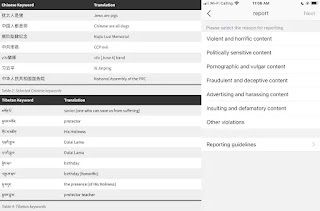
The most worrying part is the group found that the app allows users to report politically-sensitive content and uncovered a censorship keyword list in the Android version in a file named “illegalwords.txt”. The list contains 2,442 keywords, with the majority of them being politically motivated or involving vulgar words, though it appears that the list is inactive.

In response to the report, the International Olympic Committee (IOC) said that the MY2022 app has been independently assessed and was found to have no critical vulnerabilities. The Beijing Organising Committee for the games did not respond to the findings, but they released an update to the iOS version which did not fix any of the issues. Instead, a new feature called “Green Health Code” was added to collect travel document information and medical history information and was found to be similarly vulnerable.

Nevertheless, several countries have warned athletes not to bring their personal devices to China over fears of cybersecurity threats. For example, the U.S Olympic & Paralympic Committee have recommended the usage of burner phones as well as rental or disposable computers. On another hand, the Dutch Olympic Committee reportedly will be providing phones and laptops to athletes and staff which will be subsequently disposed once they come back from Beijing.

Saturday, November 27, 2021

Apple Reportedly Planning To Debut Its Self-Driving Car In 2025

It’s been a while since we heard anything substantial about Apple’s Project Titan electric vehicle, apart from a certain mishap back in September which involved one of its prototypes. Now, a new report by Bloomberg’s Mark Gurman claims to have acquired new information regarding the company’s first EV from people who are familiar with the matter.

As we’ve already covered when rumours regarding Project Titan first surfaced, Apple’s first EV is believed to be fully autonomous rather than a conventional one with semi-autonomous features. According to the insiders, new Project Titan lead Kevin Lynch insisted that the first model should be able to drive itself. 

Gurman’s latest report cites several sources supporting this particular tidbit, as well as the company’s aim to debut the vehicle in 2025. In regards to the latter, earlier rumours suggested that Apple originally envisioned to debut the car in 2024, but the plan was supposedly pushed back to sometime between 2025 and 2027.

Whether the company is able to meet the 2025 launch window for its EV mainly depends on whether it can complete its fully autonomous system on time, the insiders noted. Progress-wise, sources claim that Apple has supposedly finished much of the “core work” on the car’s processor.

Other than that, people familiar with the matter told Bloomberg that Apple plans to have its first EV to feature a lounge-like interior with a touchscreen infotainment system in the middle, but would lack a steering wheel or pedals. This further suggests that the vehicle would act as a fully-autonomous passenger shuttle rather than a standard car. In terms of safety, the sources added that the company intends to include a manual override mode in case of emergencies.


With four more years to go, it will definitely be a while until Apple is expected to officially announce or showcase its first ever EV. A fully autonomous system is indeed possible to an extent with current technology, but most of these rely on dedicated pathings with little to no interference or interaction with human-based traffic. That being said, it is not known whether the company’s vehicle is intended to be used on the road or for smaller-scaled use cases (such as in-campus transportation).

Monday, November 8, 2021

Sony And TSMC Reportedly Joining Forces To Tackle Chip Shortage With Japan’s Help

Japanese tech company Sony and Taiwanese semiconductor giant TSMC may be joining forces to help tackle the ongoing global chip shortage, according to reports published independently by Reuters and Nikkei. It is said that both companies are considering a partnership to co-establish a new semiconductor factory in Japan, which is expected to be up and running by 2024.

People familiar with the matter told the publications that the new plant will be based at a Sony-owned location in Japan’s Kumamoto Prefecture, close to the company’s own image sensor factory (shown above). The project is said to cost US$7 billion in investment from both Sony and TSMC, with half of it reportedly covered by the Japanese government. The new factory will be managed by the Taiwanese semiconductor giant, the sources added.

Reuters and Nikkei reports that the plant would manufacture chips for cameras, cars and other purposes – all of which have recently seen a drop in production capacity due to the ongoing shortage. Both Sony and TSMC declined to comment regarding this potential partnership when approached by the publications. Meanwhile, Nikkei believes that Japanese automotive parts manufacturer Denso is also interested in the project.

If accurate, the new factory by Sony and TSMC would definitely contribute to other efforts that are also aiming to ramp up the manufacturing of semiconductors. However, it will still take some time until it is able to help with the production, seeing that the plant will only be operational in 2024. Moreover, Sony and TSMC themselves – as well as other major companies such as IBM and Foxconn – have noted that the chip shortage will likely continue for another few years until the strong demand for semiconductors could be met.

Sunday, October 31, 2021

WhatsApp Reportedly Adding Pause And Resume Functions To Voice Notes

WhatsApp is working on yet another new feature for its mobile app, this time on one that enhances the voice recording experience. On top of receiving new timestamp transcriptions (a new addition which we’ve covered previously), the in-app voice notes feature will reportedly be getting the ability to pause and resume a recording.

A preview from WABetaInfo shows that the voice note interface seems to be overhauled. Instead of the current UI where users are required to hold the record button and slide to cancel, it now features a new “Stop” button when a voice recording is being conducted.  This enables recordings to be paused and later stitched together as a single continuous track, which is quite useful as you won’t need to send multiple voice messages in case you need to stop in the middle of recording.


WABetaInfo claims that this feature is still under development, and that it will eventually be rolled out to both iOS and Android devices that are opted-in to their beta programme on Play Store and TestFlight. Since the preview obtained is based on the iOS version, it is possible that the feature will first come to iPhone betas before being rolled out on Android.


WhatsApp has been developing multiple new features for the platform, with some have already been released on the public beta – such as the multi-device function, which lets up to four devices use the same account without being connected to your phone. Other than that, there is also a feature that lets you choose a default length for the app’s disappearing messages feature.

Tuesday, October 5, 2021

Apple Reportedly Cancels Plan To Release iPad Air With OLED Display For 2022

Earlier in June this year, renowned analyst Ming-Chi Kuo reported that Apple would be updating certain 2022 iPad models with OLED displays, starting with the next-generation iPad Air. However, according to a recent investor note obtained by MacRumors, Kuo now says the company has allegedly decided to exclude the Air variant from receiving this upgrade.

Instead, it is said that the company will continue featuring LCD displays for next year’s iPad Air model. The analyst states that one reason behind this was due to costs as well as quality concerns, which did not meet Apple’s expectations. This also seemingly corroborates with a report by The Elec that was published back in late September, which suggests that Apple has called off a joint-project with Samsung to use an OLED display developed by the South Korean giant for a forthcoming iPad Air model.

Meanwhile, an earlier prediction of Kuo’s suggests that Apple is upgrading the 11-inch iPad Pro to feature a mini LED display – a tech that is already included in the current generation 12.9-inch Pro model. It is also mentioned in the investor note that Kuo claims Apple intends to have the new 11-inch model to be the “focus of [the] iPad line in 2022,” and concluded that releasing an OLED-equipped iPad Air would be detrimental to its potential sales.

While Kuo’s track record of predicting future Apple’s releases has been accurate to a certain degree, it is still advisable to take the information provided by the analyst with a pinch of salt. Whether his predictions are accurate or not will only be determined when Apple officially unveils its 2022 iPad line-up, which – as most of us are aware – is still far off.

Friday, October 1, 2021

Amazon New World MMORPG Reportedly Still Killing GeForce RTX Graphics Cards

Back in July, reports began cropping up of Amazon’s MMORPG, New World, bricking NVIDIA GeForce RTX 30 series graphics card and more specifically, GeForce RTX 3090 models made by EVGA. The game has since gone live, drawing a massive wave of interest, and while EVGA itself has admitted to its own shoddy manufacturing issues with its RTX 3090s, there are still reports that the game is still causing other GeForce RTX cards to die.

Reports of New World’s ongoing GPU murder spree was picked up by the custom rig company, PowerGPU, who tweeted that many of their customers were emailing them about their GeForce RTX graphics cards that were bricked while playing -you guessed it – New World. In the same tweet, PowerGPU also says that all affected customers clearly never played the beta and it had been anticipating said issues since the issue came about.

 The serial killing doesn’t stop there either. WinFuture, the German tech publication, reported that its Gigabyte GeForce RTX 3090 Gaming graphics card also suffered the same fate after playing New World. This was despite the tech site enabling the game’s framerate limiter and the 60 fps limit in the NVIDIA GeForce driver; it says that the fans on the card still spinning furiously at 100% speed, before the display went black and the PC shut down immediately thereafter. There are also reports of the Gigabyte GeForce RTX 3080 Ti Eagle 12G and other RTX 3080 cards that suffered the same fate, too.


At this point, it’s clear that Amazon’s new MMORPG isn’t just singling out specific brands, but more to the point, it is also clear that the game is a hazard to all high-eng NVIDIA GeForce RTX 30 series graphics cards. So, despite Amazon’s claim that it isn’t the game’s fault, there is little doubt that it actually is. Until an actual fix is available or a full investigation into the issue is made, we strongly suggest that GeForce RTX owners hold off from playing the game.

AMD And MediaTek Reportedly Considering Joint Venture

It is being reported that AMD is in talks with MediaTek, with both parties seemingly interested in the idea of a partnership. Specifically, the collaboration could help AMD gain an edge over its CPU rival, Intel, the realm of 5G connectivity.

According to a report by DigiTimes (paywall), the partnership could enable MediaTek to integrate its own SoC and 5G technology into AMD’s own chips. While not wildly popular as its rivals in terms of chip preference, MediaTek’s 5G technology is still regarded to be one of the best in the mobile industry.

It shouldn’t come as a surprise to anyone in the know that this isn’t the first time AMD has dipped its toes into the mobile components pool. As it stands, the chipmaker already has an arrangement with Samsung, whereby the GPU segment of the Korean tech giant’s upcoming Exynos SoC will house at least six Graphics Compute units, powered by AMD’s Radeon RDNA 2 GPU architecture. This also isn’t the first time AMD and MediaTek have collaborated. Prior to this, both companies worked together to create the AMD RZ608 Wi-Fi chip, which ultimately got rebranded as the MT7921K.


On the other hand, this isn’t MediaTek’s first tryst with a GPU maker either. Back in April this year, NVIDIA licensed out its Ampere GPU IP to the Taiwanese semiconductor maker, for the purpose of creating a reference system and SDK for Google Chrome OS and Linux-based PCs. Then in July, during the annual Game Developers Conference, NVIDIA showed off a MediaTek and GeForce RTX 3060-powered Chromebook, running Wolfenstein Youngblood.

Thursday, September 30, 2021

Samsung Reportedly Cancels The Galaxy S21 FE

Despite the numerous leaks which have allegedly revealed its design and specifications, the supposedly upcoming and highly anticipated Samsung Galaxy S21 FE might not see a release in the end. Not long after a report suggesting its cancellation was published by South Korean website DelightIT.net a few days ago, Samsung is said to have silently removed any traces of the smartphone from its official online presence.

Even before a product is announced or released, the tech giant has been known to put up an upcoming device’s support page on its website across multiple regions. Most of the time, these pages usually bear a device’s model number, but lack the necessary documentation related to it – especially if its uploaded ahead of an official launch. Regardless, the support page’s existence is enough to suggest the product’s imminent release.

However, in the Galaxy S21 FE’s case, it has been found that Samsung has recently removed the support pages for the smartphone from its Hong Kong, Singapore, South Africa and other markets’ websites. According to SamMobile, which first reported the discovery, these pages now return an error message stating “Sorry this link is now unavailable”.

The phone was first expected to launch in August this year, but was then said to be delayed to September. Supposedly corroborating the latter rumour is a leaked photo shared by Max Weinbach, which allegedly revealed the Galaxy S21 FE’s branding being present in an unspecified Samsung store. However, as most of us are aware by now, the launch never came to be.

It is speculated that the ongoing chip shortage, among other potential factors, resulted in the supposed cancellation of the Galaxy S21 FE. If this is true, it will undeniably disappoint those who’ve been looking forward to a more affordable variant of Samsung’s current generation flagship.

Given that the phone was never officially announced, the company can easily claim that it has never existed in the first place – despite prior evidences or leaks. Samsung’s own Schrödinger’s cat, if you may.

Tuesday, September 28, 2021

iPad mini 6 Also Reportedly Exhibiting A Display Issue

It looks like the iPhone 13 Pro models aren’t the only newly launched Apple products experiencing display issues. According to 9to5Mac and The Verge’s Dieter Bohn, exhibited on the company’s new iPad mini 6 is a wobbling effect that occurs when content is moving quickly on screen when used in portrait mode.

The issue, also dubbed as “jelly scrolling” by both sources as well as owners of the tablet, is easily noticeable when scrolling up or down on a web page or certain apps (ie: social media). As demonstrated by Bohn in a Twitter post, it appears that one side of the 6th gen iPad mini 6’s display is refreshing slower than the other, thus causing content to appear as if it is wobbling. Strangely enough, he notes that the effect is not present when using the new tablet in horizontal orientation.

It looks like that this isn’t an isolated issue either, as an owner told 9to5Mac that the wobbling effect is also present on all iPad mini  6 demo units that are displayed in their local Apple Store. The company has yet to acknowledge and address the flaw, and it is still uncertain whether it is caused by the tablet’s LCD panel, its display controllers, or by its firmware/software.

Apple recently responded to the iPhone 13 Pro series’ refresh rate issue and promised to roll out a fix soon. With that, hopefully the company would also follow up on the 6th gen iPad mini and offer a potential solution for the display’s wobbling effect problem.


As previously reported, the iPad mini 6 will retail at a starting price of RM2,299, but its expected arrival in Malaysia has not been determined at this time. Meanwhile, all four iPhone 13 variations, which includes the standard, mini, Pro and Pro Max models, are slated to arrive locally next month on 8 October.

Wednesday, September 22, 2021

NVIDIA Reportedly Begins Selling Repurposed GA104 GPUs As GeForce RTX 3060 Cards

NVIDIA repurposing its higher-tier GPUs for lower-tier graphics card models isn’t groundbreaking news, by any measure of the definition. The GPU maker usually does this whenever it has a surplus of GPU dies in question and the higher-ups in the company decide to sell them to AIBs, who then sell them to customers directly.

Recently, a discovery by Twitter user Matthew Smith (@T4CFantasy) showed that NVIDIA has begun selling its GA104 GPUs in the shape and form of GeForce RTX 3060 cards. As a quick recap, the RTX 3060 shifted out with a GA106 GPU but that said, both GA104 and GA106 GPUs actually have similar designs when it comes to their pin layouts. Also, it was the RTX 3070 and RTX 3060 Ti that originally shipped out with the GA104 GPU, thus making this the first GA104-powered RTX 3060 with more than 8GB GDDR6 graphics memory.

On paper, the GA104-powered RTX 3060 still retains the same 3584 CUDA cores, as well as the same 12GB of GDDR6 graphics memory and 192-bit memory bus. However, to ensure that the card’s performance still falls within the parameters of an entry-level or mid-range card, approximately 42% of the GPU’s potential will be disabled. Versus the 7% of disabled cores in a GA106-driven RTX 3060.

As for when and where the card will be made available, there are no specific dates but Videocardz speculates that the GA104-based RTX 3060 could make its way into the North American and European markets first, before other countries in Asia (except China) begin receiving it. 

Tuesday, September 14, 2021

Android 12 Reportedly Scheduled For 4 October Launch

Google is allegedly gearing up to roll out the stable update of its Android 12 OS for mobile devices in October. To be precise, the search engine plans to launch the latest version of its mobile OS by 4 October.

Evidence of the rollout was first reported by XDA writer Mishaal Rahman, who managed to take a screenshot of an internal Google document that tells us when the search engine will cease approving software builds, based on Android 10, 11, and 12. According to the document, the OS is slated to be released via its Android Open Source Project (AOSP). While not mentioned, it is also likely that the final and stable build of Android 12 will rollout for Pixel phones first.


It’s relatively easy to see why Google is choosing to release the stable update for Android 12 on 4 October. As The Verge explains, it may have something to do with Android 10 and 11; both OS’ stable updates were released around the time of the year – 3 September 2019 for Android 10 and 8 September 2020 for Android 11. In the case of Android 12, one reason as to why its official launch date seems to be a month later may also be due to the fact that October is when Google intends to pull the veil back from the Pixel 6.

It would make sense if that were the case, as it would allow Google to kill two birds with one stone. However, it is important to note that, at the time of writing, there is still no set date for the Pixel 6’s launch and while the 4 October launch date seems promising, there is nothing to stop Google from pushing that date back.

Wednesday, September 8, 2021

Apple’s Plan For Periscope Cameras On iPhones Reportedly Halted Due To Samsung Patents

Rumours suggesting that Apple may be planning to include a periscope camera on future iPhone models have been circulating around since last year. Now, a recent report by The Elec has revealed that the company might be facing an issue to achieve this purported goal.

According to the South Korean news outlet, Apple allegedly planned to have its periscope camera to come with a ball actuator, a mechanism used to move the module’s interior lenses. However, this technological innovation is patented by rival smartphone maker Samsung, who’ve also featured the mechanism in the imaging systems featured on its flagship products, including this year’s Galaxy S21 Ultra.

The iPhone maker was expected to acquire the periscope camera modules from its long-time supplier LG InnoTek, The Elec reports. But this route may not be favourable for Apple, as the supplier procures its ball actuators from Samsung Electro-Mechanics – a move that will result in the Cupertino-based company to pay Samsung a patent license fee in order to use the technology for its future smartphone releases.


Similarly, the publication added that the same issue also plagued Apple’s decision to procure a potentially new optical image stabilisation (OIS) module by Jahwa Electronics. According to The Elec, the supplier raised concerns that it may not be able to supply the iPhone maker with the technology, due to the fact that it was co-developed together with Samsung and its Samsung Electro-Mechanics subsidiary.

With several obstructions being in the way, Apple is reportedly seeking alternatives to bypass the problem. It is suggested that the company is considering to either change the design of its periscope camera module altogether in order to avoid using the patented technology, or simply pay the patent license fee to Samsung.


Regardless, it will still take a while until we actually see a periscope camera on an iPhone, as it is said to only debut in 2023. But as always, such reports regarding this are unofficial at this current time, so be sure to take these rumours with a nice pinch of salt.

Hacker Group Reportedly Selling Rootkit That Plants And Hides Malware Within GPUs

Reports of a new rootkit that allows hackers to hide malware within GPU memory are beginning to surface. The most recent news was reported by Bleeping Computers, who allegedly discovered the rootkit being peddled across several of these forums.

Specifically, the hackers were selling a proof-of-technique concept that enables threat actors to store their malicious code within the GPU memory buffer, instead of hiding it within the RAM, as most malware is typically hidden. Doing this enables the malware to stay hidden from antivirus software, as said programs usually do not scan the memory buffer of the GPU.

This isn’t the first time that a malware of such nature has been created either. Six years ago, a hacker group called Team Jellyfish create the world’s first GPU-based malware, aptly named JellyFish. The rootkit was Linux-based and served as the foundation of other GPU-based rootkits that exist on the market.


As for which GPU the rootkit works on, the seller says that it only works on Windows systems supporting Open CL 2.0. In addition, the GPUs that were tested with the rootkit include Intel’s UHD 620 and 630 integrated graphics, NVIDIA’s GeForce GTX 740M, GTX 1650, and AMD’s Radeon RX 5700.

At the time of writing, the code had already been sold and that the seller is preparing a demonstration, in order to show how it works publicly.

Thursday, August 26, 2021

NVIDIA GeForce RTX 3090 Super GPU With 21Gbps GDDR6X Memory Reportedly In The Works

As NVIDIA reportedly preps its next-generation GPU architecture, Ada Lovelace, rumours have surfaced that the GPU brand plans on sending off its current Ampere lineup with one last hurray. That hurray, by the way, is rumoured to come in the form of a GeForce RTX 3090 Super.

Rumours of the RTX 3090 Super first came to light via prominent leakster Greymon55 (@greymon55), who said that the card was going to ship out with 10753 CUDA cores, which is 256 CUDA cores more than the current RTX 3090. Additionally, they also said that the card would require upwards of 400W of power to run, which clearly exceeds the current 350W TGP of the RTX 3090.

Less than a day after that rumour, another popular leakster, kopite7kimi (@kopite7kimi), posted more information about the RTX 3090 Super, saying that the card TGP was higher at 450W. Further, the card also would not have an NVLink unlike the RTX 3090, because SLI is pretty much dead at this point. On that note, it doesn’t appear that the card’s 24GB GDDR6X memory is getting increased, but until its launch, that is still up for change.

Another interesting plot point is that the RTX 3090 Super is expected to run on a new GA102-350-A1 architecture, along with GDDR6X memory running at 21Gbps. Again, for context, the GDDR6X on the currently existing RTX 3090 run at 19.5Gbps, which is already extremely fast. Even more interesting, though, is that kopite7kimi says that NVIDIA plans on launching the RTX 3090 Super before the year is out.

As exciting as this news may sound to us, it should also be noted that these rumours do not mention or affirm if NVIDIA also plans on releasing other Super variants of other RTX 30 series GPUs, including the RTX 3060, RTX 3070, and RTX 3080. That said, the chances of that happening for the latter two models are exceedingly slim, seeing how the company just recently launched the “Ti” versions of said cards.

If these rumours actually do become reality, it is also likely that NVIDIA’s AiB partners will have no choice but to fit their own custom-cooled versions of the GPU with no less than three 8-PIN PCIe power ports in order to run the card. That, or adopt the 12-pin power connector that NVIDIA uses on its Founders Edition cards.

On that note and as always, NVIDIA has neither confirmed nor denied the existence of such a card, as is the brand’s policy. So, take this news with a liberal sprinkling of salt.

Xiaomi Shows Off Physical Concept Of Vision Gran Turismo

At the very tail end of last month, Xiaomi unveiled the Vision Gran Turismo. The car was revealed as a digital hypercar, and one that’s made...