Showing posts with label Own. Show all posts

Tuesday, January 3, 2023

Sony Mocopi Can Be Your Very Own Motion Capture Kit


In today’s online world of YouTubers and live streamers, VTubers and VStreamers are starting to rise in prominence from what was once a ciche corner of the market. But having a virtual avatar instead of just revealing your real self has challenges of its own, primarily on the motion capture department. Sony has something that can be an affordable-ish solution, in the form of the Mocopi.

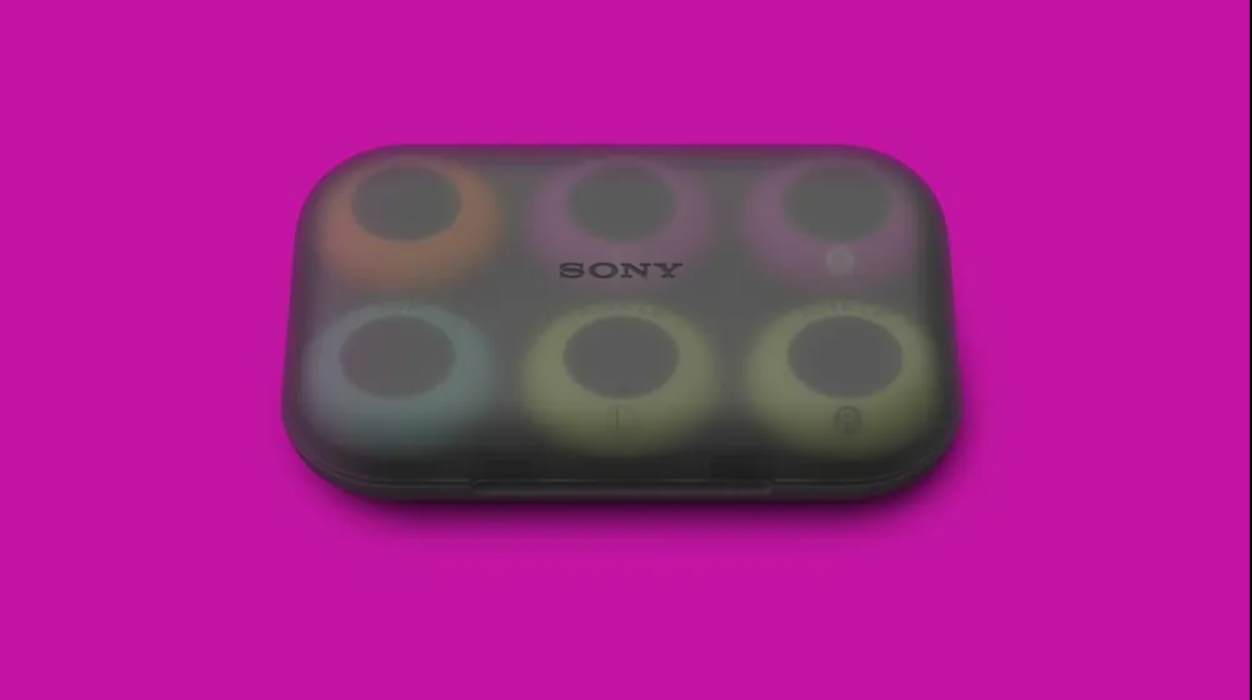
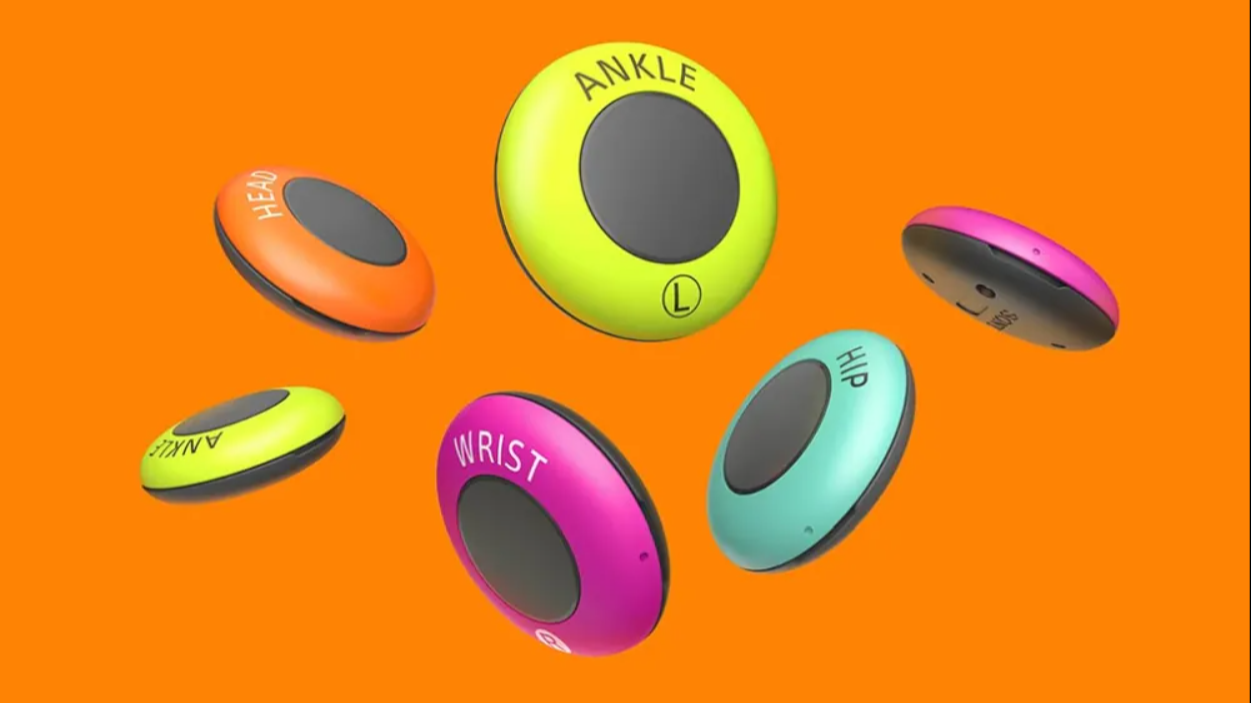
The Sony Mocopi is a motion capture kit that consists of six sensors, each about the size of, say, an Apple AirTag. Each measures 32mm across in diameter, and weights about 8g, and are labelled for which part of your body they are supposed to be strapped to – one for your head, one for your hip, one for each wrist and one for each ankle. They are also dust-proof and water resistant, with the usual IP65 / IP68 rating that you find on most of the brand’s smartphones. While we’re on the subject, the sensors also connect to phones via Bluetooth.



On the software side of things, the Sony Mocopi uses the company’s proprietary algorithm to translate physical motion into data. This can then be streamed to applicable software like VRChat. Or, should you prefer, you can also export your motion with an avatar as an MP4 video file. Being completely wireless, the Sony Mocopi set comes with a carrying case which also serves to charge the sensors. The company claims that each sensor has a battery life of up to 10 hours, and the case can charge each one up to full in 1.5 hours, or 90 minutes, via USB-C.

This is all pretty impressive-sounding, but there are a couple of issues that one can foresee some very specific use case issues with the Sony Mocopi. For one, there’s no indication on if it does finger tracking. The how-to video posted on YouTube indicated that there’s lip-syncing at least, but its accuracy remains to be judged.


Sony announced that it will be releasing the software development kit (SDK) for the Mocopi on 15 December, so that devs can get it to work on things like Unity and Autodesk MotionBuilder. A little later, consumers (in Japan at least) will be able to purchase it for JPY49500 (`~RM1600) in late January. No word on when or if it will be available elsewhere just yet.

Friday, October 1, 2021

Xiaomi Unveils Its Own Smart Glasses

Beyond phones, Xiaomi has made just about every other smart device under the sun. So it was only a matter of time before the company gave smart glasses a go. And it looks like that has finally happened, as the company announced the simply named Xiaomi Smart Glasses.

On the face of it, the company’s smart glasses works just about as you’d expect. As Xiaomi describes it, the company’s smart glasses uses MicroLED for its display, which is claimed to be longer lasting and has higher pixel density than OLED. It also works in quite the non-conventional way. Rather than just projecting an image in front of your eye, this pair of smart glasses uses a neat combination of reflection and refraction to direct images to the wearer’s eye, all with a single lens. 

While the Xiaomi Smart Glasses has its display on the right lens, the left side houses its 5MP camera. Compared to the smartphones of today, the pixel count is pretty modest. But it is still enough to allow for more than just taking photos. With it, you can get text translations in real time. For those worried about privacy, the camera also has an indicator light to let other people know that it is in use.

Overall, the Xiaomi Smart Glasses looks to be the smallest one among its kind, being just slightly bulkier than your average eye wear. It also weighs in at 51g. Though all that being said, the company did not say if it will actually be selling these smart glasses to the average consumer.

Wednesday, September 22, 2021

Riot Games To Release Its Own Game Launcher Soon

GOG Galaxy, EA Origin, and Steam are some of many game launchers that are currently available on PC. And if you happen to be a regular player of League of Legends (LoL) and Valorant, well… then get ready to add another one to that list.

According to Riot Games, the developer of the two aforementioned titles, the new launcher is aimed to unify all of its in-house games under a single platform and enable players to access them under a single sign-in. In addition, existing desktop shortcuts to titles such as LoL and Valorant will still work even after the rollout of its platform. However, it was not mentioned if accessing these shortcuts would directly launch their respective games, or redirect users to the new Riot Games Launcher.

From their description, the upcoming platform seems like it might function similarly to Activision-Blizzard’s BattleNet client, where each game features its own tab and respective page for launching it and receiving patch updates. At the same time, the overall launcher will also act as a central hub for users to easily keep up with the latest announcements, news, and events for each title. The developer ensures that the new launcher will be lightweight in terms of resource requirements.


The new Riot Games Launcher will first be available on 20 September for testing, and is expected to roll out to all players worldwide starting 4 October. The team noted that the latter is subject to change, should additional time be needed to iron out any issues as well as to add new features to the upcoming client app.

Monday, August 16, 2021

Xiaomi Now Has Its Own Robotic Dog: Powered By NVIDIA and Intel

Some think of quadrupedal robots as a marvel of science and engineering but there are those who feel that they are the stuff of nightmares. Whatever you think of them, you most probably would be surprised to know Xiaomi has decided to come out with its own four-legged robot.

Revealed alongside the new Mix 4 phone, it is hard not to be reminded of the Boston Dynamics’ Spot when we saw Xiaomi CyberDog for the first time. Powered by NVIDIA Jetson Xavier NX, the CyberDog also comes with servo motors developed by Xiaomi itself that are said to have a maximum torque of 32N⋅m and 220rpm maximum rotation speed.


Xiaomi also claimed that the CyberDog has a maximum walking speed of 3.2m/s and is able to perform complex actions such as backflips. The robot also carries a variety of sensors including touch sensors, a 13MP AI interactive camera, a 2MP ultra wide-angle camera, an ultrasonic sensor, six microphones, and a GPS sensor alongside Intel RealSense D450 Depth module, 8GB RAM, 16GB eMMC storage, and 128GB solid state drive.

All the hardware that Xiaomi has equipped into CyberDog allows it to have autonomous object tracking, obstacle avoidance, and navigation. Designed to carry a payload of up to 3kg, the robot is also able to follow its owner and can also be controlled via the accompanying remote control or smartphone app.


Running on Ubuntu 18.04 and Robot Operating System (ROS) 2, Xiaomi has also added three USB-C ports and one HDMI port to allow developers to craft their own add-on hardware or software for CyberDog. Comes standard with a 5.2Ah 112.3Whr battery, the 14kg quadrupedal robot has a battery life of around 1 hour.

In terms of pricing, Xiaomi is selling the CyberDog for RMB9,999 (~RM6,522) although only 1,000 units are being made available at launch.

Friday, April 16, 2021

Google Allegedly Boosted Its Own Ads System Over The Competition

The advertising space is a very competitive one among the big names in tech. Among them is the internet search giant Google. The company is allegedly gaming the ad market to give its own an advantage.

The Wall Street Journal reports that this program, known as Project Bernanke was revealed via court documents filed in an antitrust lawsuit in Texas. Under the project, Google makes use of historical data from publishers’ ad servers to undercut the competition. The internet search giant claims that this is comparable to data maintained by other buying tools.


That being said, the potential problem lies with the fact that Google is both the operator of a major ad exchange as well as a representative of buyers and sellers in the very same exchange. The company itself is also an ad buyer in the space. The combination of all these leads to the allegations that it can game the system to its advantage. More specifically, this allows it to not only undercut the competition, but also pay publishers less on winning bids. This amounts to insider trading, as the Texas court claims.

Incidentally, documents submitted to the Texas court were also unredacted. This may reveal the more secretive elements of the Google ad business. The company has been given the chance to refile a more “properly-redacted” version.

Xiaomi Mi Mix Fold Goes Official: Features The Company’s Own ISP and Liquid Lens Camera System


Still reeling from last night’s event which saw the launch of the expanded family members of Mi 11 Series that includes Mi 11 Ultra, Mi 11 Pro, Mi 11i, Mi 11 Lite 5G, and Mi 11 Lite, the Day 2 of Xiaomi Mega Launch has several significant revelations in tow as well. In addition to announcing its entry into the electric vehicle market, the Chinese tech giant has also unveiled its first-ever foldable device, the Mi Mix Fold.

Xiaomi is positioning its foldable debutant as a flagship device and apt enough, it is powered by the Qualcomm Snapdragon 888 processor. Adopting a similar form factor as per Samsung Galaxy Fold, the Mi Mix Fold is equipped with an 8.01-inch 60Hz WQHD+ flexible OLED display on the inside while there is also a 6.5-inch 90Hz AMOLED display with 2520 x 840 resolution on the outside.

In order to ensure the phone’s reliability especially its U-shaped hinge design, the company claimed that the Mi Mix Fold has been subjected to extreme tests that involved up to 1 million bends. Supporting 5G and Wi-Fi 6, the phone offers up to 16GB of LPDDR5-3200 RAM and 512GB UFS 3.1 internal storage.

The launch of Mi Mix Fold also marked the arrival of the company’s Surge C1 ISP chip which apparently took two years to be developed. The new chip apparently provides an improved 3A algorithm and enhanced the phone’s low-light focusing capabilities which also improved its autofocus, exposure, and white balance that subsequently allows the Mi Mix Fold to deliver high-quality image output.


Not only that, Xiaomi has also claimed that Mi Mix Fold is the first device in the world to feature a rather interesting optics technology called Liquid Lens. Paired with an 8MP sensor, the company said that the lens is really made from transparent liquid and its curvature is being controlled using a high-precision motor that allows users to access telephoto capabilities from 3x optical zoom up to 30x maximum zoom.

Aside from that, the 8MP Liquid Lens camera can also act as a macro camera with a focusing distance as close as 3cm. Other than that, Xiaomi has also equipped the new Mi Mix Fold with a 108MP Samsung ISOCELL HM2 sensor for its main camera and 13MP ultra-wide camera as well as a 20MP selfie camera.

Comes standard with a quad-speaker system that has been tuned by Harman Kardon and boosted by a 15V Smart PA amplifier, the Mi Mix Fold’s fingerprint reader is integrated into the phone’s side-mounted power button. Completing its basic specifications is a 5020mAh battery that can gain back its full capacity in just 37 minutes via a 67W wired fast charger.


The Mi Mix Fold’s international launch date is not yet known at the moment although it will be released in China in the middle of April with a price range of between CNY 9,999 (~RM 6,320) to CNY 12,999 (~RM 8,192). We will keep you posted if the new foldable is going to make its way to Malaysia, so stay tuned.

Thursday, March 25, 2021

Qualcomm May Make Its Own Nintendo Switch-Like Device


The Nintendo Switch has been in the news quite frequently as of late, with recent 4K output and DLSS reports. Qualcomm is likely taking some notes from the Japanese games company. Recent reports indicate that the mobile chip maker may be trying to board the hype train by making something similar.

Sources to Android Police say Qualcomm is planning its own Android-based games console with a “less traditional form factor”. More specifically, it will likely be running a custom version of Android 12. The device itself will look like a thicker, bulkier smartphone. It will also come with detachable controllers much like the Nintendo Switch Joy-Cons. It will also be packing a 6000mAh battery with Quick Charge.

Another similarity to the Nintendo Switch is that this Qualcomm device will have the ability to output to an external display. Though for now it is not yet clear if this will be via a mini HDMI or USB-C, or anything else entirely. Then it will also have the usual smartphone bells and whistles like GPS and even 5G connectivity. That being said, Android Police believes this will make use of the older X55 modem. The device will also not be able to act as a mobile phone, so no making calls and sending SMS from it.

The report also mentions that Qualcomm is aiming for a Q1 2022 release for its Nintendo Switch-inspired device. It may also come with a price tag of US$300 (~RM1240), but it’s unclear if this price includes the detachable controllers, or even the 5G connectivity. Distribution also seems to be direct sales or via US telcos, so it remains to be seen if the company intends to make it available anywhere else.

Saturday, March 13, 2021

Resident Evil Village Gets Its Own Phishing Scam


Last month, we saw scammers trying to phish for victims via fake Far Cry 6 beta invites. Now, it’s the turn of Resident Evil Village. The approach is pretty similar too, with this one using the guise of “early access invitations”.

Twisted Voxel reports that Capcom Europe has sent out a notice regarding this phishing scam. As before, the email comes from an official-looking email from the company. Capcom warns that it did not actually send out such emails, and that you shouldn’t download any files or reply to them. You should also delete the email to be safe.

The report also mentions that Capcom did indeed have a number of prior private beta tests for Resident Evil Village. These closed beta tests have taken place both before and after the game’s announcement. For those who are aware of these tests, then this phishing attempt will look even more legitimate. The scammers are likely trying to make use of this fact.

At any rate, there’s probably no need to be in such a hurry to experience Resident Evil Village. After all, the game will be released in early May. And if you own a PS5, you can use the Maiden visual showcase to scratch that itch a little while waiting.

Thursday, March 11, 2021

AirAsia Launches Its Own Chat Platform


Continuing its super-isation drive, AirAsia has officially introduced yet another service into its “super app” ecosystem although this particular offering is currently limited to AirAsia’s mobile app. Called airasia Chat, you can now communicate in real-time with other AirAsia app users, and connect with like-minded communities, as well as discover places to stay, eat, and play.

There are several main features within the new airasia Chat. Firstly, you can join the community chat rooms based on topics that interest you. You can also use channels to get the latest updates on AirAsia promotions, news, and more.

Among the top community chat rooms are Kuala Lumpur Travellers and Bali Travellers, while not surprisingly, the airasia.com promotion has the highest number of followers in the Channels category. In today’s announcement, AirAsia has promised that more chatrooms and channels should emerge as chat members grow.


Of course, chat wouldn’t be chat without one-to-one private conversations. According to the company, you can search for other users via nickname or sync your phonebook contacts to the app.

Another interesting feature of the new airasia Chat is the ability to communicate with other AirAsia passengers regardless of whether they are on the ground or up in the air. Naturally, the capability to chat while in the air is only available for those who are on AirAsia WiFi-enabled flights.

Additionally, you can set up a personal profile complete with a photo and play free games like Point Catcher, which gives you BIG points that you can spend on the services within AirAsia super app.

This all doesn’t seem much right now, but AirAsia promises more features in the future “which are on par with the best in the business”. Would that mean end-to-end encryption as provided by apps like WhatsApp and Telegram? We can’t say.

In its current state though, the airasia Chat is predictably centred around the company’s growing ecosystem and it seems more like a community forum for its customers than anything else. Then again, it is still interesting to see how the company will grow its new messaging platform as the airasia Chat is quite an oddball when compared to other services within the AirAsia’s super app ecosystem.

Wednesday, February 17, 2021

Dota Now Has Its Own Anime Series: Coming To Netflix This March


Over the years, the popular multiplayer online battle arena Dota 2 by Valve has been making histories in so many ways. From having millions of players throughout the world to tournaments that offer millions of dollars of cash prize pool, the game now even has its own anime.

Called Dota: Dragon’s Blood, the new series will be making its way to Netflix in Malaysia on 25 March 2021. Here is the synopsis of the series, as provided by the streaming service:

“The sweeping fantasy series tells the story of Davion, a renowned Dragon Knight devoted to wiping the scourge from the face of the world. Following encounters with a powerful, ancient eldwurm as well as the noble Princess Mirana on a secret mission of her own, Davion becomes embroiled in events much larger than he could have ever imagined.”

The new series is under the responsibility of Ashley Edward Miller as its showrunner and has previously co-written the screenplay for Thor as well as X-Men: First Class. In terms of the animation, it is being done by the well-known South Korean outfit, Studio Mir which is well-known for its work on The Legend of Korra and Voltron: Legendary Defender.


In fact, Ryu Ki Hyun who actually worked on both series will be involved in Dota: Dragon’s Blood too as its Co-Executive Producer. Netflix stated that the series will have eight episodes in total, so do look out for them on the service this coming March.

Xiaomi Shows Off Physical Concept Of Vision Gran Turismo

At the very tail end of last month, Xiaomi unveiled the Vision Gran Turismo. The car was revealed as a digital hypercar, and one that’s made...