Showing posts with label Production. Show all posts

Wednesday, January 19, 2022

NVIDIA Requests Temporary Suspension Of GeForce RTX 3090 Ti Production

NVIDIA seems to have made a sudden request to all of its board partners, asking them to halt the production of its soon-to-be announced GeForce RTX 3090 Ti graphics card. Effectively, this also means that NVIDIA’s original plan of launching the card later this month is clearly not happening.

The news was initially reported by TweakTown, whom got the news from their source. However, when asked why the GPU maker requested to “pause production” of its AiB partner’s custom-cooled RTX 3090 Ti, the source wasn’t clear. However, thanks to Videocardz, we now know that NVIDIA’s 11th hour request seems to stem from issues with the card’s BIOS and hardware but nothing else beyond that point.

The RTX 3090 Ti was first announced during CES 2022 earlier in the month, albeit briefly. At the time, the company confirmed what earlier rumours had speculated about the card: it would still retain the same 24GB GDDR6X memory, but clocked at a faster 21Gbps and required a much higher 450W TDP, conducted through a new 16-pin Microfit PCIe MOLEX connector.

In any case, we’re just going to have to wait on Team Green for further updates on the RTX 3090 Ti.

Wednesday, September 8, 2021

Xiao-i, a leading cognitive intelligence enterprise in China, has asked a Shanghai Court to Stop Production of Apple's iPhone 13


At the height of Apple's iPhone 13 production, it's being reported by Hong Kong's SCMP that a Chinese artificial intelligence firm has asked a Shanghai court to stop the production and sale of Apple’s iPhone in the country over a long-standing patent dispute involving virtual assistant Siri.

Shanghai Zhizhen Intelligent Network Technology, also known as Xiao-i Robot, last Friday applied to the Shanghai Higher People’s Court for a preliminary injunction to ban the manufacture, sale and export of iPhones containing Siri that infringe on its patent, according to the Chinese company’s statement that was posted on its official WeChat account on Tuesday.

Xiao-i Robot chief executive Yuan Hui said in the statement that Apple did not respect its intellectual property. “Apple should immediately stop the infringement, take down and stop selling the related products,” Yuan said.

The statement came a few hours before Apple, with a market capitalization of US$2.59 trillion as of Wednesday, announced a “special event” in the US on September 14, when the company is expected to launch its latest iPhone 13 line and other devices.

Responding to a request for comment on Wednesday, an Apple spokeswoman referred to the company’s previous statement issued in August 2020, when it refuted the allegations in Xiao-i Robot’s patent infringement lawsuit that sought 10 billion yuan (US$1.5 billion) in damages.

The 2020 statement read: "Siri does not contain features included in their patent, which relates to games and instant messaging … Independent appraisers certified by the Supreme People’s Court have also concluded that Apple does not infringe Xiao-i Robot’s technology."

In June last year, China’s Supreme Court ruled that Xiao-i Robot’s patent was valid, after multiple legal battles with Apple since 2012. The Chinese company first applied for its patent, described as a chat robot system that can complete conversations in natural language, in 2004. It was granted that patent in 2009, before Apple first integrated Siri with its iPhone 4s model in 2011.

Thursday, July 22, 2021

Intel To Discontinue Production of 10th Generation Ice Lake Laptop CPUs


Intel has announced that it is discontinuing the production of its 10th generation Ice Lake-U series CPU lineup. The news is a little surprising, especially given the fact that some of the CPUs have only been around for a little more than two years.

To be precise, the discontinuation of its 10th generation CPUs isn’t just limited to its Core series lineup, but also its Lakefield, Pentium, and Celeron lineup. The list of the affected CPUs is as below:

  • Intel Core i3-10110U
  • Intel Core i3-10210U
  • Intel Core i5-10210U
  • Intel Core i5-10310U
  • Intel Core i7-10510U
  • Intel Core i7-10610U
  • Intel Core i7-10710U
  • Intel Core i7-10810U
  • Intel Core i3-1005G1
  • Intel Core i5-1035G1
  • Intel Core i5-1035G4
  • Intel Core i5-1035G7
  • Intel Core i7-1065G7
  • Intel Core i3-L13G4
  • Intel Core i5-L16G7
  • Intel Celeron 5205U
  • Intel Celeron 5805
  • Intel Celeron 6805

As to why Intel is discontinuing its Ice Lake-U series, it is probably due to the fact that its current 11th generation Tiger Lake-U CPU series is obviously faster and more powerful. Due to their generally higher base and boost clocks.


On that note, manufacturers will still continue to accept orders for the listed CPUs until 22 October. After that, the last batch of these processors will then be sent off by 29 April 2022. Exceptions to the rule are the Core i7-10810U, Core i7-10610U, Core i5-10310U, and Celeron 5205U. Orders for these CPUs will still be fulfilled until 28 January 2022, and the final batch to be shipped out by 29 July the same year.

Saturday, June 19, 2021

Samsung Denies Rumours Of Delayed Galaxy S21 FE Production


South Korean news outlet ETNews published a report on Sunday revealing that Samsung has delayed the production of its unannounced Galaxy S21 Fan Edition (FE) smartphone due to component shortage. However, the article itself was taken down just hours after without any explanation.

When approached by Bloomberg in regards to the supposed delay, Samsung denied that such decisions were made. “While we cannot discuss details of the unreleased product, nothing has been determined regarding the alleged production suspension,” a spokesperson told the publication.

After ETNews’ now-deleted article was published, industry insiders also shared additional information which seemingly corroborates the rumour. Renowned leakster Ice Universe (responding to WinFuture’s Roland Quandt on Twitter) says that his contacts have confirmed that “something unexpected” has happened to the supply chain, but did not go into further detail. Meanwhile, South Korean insider Ianzuk on Naver hinted that Samsung has delayed the Unpacked Event for the Galaxy S21 FE by a couple of months from its original schedule. 

Back to the phone itself, it’s also worth pointing out that Samsung may have unintentionally confirmed the Galaxy S21 FE’s existence in their response to Bloomberg’s query, albeit vaguely. The device, much like the Galaxy S20 FE that was released last year, aims to deliver users a more affordable variant of this year’s flagship by toning down certain hardware or features. Using its predecessor as reference and also unofficial information from earlier leaks, there’s a chance that the Galaxy S21 FE may feature a flat Super AMOLED display instead of Dynamic AMOLED, slower charging speed, and downgraded lenses for its camera setup.


Unfortunately, we’ll only find out its official specs by the time Samsung decides it is ready to announce the new smartphone. Earlier rumours suggested that the upcoming Galaxy S21 Fan Edition is expected to launch sometime in August, although that may no longer be the case if word of its delay turns out to be accurate.

Wednesday, June 9, 2021

iPhone Screens With 120Hz Refresh Rate Enters Production


Rumours of an iPhone generation featuring a display with 120Hz refresh rate started with the iPhone 12. That didn’t happen, as all four variants sport the standard 60Hz refresh rate displays. But that didn’t stop the rumour from resurfacing for this year’s model. Such displays have reportedly entered their production stage.

South Korean news outlet The Elec reports that Samsung and LG have both started the production of said display. The outlet’s sources claim that the former started production in the middle of the month. The latter, on the other hand, began production more recently.

Also included in the report is the fact that this production run started a month early compared to last year. Apple itself made the request to start production earlier. This could suggest that the iPhone maker intends to introduce this year’s phones a month earlier than it did in 2020, which was in October.

While the 120Hz display is the more recent of rumours surrounding this year’s iPhones, they are not the only one. Others, some dating all the way back to 2019, include the lack of a Lightning connector port, or just ports in general. Then there’s the alleged design leaks of a mini variant, which contradicts the one on portless design.

Tuesday, June 1, 2021

Sony Introduces Fully Unstaffed Production Line At Malaysian TV-Making Factory


Sony has deployed its first fully unmanned production line at a TV-making factory outside Kuala Lumpur and plans to expand automation to other lines there too.

According to Nikkei Asia, the electronics giant is embracing this kind of technology to better compete with its South Korean and Chinese competitors. Indeed, the automation move is projected to cut production costs at the factory by 70% from fiscal 2018 levels by fiscal 2023.

The company is employing off-the-shelf robots, but is internally developing key elements such as control programming. It described full automation as challenging due to processes that involve parts that are difficult for robots to handle.


Unsurprisingly, with the shift to automation, Sony will gradually reduce the factory’s workforce of thousands, opting not to renew their limited-term contracts. The company also plans to automate audio equipment production at the KL factory after shutting its main audio equipment factory in Penang by September.

Once the automation technology is firmly rooted at the KL plant, the electronics giant will consider employing it at other factories as well. It’s extraordinarily timely considering the havoc COVID-19 has unleashed on global manufacturing. For example, Foxconn factories in India and Vietnam have recently seen work disruptions because of the pandemic.

On the flip side, automation does generally mean fewer jobs in the medium- to long-term, bringing with it economic, political, and social problems. Indeed, the loss of manufacturing jobs in the US (mainly due to technology) has caused considerable anger and resentment.

Monday, May 17, 2021

IBM Claims “World First” Title With Production Of 2nm Chips


IBM may have beaten the crowd today after claims that it has developed the world’s first 2nm chips. To state the obvious, the new chip is made with some relatively groundbreaking technology that won’t be found on the current 7nm process nodes.

IBM’s 2nm chip features exceptionally thin wiring – thinner and smaller than the width of a single strand of human DNA. To put in Axios’ words: the chip can also be fitted with up to 50 billion transistors in an area around the size of a fingernail.

While there are no official data and performance metrics of the chip yet, IBM says that its new chip could boast an improved performance of 45% over current 7nm offerings with the same power. Alternatively, the same chip could also be altered and tweaked, so that it may consume up to 75% less energy, but still maintain the same performance level as a 7nm.


While IBM may have taken the championship belt within the semiconductor industry, it is fair to say that that title will be challenged – most likely by TSMC – within a year or two. As for now, the world is still waiting on the arrival of 3nm chips, while the 5nm made its debut with Apple’s latest iPhone 12 series.

Saturday, May 15, 2021

Foxconn’s iPhone 12 Production In India More Than Halved By COVID Outbreak


A Foxconn factory in India saw its iPhone 12 production drop by over 50% due to a COVID-19 outbreak there which forced infected workers to leave their posts, according to a Reuters report citing sources.

One source told Reuters that over 100 Foxconn employees in Tamil Nadu – the state where the factory is located – have tested positive for the coronavirus, and that the firm has banned entry to the factory until late May.

“Employees are only allowed to leave but not to enter the facility since yesterday,” the source said. “Only a small part of output is being kept.”

The affected factory produces iPhones specifically for India – the second largest smartphone market in the world after China. Earlier in March, it was reported that Foxconn would shift some of its iPhone 12 production out of China and to India.


The move was thought to be based on rising labour costs (in China) as well as escalating tensions between the US and China. India has also tempted major smartphone manufacturers with attractive subsidies.

Since March, however, the COVID-19 situation has grown exponentially worse in India – by some estimates, new cases are exceeding 350,000 per day, with deaths in the thousands. A full statewide lockdown has been imposed in the state of Tamil Nadu, where the factory is, since Monday.

Monday, May 10, 2021

PS5 To Get Hardware Redesign; Production To Start In 2022

It looks like the PS5 may be getting a slight upgrade in a year or two. But so far, it looks like it’s not as major as going from the PS4 to the PS4 Pro. Instead, it may be something like the new, improved battery life version of the Nintendo Switch instead.

Taiwanese website DigiTimes reports that the PS5 will be getting a hardware redesign. Emphasis on the hardware part, going from a 7nm CPU to a 6nm one. The company may have preferred to use 5nm, but ultimately decided against it because it’s too expensive to do so.

This supposed hardware redesign will enter production in 2022. Which may mean that the improved PS5 consoles will only see the light of day very late that year at its earliest, or in 2023. It’s unknown what sort of performance increase that can be expected from this redesign. But the usual suspects are a slight performance increase, and maybe better power efficiency.

Though on the outside, the console is not expected to get any significant cosmetic makeover. Overall, it’s probably safe to expect the same minimal fanfare that the improved Switch saw. Which is to say none at all besides maybe a way to identify which one you’re getting if you haven’t already gotten a PS5.

Friday, May 7, 2021

IBM Claims “World First” Title With Production Of 2nm Chips

IBM may have beaten the crowd today after claims that it has developed the world’s first 2nm chips. To state the obvious, the new chip is made with some relatively groundbreaking technology that won’t be found on the current 7nm process nodes.

IBM’s 2nm chip features exceptionally thin wiring – thinner and smaller than the width of a single strand of human DNA. To put in Axios’ words: the chip can also be fitted with up to 50 billion transistors in an area around the size of a fingernail.

While there are no official data and performance metrics of the chip yet, IBM says that its new chip could boast an improved performance of 45% over current 7nm offerings with the same power. Alternatively, the same chip could also be altered and tweaked, so that it may consume up to 75% less energy, but still maintain the same performance level as a 7nm.


While IBM may have taken the championship belt within the semiconductor industry, it is fair to say that that title will be challenged – most likely by TSMC – within a year or two. As for now, the world is still waiting on the arrival of 3nm chips, while the 5nm made its debut with Apple’s latest iPhone 12 series.

Monday, May 3, 2021

Apple M2 Chip Enters Production; Could Launch In July


The Apple M1 chip has been put into a fair number of the company’s new products. But it looks like the iPhone maker is already gearing up for the chip’s successor, likely to be known as the M2. A new report indicates that the chip has entered production this month.

Sources to Nikkei say that these new M2 chips will power Macs that will be launched as soon as July. This may mean that Apple will be officially announcing these M2 chips, as well as the new Macs, during WWDC in June. As we’ve seen with the inclusion of the M1 in the iPad Pro, the new M2 will likely also make its way to the company’s other devices down the line.


The chip itself is currently being made by TSMC, using what is called the 5nm plus. While it’s a very new process, the company is already taking things further, currently working on 3nm and 2nm processes.

But back to Apple. Having two chips could see quite the clear separation of tiers, for lack of a better term, between products. Top-of-the-line models in the future may sport the newer, presumably more powerful M2 chip. Meanwhile, the M1 will go instead into refreshes of other devices like the iPad Air.

Sunday, April 18, 2021

Apple Feels The Pinch Of Global Chip Shortage; Delays MacBook, iPad Production


Apple’s production for the MacBook and iPad has officially been delayed and it’s all due to the global chip shortage. According to a report by Nikkei, the fruit company has pushed back a portion of its component order for the two products from the first half of the year to the second half.

The delay is a clear sign that even giants like the company from Cupertino isn’t immune from issues like the ongoing components famine that was brought about by the ongoing COVID-19 pandemic. An issue, by the way, that is affecting a company with one of the most complicated supply chains in the world, and its insane ability to mobilise its suppliers in extremely short notices.

For what it is worth and perhaps as a form of consolation to Apple, the company isn’t alone in this. Its rival, Samsung, isn’t faring much better in this climate and if that wasn’t bad enough, it was also forced to shut down its Texas factory back in February, after an apocalyptically cold winter storm swept through the US state. Causing power outages and leaving its residents in the dark.


Outside the realm of smartphones, the chip shortage has also affected the production line for PC components, chief among them being the GPU. To make matters worse, that shortage is further compounded by the unscrupulous actions of scalpers and GPU miners, the latter brought about by the crypto-boom in the value of Bitcoin.

At the time of writing, Apple did not comment on any of the reports.

Tuesday, March 30, 2021

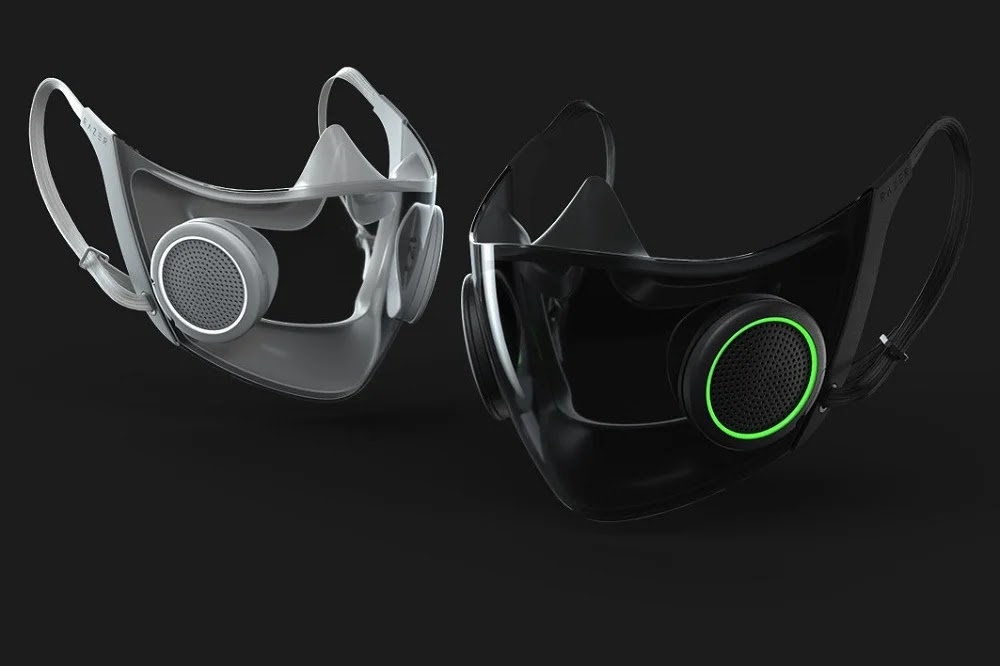
Razer Greenlights Production Of Its Project Hazel Face Mask


When Razer first revealed that it had converted some of its manufacturing lines to produce face masks last year to help fight the on-going pandemic, fans joked that it wouldn’t be long until we see a branded mask with RGB lighting. Lo and behold, the gaming firm did just that and revealed its Project Hazel face mask concept during CES 2021.

Fast forward back to present time, Razer CEO Min-Liang Tan has recently revealed during an interview with Yahoo! News that the company will begin production for its N95-rated RGB face mask. “You still have to be masked up because there is still the risk factor that even if you’re vaccinated, you still need to be incredibly careful,” said Tan. “So with that in mind, we are going to go ahead and solve the sustainable aspect of the mask which is one of the big things for us. Project Hazel is going to be a reality.”

Besides featuring the brand’s signature Chroma RGB lighting, Razer’s Project Hazel mask is also equipped with quality-of-life and health-related tech enhancements. Its front portion is mostly transparent which allows others to still see your mouth move when you speak. Meanwhile, on its sides are ventilators that not only purify air, but also come with microphones that pick up your voice and output it externally via amplifiers.

Surrounding the back is a silicon guard that prevents outside air from entering between your face and the mask itself. Its ear loops are also fully adjustable, ensuring for a perfect and comfortable fit for all users.

Unfortunately, Tan did not reveal when the production version of Project Hazel is expected to be released, and the same can be said for its pricing as well. It’s very likely that the hi-tech Razer mask will not be cheap, given that both the brand’s cloth-based face mask sold for RM99 locally. That being said, there’s also a chance that the upcoming mask would also be sold out in mere hours, so do keep that in mind just in case you’re planning on procuring a unit for yourself.


Oh, just in case you missed it. Razer also recently unveiled its own reusable and collapsible stainless steel straw, which you can purchase now via its official website for only RM99. Unlike the Project Hazel mask, however, the straw does not feature RGB lighting. Bummer.

Thursday, March 18, 2021

Apple AirPods 3 Will Only Enter Production In Q3, Analyst Says


The Apple AirPods 3 has been the subject of many rumours for the past month. Images claiming to represent the TWS buds appeared last month, with accompanying rumours that it will launch sometime this month. Analyst Ming-Chi Kuo, on the other hand, has said that they won’t even be made until the third quarter of this year.

According to AppleInsider, Kuo said that Apple has scheduled for the production of the AirPods 3 for the aforementioned time window. This also serves as a retraction to a previous prediction he made, when he thought that the new AirPods will launch in the first half of 2021. That being said, he did not explain the reason behind the later-than-expected production of the TWS buds.


If this is accurate, then that’s one less thing to expect in the rumoured upcoming Apple event next week. Naturally, if the Apple AirPods 3 will only enter production in Q3, an announcement next week would be too early. Instead, it would probably be showing up with the iPhone 13, assuming it remains a year-end announcement.

But at any rate, Apple has yet to say anything about the upcoming event, or indeed the AirPods 3. If an event is indeed being planned for next week, we should hear about it pretty soon.

Saturday, March 13, 2021

Foxconn Shifting Some iPhone 12 Production Away From China To India


China’s already eroding reputation as the ‘world’s factory’ has taken another hit. Taiwan manufacturer Foxconn is set to shift some of its iPhone 12 production away from China to India, Nikkei Asia reported.

Up to 10% of Foxconn’s iPhone 12 production will be moved to a factory in Tamil Nadu, a southern state in India, the report added. This would mean that the phone would no longer be exclusively produced in China, which faces increasingly stiff competition from India and Vietnam.

Foxconn has long based most of its operations in China, but increasing labour costs and deepening US-China tensions has prodded it to look elsewhere. Understanding this, India has deftly exploited the situation by tempting major smartphone manufacturers with attractive subsidies.


All iPhones are manufactured by three Taiwanese firms: Foxconn, Pegatron, and Wistron. Foxconn already makes older iPhone models in India, while Pegatron and Wistron have plans to expand there, Nikkei Asia said.

But India isn’t the only beneficiary of this larger shift. Foxconn will begin producing iPads in Vietnam this year – something it previously did only in China. Furthermore, Pegatron set up shop in Vietnam last year in March.

It isn’t like Beijing is unaware of the problem. A top Chinese leader recently opined on the weaknesses and vulnerabilities of the country’s manufacturing sector.

Friday, January 8, 2021

Intel To Discontinue 300-Series Chipset; Production To End By July


Intel has announced that it is discontinuing the production of its 300-series chipset and along with it, the corresponding motherboards. The lineup includes the H310, H370, Z370, and Z390.

According to sources, production of the chipset will end by July this year, but the sales of its motherboards, as well as its mobile chipsets, will only come to a halt by January 2022. Intel’s decision isn’t all too surprising and par for the course. Last year, the chipmaker officially discontinued the production of its 8th generation Coffee Lake CPUs back in June 2020.

That isn’t to say that the company hasn’t abruptly pulled the plug on its product line before, the most recent being its 9th generation Coffee Lake refresh line, which gave the world the still powerful Core i9-9900K and its follow-up, the 9900KS.

The discontinuation is also a way for Intel to move forward with its next-generation chipsets. As it stands, the Blue team is playing a desperate game of catch up to its rival, AMD, and with its upcoming 500-Series chipset, it will finally be able to offer its customers access to PCIe 4.0, a features that its rival introduced to the world with the launch of its Ryzen 3000 series desktop CPUs and own AM4 500-series chipset.

Moreover, the new 500-Series chipset will introduce a new LGA1700 socket, which will officially replace the current LGA1200 socket currently in use by its Comet Lake-S CPUs.

Xiaomi Shows Off Physical Concept Of Vision Gran Turismo

At the very tail end of last month, Xiaomi unveiled the Vision Gran Turismo. The car was revealed as a digital hypercar, and one that’s made...