Showing posts with label 2022. Show all posts

Thursday, July 28, 2022

Motorola Razr 2022 To Get Qualcomm Snapdragon 8 Plus Gen1 Chipset

The Motorola Razr of 2022 has made a physical appearance in some capacity, confirming leaks that it will look quite different compared to before. But the way it looks aside, other things that we know of the device come from leaks. Though on this front, some things have changed, as the company has revealed two bits of info on what the phone packs.

As Android Authority reports, the company has shared on Chinese social media Weibo that the Motorola Razr 2022 will come with a Qualcomm Snapdragon 8 Plus Gen1 chipset. Considering that it hasn’t gotten an official launch yet, this is good news. The base Snapdragon 8 Gen1 would be just a little out of date by the time the phone becomes available.

Separately, one post which the report attributes as coming from a Motorola executive states that the Razr of 2022 will also get a 3500mAh battery. By today’s standards, that is a pretty small battery for a smartphone. But hopefully with the more efficient chipset, it would be enough for the foldable phone to last a day at the very least. The executive also claims that the phone will also have good battery management, which would be nice if it’s true.


Beyond these two points though, we’ll still have to go with what we know from previous leaks. Leakster Evan Blass has claimed that the Motorola Razr 2022 will have a Full HD+ display, either 8GB or 12GB of RAM, 256GB or 512GB of storage space, a 50MP primary + 13MP wide angle and macro camera combo, and a 32MP punch hole secondary camera.

Whether or not these are accurate, we will have to wait for the launch to find out. On that note, the report claims that Motorola will be officially unveiling the Razr 2022 on 2 August, so it won’t be too long a wait.

Wednesday, January 19, 2022

SK Hynix To Discuss 896GB/s HBM3, 27Gbps GDDR6 Memory During ISSCC 2022

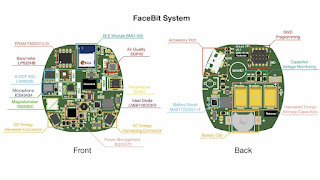
Facemasks being a trend may not be intentional, but researchers are taking the extra step to make them do more. The folks at Northwestern Universtity have developed what’s called a FaceBit. Described as the “Fitbit for the face”, the researchers say it can turn any face mask into a smart monitoring device.

The FaceBit chip attaches itself to a mask using a tiny magnet, and it works with just about any mask, from the N95 to the more basic surgical and cloth masks. It has some of the features that you’d expect to see on a smartband hence the brand namedrop. To start, it measures heart rate using subtle head movements from blood being pumped through its vessels.

It also detects poor fitting masks by detecting a dip in mask resistance. Though the researchers point out that the FaceBit is yet to replace the usual fit test of an N95 mask. All the data collected is then used to monitor a person’s stress levels. The chip can then ask its user to take a break, for example.


The FaceBit prototype runs on a battery that recharges itself using breathing force, heat, motion and solar energy. This allows it to stretch its battery life up to 11 days. But the researchers are still working on making it completely battery free.

For now, the FaceBit chip still has to go through a long list of tests before it is ready for real-world use. But the researchers have released the project code and hardware to the public so that others can help build and verify it.

SK Hynix To Discuss 896GB/s HBM3, 27Gbps GDDR6 Memory During ISSCC 2022

SK Hynix, the South Korean memory manufacturer, is now expected to reveal, as well as speak at length about its latest and faster HBM3 memory standard. The new memory is reportedly capable of achieving speeds of up to 896GB/s, up from the initial 820GB/s that was first touted when it launched its 12-Hi HBM3 last year.

Details about the new memory is still scarce but what is confirmed is that the presentation and Q&A sessions are set to be held during the International Solid-State Circuits Conference (ISSCC) that is scheduled to take place from 20 February until 24 February next month. Like its predecessor, the new HBM3 memory is expected to be a 12-layer DRM, with a capacity of 196Gb or 24GB. How this is achieved is through a process called Through Silicon Via (TSV) auto-calibration and machine-learning optimisations.


In addition to the new ultra-fast HBM3 memory, SK Hynix also plans on speaking about its new T-Coil 27Gbps GDDR6 memory. Naturally, that would make it faster than Samsung’s own GDDR6 memory, which currently runs at 24Gbps and is currently being sampled.

Wednesday, October 6, 2021

NVIDIA Rumoured To Launch GeForce RTX 3090 SUPER In January 2022

Back in September, a leak sprung forth from NVIDIA’s rusty pipes, alleging that the GPU brand was already preparing to launch a “SUPER” class lineup of Ampere-powered GeForce RTX 30 series graphics cards. Recently, a new rumour is hinting that NVIDIA could launch its RTX 3090 SUPER as early as January next year, along with a couple of other cards.

Rumours of NVIDIA’s alleged launch plans first came to light via a Tweet from user hongxing2020 (@hongxing2020), who claims that the RTX 3090 SUPER, which is obviously an updated model of the current RTX 3090, will be the first card of the SUPER lineup to be announced next year. In addition to that, hongxing2020 also claims that NVIDIA will launch two more cards: an RTX 3070 Ti with 16GB GDDR6X memory and a resurrected RTX 2060 from the Turing era, but one with 12GB GDDR6 memory.

Stating the obvious yet again, the RTX 3070 Ti 16GB is clearly expected to be placed above the current RTX 3070 Ti, seeing how it has double the graphics memory. As for the 12GB variant of the RTX 2060: if the tweet rings true, then it serves as a confirmation of a rumour that first made its way online at the start of the year.

Of course, as with all rumours and leaks, we do suggest that you take hongxing2020’s tweet with a liberal sprinkling of salt, especially since it is missing the more important information pertaining to the other SUPER cards, including the RTX 3080 SUPER and RTX 3060 SUPER.

Tuesday, October 5, 2021

Apple Reportedly Cancels Plan To Release iPad Air With OLED Display For 2022

Earlier in June this year, renowned analyst Ming-Chi Kuo reported that Apple would be updating certain 2022 iPad models with OLED displays, starting with the next-generation iPad Air. However, according to a recent investor note obtained by MacRumors, Kuo now says the company has allegedly decided to exclude the Air variant from receiving this upgrade.

Instead, it is said that the company will continue featuring LCD displays for next year’s iPad Air model. The analyst states that one reason behind this was due to costs as well as quality concerns, which did not meet Apple’s expectations. This also seemingly corroborates with a report by The Elec that was published back in late September, which suggests that Apple has called off a joint-project with Samsung to use an OLED display developed by the South Korean giant for a forthcoming iPad Air model.

Meanwhile, an earlier prediction of Kuo’s suggests that Apple is upgrading the 11-inch iPad Pro to feature a mini LED display – a tech that is already included in the current generation 12.9-inch Pro model. It is also mentioned in the investor note that Kuo claims Apple intends to have the new 11-inch model to be the “focus of [the] iPad line in 2022,” and concluded that releasing an OLED-equipped iPad Air would be detrimental to its potential sales.

While Kuo’s track record of predicting future Apple’s releases has been accurate to a certain degree, it is still advisable to take the information provided by the analyst with a pinch of salt. Whether his predictions are accurate or not will only be determined when Apple officially unveils its 2022 iPad line-up, which – as most of us are aware – is still far off.

Monday, October 4, 2021

Alleged Intel ARC Alchemist Graphics Card Renders Leak; Launching In Q2 2022

Alleged renders of Intel’s soon-to-be released ARC Alchemist graphics cards have seemingly made their way online. Well, artistic impressions of the cards, to say the least.

Potential renders of the ARC Alchemist’s was first posted by prominent speculator, leakster, and YouTuber, Moore’s Law Is Dead, who says that they had made a request to their friends. Asking if they could do a simple animation of the Intel graphics card’s cooler shroud, based on the accummulated information around it.

Now, this isn’t the first time the YouTuber has leaked details of the Intel’s unreleased consumer-ready GPU. Back in April and when the card was still referred to by the Xe-HPG moniker, the channel had managed to procured images of what was supposedly engineering samples of the GPU’s cooler shroud.


In this case, the renders show the card’s cooler shroud in silver, rather than black. In addition, the 8+6 Pin PCIe connectors can be seen situated at the end of the card’s PCB, although the cooler extends a little further past it; a design trait that both NVIDIA and AMD have adopted for some time now.

In addition to the renders, Moore’s Law Is Dead also speculated that Intel could be gearing up to launch its first-ever ARC Alchemist lineup sometime during the second quarter of 2022, which is also the expected launch window for the chipmaker’s 12th generation Alder Lake mobile CPUs and next-generation gaming laptops.

As always, this is alway merely speculation and as such, take this news with a large grain of salt.

Friday, October 1, 2021

4K Nintendo Switch Dev Kits Do Exist; Consumer Units Could Arrive On Store Shelves By 2022

Come 8 October, the Nintendo Switch OLED model will be available for purchase, first in the US. As its name implies, the new Switch will feature a new OLED display, but not one with the 4K resolution that many fans had initially expected. It’s a move by Nintendo that, frankly, surprised game developers and for a pretty damn good reason to boot: many of them say that they had developed their respective titles with Switch development kits that were capable of supporting 4K graphics.

According to Bloomberg, developers working at no less than 11 game companies confirmed that their teams were definitely in possession of 4K-capable Switch dev kits. The developers aren’t just small-time companies either; while they had asked not to be named, there is little doubt that several of them would be prominent studios and companies.

In light of the report, Nintendo responded to Bloomberg soon after, saying that its reports about the 4K Switch dev kits was merely “inaccurate” and did not elaborate on any of its statement any further. It also reiterated that it had no plans for any other Switch models beyond the OLED variant at the current moment.


Despite the refute, developers that claim that they are developing 4K titles for Switch, say that their games should be out sometime “during or after” the second half of 2022. If that is to be believed, then it is likely that a Nintendo Switch capable of 4K output would also be made available around the same time.

Monster Hunter Rise Comes To PC On 12 January 2022

Monster Hunter Rise was released for the Nintendo Switch earlier in March this year. One would think that it would be either six or 12 whole months before a PC port made an appearance. At the Tokyo Games Show, Capcom announced that it was neither, but closer to the latter. Specifically, the game will be available on PC from 12 January 2022 onwards.

The PC version of Monster Hunter Rise will come with all the extra features that you’d expect for the platform. Among them are things like widescreen support, 4K resolution, higher framerates and better higher resolution textures. It will also come with in-game voice chat support.


Being released so late in its life cycle, the PC version of Monster Hunter Rise will also come with all the DLC that’s available to the Nintendo Switch, at least up until November 2021. For those who want to experience the game earlier, Capcom also says that a demo for the game will be available on 13 October.

Prior to the PC release of Monster Hunter Rise, Capcom also announced an expansion for the game, Sunbreak, which is set to release in summer 2022. For those of us without four seasons, this means between late June and late September. And it will be a simultaneous release for both platforms. Which makes the timing of the base game’s PC port a little strange, if not outright late.

Gungrave GORE Brings A Sequel To The Series In 2022

Gungrave was a popular name back in the early 2000s, but faded into obscurity after. The name came back again in 2019, when a trailer for a new sequel appeared. And now, it looks like the game has, at the very least, a release window.

The new trailer has a dark but wacky intro, and shows off a sprinkling of new gameplay footage, but that’s about it. Though as part of that last bit, we see that Bunji Kugashira, a recurring villain in the first two games almost two decades ago, will be playable. Though it doesn’t look like he has a unique moveset, as his attack animations look the same as Grave’s.


Speaking of which, despite the modern graphics, it looks like Gungrave GORE will have the same kind of gameplay as the original. While it looks like the quintessential gameplay style of the series, it’s bound to rub some people the wrong way, the same way the originals did back in the day.

At any rate, Gungrave GORE is developed by South Korean studio IGGYMOB, and published by Prime Matter of the Embracer Group. It doesn’t yet have a specific release date. Instead, it will be released sometime in 2022, for both generations of both consoles, as well as PC.

Sunday, September 5, 2021

Porsche Assembly Plant In Malaysia To Be Operational In 2022

It is something that has been rumoured for quite some time but Porsche and Sime Darby have finally confirmed that they are working together to set up an assembly plant in Malaysia. The new endeavour is part of the German automaker’s effort to strengthen its presence in Southeast Asia which has seen an increase of 9% in terms of deliveries last year despite the challenges presented by the COVID-19 pandemic.

Sime Darby is currently Porsche’s exclusive importer and distributor in Malaysia although the relationship between both companies has been going on for more than 10 years. The company also has almost 40 years of experience in vehicle assembly and operates a facility in Kulim that assembles vehicles for Hyundai, BMW, Land Rover, MINI, and Mazda.

Interesting enough, the Malaysian facility will be the first Porsche’s assembly plant outside of Europe. Not only that, Porsche also has noted that the vehicles assembled there will be made available exclusively for Malaysia.

At the moment, Porsche and Sime Darby have not yet disclosed which models will be assembled at the new facility. Nevertheless, both companies have said that production at the plant will begin in 2022.

Tuesday, July 13, 2021

Secretlab Launches TITAN Evo 2022 Series Gaming Chair With Improved Design And Features


Secretlab announced its 2022 Series gaming chair lineup and from the looks of it, the brand is streamlining both its Omega and Titan series into a single chair. That chair is the TITAN Evo 2022 and it comes in three different sizes, along with a handful of new design upgrades and features.

In regards to chair size, the TITAN Evo 2022 is available in either Small (S), Regular (R), or Extra Large (XL). Each size is designed to accommodate individuals within a specific weight category. In addition, Secretlab says that the S and R models have been refitted with shorter hydraulics and “improved design engineering” that should allow users’ feet to stay flat on the ground.

Moving on, the TITAN Evo 2022’s seat now uses what the brand calls a Pebble seat base that is supposedly a combination of the seats from its Omega and Titan lineup. Then, as now, the chair’s upholstery is available in two textures: Secretlab’s new NEO hybrid leatherette and a new and imrpvoed SoftWeave Plus fabric. Regarding the former, the NEO hybrid leatherette is 12 times more durable than its standard PU leather, which we’re guessing means that the material won’t peel off so easily after prolong use.

As for the new and improved features, let’s start with the seat of the TITAN Evo 2022; it’s fitted with the brand’s proprietary cold-cure foam mix that it says helps to distribute a user’s weight easily and relieve pressure over long hours of sitting.

On another note, even the chair’s lumbar support system has been upgraded with a new 4-way L-Adapt system that not only enables users to adjust it in or out, but also up or down. Depending on how much lower or higher your spine is. In addition, the lumbar system also has a lattice of living hinges that Secretlab says can intelligently adapt to the curvature of one’s spine.

Of course, it comes as no surprise that the 4D armrests on the TITAN Evo 2022 are now magnetic and hot-swappable, courtesy of the new CloudSwap system. As for what’s available as a replacement to the original armrests, there is one custom-made model that is filled with a heat-dissipating gel, with more designs and materials to be announced over the chair’s shelf life. Lastly, the memory foam head pillow is now magnetic and snaps effortlessly onto the headrest of the TITAN Evo 2022, doing away with needless fiddling of straps.

Friday, June 18, 2021

Next-Gen PS VR Reportedly Planned For End Of 2022 Release


Sony Interactive Entertainment officially announced the next-generation PS VR headset. But the company did not provide a release date, beyond that it won’t be out this year. But a new report suggests that it will be out at the end of next year.

Bloomberg has a new report about a Japanese LCD maker pivoting its focus from phone screens to VR. But in it, the report also mentions the successor to the original PS VR. It claims that the company is looking to release it in “the holiday period of next year”. It also mentions that he headset will be using OLED panels provided by Samsung for its display.


Prior reports pegged said display as being of around 4K resolution together. It is also said to come with foveated rendering, which makes use of eye-tracking tech. This allows the headset to only fully render areas a user is looking at to lower graphical processing load. The headset itself is also said to support haptic feedback.

At any rate, it looks like the next PS VR still has a long way to go before it is ready for the public. But it does look like it will have all the bells and whistles of the current generation PlayStation console when it does.

Monday, June 14, 2021

Microsoft To Retire Internet Explorer On 15 June 2022


Microsoft is already moving all of its internet browser resources from Internet Explorer into its Chromium-based Edge. It’s even integrated the former into the latter. And next year, the company will be retiring the 25-year old browser.

In a blog post, Microsoft said that it stopped supporting Internet Explorer come 15 June of 2022. It’s still quite a long way away, but the end of the browser itself has been a long time coming. The company goes on to explain why you should be moving on to its new Edge browser.

Though in all fairness, the average person has likely long shifted to a different browser. The only ones that are still using the old browser are the enterprise people, who have websites that are heavily invested into legacy apps. But since the new Edge browser has an IE mode, this should no longer be an issue either.

But companies should still start updating their websites to fit modern standards. This is because IE mode is also due to be retired further down the line, all the way in 2029. It’s fair to say that today, no one is a fan of Internet Explorer. Even Microsoft started telling users to stay away from it back in 2019.

Thursday, June 10, 2021

Pokemon Legends Arceus Gets A 28 January 2022 Release Date


Back in February, Nintendo announced Pokemon Legends Arceus, taking the franchise open world. But back then, the game didn’t have a release date beyond the vague early 2022. Now, the company has announced an exact date as to when the game will be released.

We’ve covered what makes Pokemon Legends Arceus unique among the other games of the franchise. But to quickly recap, beyond taking the franchise open world, it blurs the lines between generations. The game takes place in a feudal version of the fourth generation region, the starters are from generations two, five and seven, and the titular Legendary Pokemon is from generation five.

As mentioned, Nintendo announced the release date of Pokemon Legends Arceus, and that’s on 22 January 2022. Which is pretty great, because it is very early in the vague “early January” window that we got before. Naturally, this is a release for the Nintendo Switch but it’s definitely not the typical Pokemon game release window.


Taking that slot instead will be Pokemon Brilliant Diamond and Shining Pearl. These remakes of the fourth generation games will take place in the same region of Sinnoh. And they will be released in the traditional mid-November window of this year. Specifically, both will be out on 19 November 2021, also for the Nintendo Switch. And like with the eighth generation Sword and Shield, there will be a double pack containing both games.

Monday, May 10, 2021

PS5 To Get Hardware Redesign; Production To Start In 2022

It looks like the PS5 may be getting a slight upgrade in a year or two. But so far, it looks like it’s not as major as going from the PS4 to the PS4 Pro. Instead, it may be something like the new, improved battery life version of the Nintendo Switch instead.

Taiwanese website DigiTimes reports that the PS5 will be getting a hardware redesign. Emphasis on the hardware part, going from a 7nm CPU to a 6nm one. The company may have preferred to use 5nm, but ultimately decided against it because it’s too expensive to do so.

This supposed hardware redesign will enter production in 2022. Which may mean that the improved PS5 consoles will only see the light of day very late that year at its earliest, or in 2023. It’s unknown what sort of performance increase that can be expected from this redesign. But the usual suspects are a slight performance increase, and maybe better power efficiency.

Though on the outside, the console is not expected to get any significant cosmetic makeover. Overall, it’s probably safe to expect the same minimal fanfare that the improved Switch saw. Which is to say none at all besides maybe a way to identify which one you’re getting if you haven’t already gotten a PS5.

Monday, May 3, 2021

TSMC 2nm Chips Reportedly Enters Development; 3nm, 4nm Due In 2022

While the chip shortage is expected to rage on till next year, Taiwanese foundry, TSMC, has no intentions of slowing down the development of new and thinner fabrications of its products. To that end, reports suggest that the foundry has already entered development of a 2nm process node.

According to Anandtech, TSMC seems to be developing both 3nm and 2nm at the same time. Unsurprisingly, the Taiwanese foundry isn’t sharing a lot of detail, only that development for the die lithography is progressing nicely under its “advanced CMOS logic”.

As for its 3nm and 4nm process, Anandtech says that both process nodes are still on track with its development, with 4nm expected to enter mass production by early 2022, while the 3nm – part of the company’s N3 roadmap – should enter risk production this year, with mass production expected to begin during the second half of 2022.


TSMC has long dominated the semiconductor market and has virtually cornered half the market, the other half having been bagged by Samsung. Earlier this month, the company also announced that it would spend US$100 billion (~RM410 billion) over the next three years to ramp up its production capacity.

Tuesday, April 20, 2021

TSMC Warns Chip Shortage May Last Into 2022


Taiwanese chip manufacturing giant TSMC warned that the global semiconductor shortage could last into next year, even as it expects better supply for its automotive clients next quarter. According to Bloomberg, CEO C.C. Wei told analysts that the company expects the chip shortage as a whole to continue throughout 2021 and potentially into the next year.

“In 2023, I hope we can offer more capacity to support our customers. At that time, we’ll start to see the supply chain tightness release a little bit,” he said.

Prodded by the extraordinary demand for chips, TSMC previously announced that it would spend US$100 billion (~RM413.8 billion) over three years to boost the chip-making capacity of its plants.


Wei noted the strong demand for 5-nm and 3-nm chips as an impetus for additional capacity, Reuters said. The company is already enjoying the fruits of the chip shortage – a revenue increase of 25.4% to a record of US$12.92 billion (~RM53.32 billion) in the first quarter of this year.

Still, TSMC is keeping an eye on Intel, which recently announced plans to build new chip factories and dive into the chip contract manufacturing (“foundry”) business.

But at least in the short-term, there may be more than enough demand for both companies – just not enough supply for someone looking to buy a smartphone or graphic card or a next-gen console or a car or… well, the list goes on.

Friday, February 26, 2021

Starlink Begin To Accept Deposit From Malaysian Customers Ahead Of Its 2022 Rollout


While most people mainly know the company due to its Mars ambition as well as its founder Elon Musk, SpaceX does have plenty of interesting projects under its wings. One of them is Starlink which aims to provide Internet connectivity throughout the world via thousands of satellites in low Earth orbit.

Years in the making, SpaceX kicked off the public beta test for Starlink in the U.S and Canada in October 2020 before moving on to other countries a few months later. Now, SpaceX has begun to accept deposit from those who are interested to be among the first to use Starlink in Malaysia.

We have learned about the deposit through a newsletter that came into our inbox which said that we can now place a deposit for Starlink. We originally registered our interest in the service sometime in the first week of February, just out of curiosity.

In the e-mail above, SpaceX noted that it may take a year or even more before we can actually utilise Starlink in Malaysia. True enough, Starlink’s website said that the service is expected to be here only in 2022 after we provided the general vicinity of our headquarters into the site.

In order to verify whether the 2022 rollout date is meant just for Kuala Lumpur or also in other parts of Malaysia, we have entered random addresses from other areas throughout Malaysia:


According to the Deposit Payment Terms on Starlink’s official website, the refundable USD 99 (~RM 401) deposit will be applied for the purchase of Starlink Kit once it is available for our region. The actual price for the kit has not yet been revealed for Malaysia although it cost USD 499 (~RM 2,022) in the U.S without including tax and shipping fees.


Meanwhile, the website has also stated that users can expect data speed from 50Mbps to 150Mbps together with a latency range of between 20ms to 40ms during beta period. It also pointed out that Starlink’s speed, latency, and uptime will improve as SpaceX continue to launch more satellites for the service and Elon Musk himself has tweeted earlier this week that the speed will soon be increased to around 300Mbps.

As a comparison, CONNECTme which is an Internet service run by local satellite operator, Measat provides a download speed of up to 20Mbps as well as 1Mbps upload speed. While the monthly fee in Malaysia was not revealed by SpaceX, the Starlink’s beta stage in the U.S carries a monthly cost of USD 99 (~RM 401) which is much higher than Measat who charges between RM 198 to RM 298 per month for CONNECTme.


However, we don’t have any knowledge regarding Starlink or SpaceX operation in Malaysia for the time being. In fact, we don’t know if SpaceX has actually received approvals or engaged with local authorities such as the Malaysian Communications and Multimedia Commission in order to offer Starlink in our market.

We are now reaching out to SpaceX for further clarification but nevertheless, do check out Starlink’s official website right here if you want to know more about the new satellite-based Internet service.

Xiaomi Shows Off Physical Concept Of Vision Gran Turismo

At the very tail end of last month, Xiaomi unveiled the Vision Gran Turismo. The car was revealed as a digital hypercar, and one that’s made...