Showing posts with label VR. Show all posts

Friday, October 15, 2021

HTC Vive Flow Is A Lightweight VR Headset For Lightweight Usage And Gaming

New to HTC’s list of virtual reality (VR) headsets is the recently launched HTC Vive Flow. The headset sports eyewear-style design and is also by far the lightest from the brand, coming in at only 186 grams.

Apparently, its lightweightness applies to its overall functionality as well. HTC markets the Vive Flow as a headset for the casual user who wishes to enjoy VR content related to “wellbeing, brain training and productivity”, as well as some “light gaming”. It is standalone, where it is not required for the user to connect it to a device such as a PC. Instead, the Vive Flow comes with a specialised version of HTC’s Viveport Infinity which offers a wide library of Flow-compatible content for monthly subscription of US$5.99 (~RM25) per month. These include the likes of VR meditation app Tripp, Color Connect VR, Space Slurpies, and much more.


As mentioned earlier, the HTC Vive Flow sports an eyewear or goggles style approach. For a good fit on any head size, the headset sports a dual-hinge system that can be adjusted accordingly. Inside are two 1.6K resolution stereoscopic displays that offer 75Hz refresh rate and 100-degree field of vision. Featured over the displays are a pair of diopter lenses which can be adjusted to allow those with short-sightedness to use the headset without needing to wear their glasses. Despite looking like it has the capability to support AR features, the Vive Flow actually does not feature the technology for it. Rather, the two lenses that are visible in front are actually meant for motion tracking.


For extra comfort, especially for hours of usage, included in the Flow’s frame is a small active fan that is situated under the bridge that sits above your nose. This pulls in air over your face and pushes warm air out of the device’s upper vents. Other than that, connected to its arms is a pair of embedded speakers which is said to offer high quality spatial audio. Connectivity-wise, you can pair the Vive Flow to your smartphone via Bluetooth, and could use it as a makeshift pointer for VR applications as well. Unfortunately, HTC did not mention whether the headset is compatible with the brand’s Vive VR controllers.


While the headset is designed for portability, it unfortunately lacks a substantial power supply – aside from a small cell that is reserved for powering minor processes such as shutting down and so on. For long term use, it is required that the Vive Flow is connected via USB-C to a compatible battery pack, power bank, or a wall charger. HTC says you could even power it by plugging it to your phone if required.


Considering its lightweightness being a selling point for the product, we can see why an internal power supply is excluded. However, the lack of which might seem like a deal breaker for many – especially when compared to the Flow’s closest rival, Facebook’s Oculus Quest 2. Speaking of which, the similarities between the Flow and Quest 2 end at their abilities to function independently. In terms of performance, however, HTC has made it clear that its new headset isn’t designed to tackle high-end VR applications or games.

The new HTC Vive Flow is priced at US$499 (~RM) and is expected to ship out in select markets by November 2021 onwards. However, HTC has yet to announce whether the new headset will make its way to Malaysia in the near future.

Tuesday, October 5, 2021

Canon’s Latest Dual Fisheye Lens Lets You Shoot VR Compatible Videos

Canon’s latest product announcement has caught most people off-guard. Instead of a new camera or a traditional lens, its newly revealed product is a dual fisheye lens that allows you to shoot content specially viewed on VR or AR headsets.

Known as the RF5.2mm F2.8 L Dual Fisheye, the new lens is designed to be used together with Canon’s high-end mirrorless cameras such as the EOS R5 – taking advantage of their large CMOS sensors to capture and deliver high quality content. Undeniably, its design may seem unusual for most users – featuring two bulging fisheye lenses on a flat surface that is attached to an RF mount connector. When attached to a compatible EOS camera, it does give you an impression that your camera either has a new pair of eyes or, amusingly, a snout.

But as bizarre as it looks, the whole point of its design is to enable your camera to capture up to 190-degree stereoscopic high resolution 3D footage or photos, while at the same time giving them a perception of depth. Other than that, Canon says it features coatings to control flare and ghosting, a F.28 to F16 aperture range, as well as dust and water resistant sealing.

Oh, and the Dual Fisheye is manual-only, by the way. Much like most lenses, it features a ring that adjusts the focus on both lenses simultaneously. There’s also an Allen screw adjustment that enables you to calibrate the focus on one lens if required.

Canon also announced a forthcoming firmware update for compatible cameras which would enable them to support the lens and the company’s new EOS VR system. Included in the update are new features such as MF (manual focus) peaking and Magic Window UI that aids users to customise their footage or photos for different types of VR/AR headsets.

Concurrently, new EOS VR Utility and EOS VR Plugin applications have also been introduced. These allow users to edit footage captured with the Dual Fisheye with a variety of tools for customising its resolution output and export format (DPX, Pro Res, H264, etc.). Last but not least, Canon will release an EOS VR plugin for Adobe Premiere as well.


The new Canon RF5.2mm F2.8 L Dual Fisheye is slated to be released in select markets in late December 2021 and will retail at US$1,999 (RM8,362). The company has yet to announce whether the lens will be making its way to Malaysia in the foreseeable future.

Friday, June 18, 2021

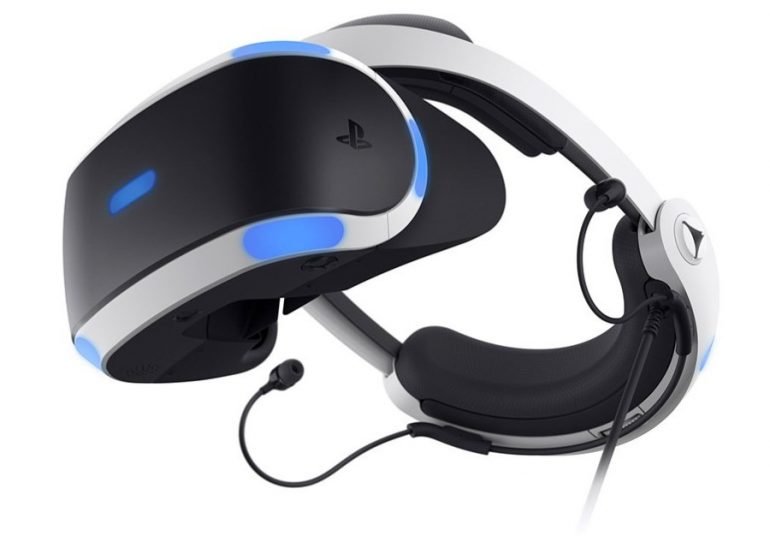
Next-Gen PS VR Reportedly Planned For End Of 2022 Release


Sony Interactive Entertainment officially announced the next-generation PS VR headset. But the company did not provide a release date, beyond that it won’t be out this year. But a new report suggests that it will be out at the end of next year.

Bloomberg has a new report about a Japanese LCD maker pivoting its focus from phone screens to VR. But in it, the report also mentions the successor to the original PS VR. It claims that the company is looking to release it in “the holiday period of next year”. It also mentions that he headset will be using OLED panels provided by Samsung for its display.


Prior reports pegged said display as being of around 4K resolution together. It is also said to come with foveated rendering, which makes use of eye-tracking tech. This allows the headset to only fully render areas a user is looking at to lower graphical processing load. The headset itself is also said to support haptic feedback.

At any rate, it looks like the next PS VR still has a long way to go before it is ready for the public. But it does look like it will have all the bells and whistles of the current generation PlayStation console when it does.

Sunday, March 21, 2021

Sony Unveils Next-Gen PlayStation VR Controllers; Features Adaptive Triggers And More


Back in February, Sony revealed that it is currently working on a next generation PlayStation (PS) VR system for the PS5 that would feature a brand new headset and controllers. Thanks to a recent entry to the official PlayStation Blog by PSVR lead Hideaki Nishino, we now know what the upcoming controllers will look like.

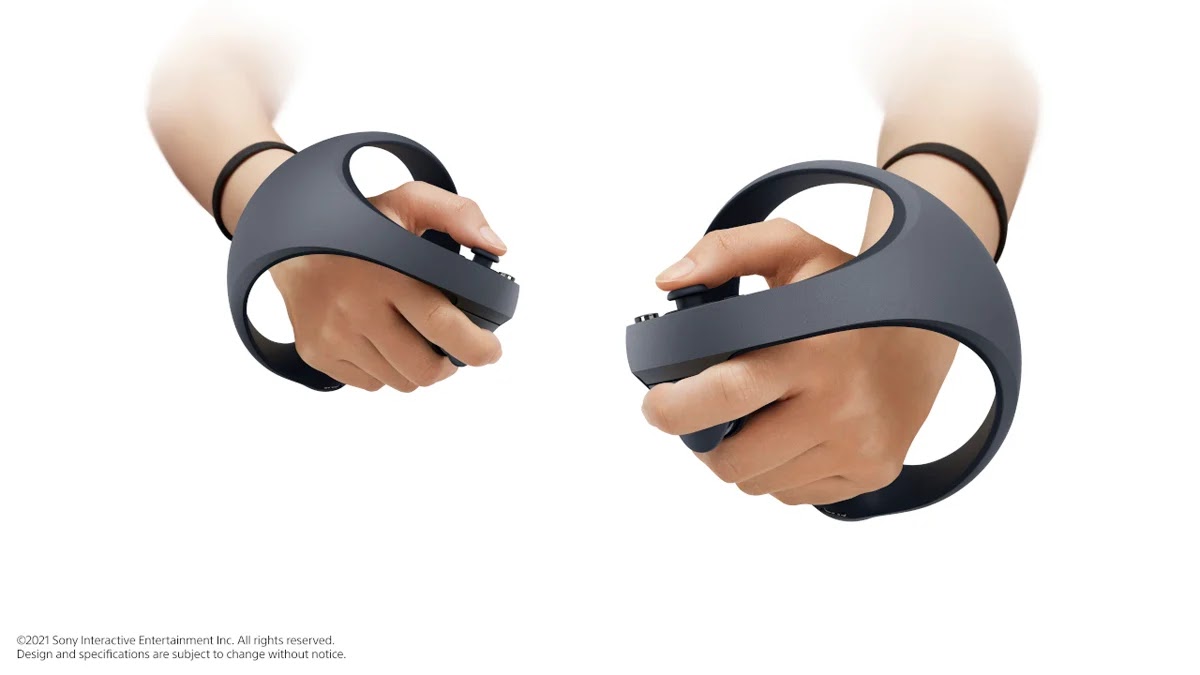
Based on the images provided, the new PSVR controllers have dropped the PlayStation Move’s “nunchuk” look for a more unique-looking grip design for each hand. Nishino refers to this as the “orb” shape, which has been designed with “great ergonomics” in mind – allowing users to “hold the controller naturally, while playing with a high degree of freedom.” He claims that the surrounding “rings” will not constrain hand movement, and have been tested on a range of hand sizes.

The button layout on the new PlayStation VR controllers bear a slight resemblance to those from Oculus, where each grip comes with two face buttons, a trigger button, a side “grip” button, a Share/Options button, and an analog stick. As mentioned by Nishino in his previous blog post, the new controllers will also include key features from the PS5’s DualSense as well as several new features of its own. These include left and right adaptive triggers, haptic feedback, and a built-in tracking ring for the corresponding VR headset.


Unique to the controller is the finger touch detection feature which can, well, detect your fingers without any pressing in the areas of the device where your thumb, index and middle fingers are placed. Nishino says that this will enable users to make “more natural gestures” with their hands during gameplay.


Other details such as battery life or charging methods were not mentioned in the blog. Development for the new PlayStation VR system is still a long way off and, as previously reported, is not aimed to be launched this year.

Thursday, March 4, 2021

Google Discontinues Sale of Cardboard VR Headsets


Google has officially stopped the sales of Cardboard, its affordable VR headsets made out of…well, cardboard. The search engine made the announcement of the discontinuation on the product’s page, with the message reading “We are no longer selling Google Cardboard on the Google Store”.

According to multiple reports, the discontinuation announcement is fairly new, given that Cardboard VR had been in circulation since it was first unveiled during Google I/O 2015. Google’s objective at the time was to bring VR technology and adoption to the entry-level market, en masse.

Google tried to take the Cardboard project to another level, with the Daydream View popping up afterwards, just a couple of years later. However, it is apparent that interest in the project has dwindled considerably over the past few years, which kind of explains the company’s decision to bring down the shutters on the product.


That said, Google did make it clear that it is still continuing its VR endeavour via its Cardboard open source project. Additionally, you can still purchase third-party “cardboard” based solutions through 3rd party cutouts, all made to Google’s specifications.

Tuesday, February 23, 2021

Sony Confirms Next-Gen PlayStation VR For PS5; Will Feature A New Controller

Sony has confirmed via its official PlayStation (PS) blog that the next generation PS Virtual Reality (VR) system will be coming to its recently launched console, the PlayStation 5. According to senior vice president of platform planning and management Hideaki Nishino, the new iteration will offer players “dramatic leaps in performance and interactivity”, which would offer them a “greater sense of presence” and immersion.

Nishino did not provide any specific details of the upcoming VR headset, but mentioned that it will connect to the PS5 via a single cord to improve ease-of-use. This suggests that Sony will finally ditch the multi-cable and splitter setup that is featured on the device’s predecessor, which – in all honesty – is a hassle to get up and running.

The company also confirmed that the next-gen PSVR will come with a new VR-specific controller, which would finally replace the 11-year-old PlayStation Move remote. Nishino added that the controller will come with better ergonomics and incorporate some of the key features found in the PS5’s DualSense. If we were to guess, it is possible that it may come with the controller’s excellent adaptive trigger and haptic feedback features. Hopefully, Sony would remove the ugly “sphere light” module from its predecessor as well.


Just like the headset, Sony did not provide any images of the upcoming controller either. Those hoping to see the new PlayStation VR soon will be disappointed, as Nishino confirmed that it will not launch in 2021 and no expected release date was mentioned. “There’s still a lot of development underway for our new VR system,” he added.

Thursday, February 4, 2021

Apple VR And AR Headset To Get Six Lenses And LiDAR Tracking


Just last month we saw reports of Apple planning to first make an expensive VR headset before its AR glasses. Now, an industry analyst has made interesting predictions regarding the matter. And it doesn’t exactly line up with what we’ve read before.

According to China Times, JPMorgan Chase analyst Yang Weilun predicts that Apple may release headsets with VR and AR tech. And this is expected to happen as early as the first quarter of 2022. Yang also predicts that the Apple headset will look similar to those made by other brands.

Other details regarding the upcoming headset include it having six lenses, and LiDAR capabilities. It’s as of yet still unclear what the six lenses are for. It could be the lenses that a user sees content through, or it could be the external camera lenses. LiDAR, on the other hand, is a lot more straightforward.

Overall though, this doesn’t line up perfectly with previous reports on the company’s plans for its VR headset and AR glasses. Those peg the Apple VR headset to be released in 2022, but the AR glasses to come in 2023 or later. The China Times report is also unclear if the headset it mentions refers to a single product, or two separate ones as with the Bloomberg report.

Xiaomi Shows Off Physical Concept Of Vision Gran Turismo

At the very tail end of last month, Xiaomi unveiled the Vision Gran Turismo. The car was revealed as a digital hypercar, and one that’s made...