Showing posts with label Gaming. Show all posts

Friday, October 15, 2021

HTC Vive Flow Is A Lightweight VR Headset For Lightweight Usage And Gaming

New to HTC’s list of virtual reality (VR) headsets is the recently launched HTC Vive Flow. The headset sports eyewear-style design and is also by far the lightest from the brand, coming in at only 186 grams.

Apparently, its lightweightness applies to its overall functionality as well. HTC markets the Vive Flow as a headset for the casual user who wishes to enjoy VR content related to “wellbeing, brain training and productivity”, as well as some “light gaming”. It is standalone, where it is not required for the user to connect it to a device such as a PC. Instead, the Vive Flow comes with a specialised version of HTC’s Viveport Infinity which offers a wide library of Flow-compatible content for monthly subscription of US$5.99 (~RM25) per month. These include the likes of VR meditation app Tripp, Color Connect VR, Space Slurpies, and much more.


As mentioned earlier, the HTC Vive Flow sports an eyewear or goggles style approach. For a good fit on any head size, the headset sports a dual-hinge system that can be adjusted accordingly. Inside are two 1.6K resolution stereoscopic displays that offer 75Hz refresh rate and 100-degree field of vision. Featured over the displays are a pair of diopter lenses which can be adjusted to allow those with short-sightedness to use the headset without needing to wear their glasses. Despite looking like it has the capability to support AR features, the Vive Flow actually does not feature the technology for it. Rather, the two lenses that are visible in front are actually meant for motion tracking.


For extra comfort, especially for hours of usage, included in the Flow’s frame is a small active fan that is situated under the bridge that sits above your nose. This pulls in air over your face and pushes warm air out of the device’s upper vents. Other than that, connected to its arms is a pair of embedded speakers which is said to offer high quality spatial audio. Connectivity-wise, you can pair the Vive Flow to your smartphone via Bluetooth, and could use it as a makeshift pointer for VR applications as well. Unfortunately, HTC did not mention whether the headset is compatible with the brand’s Vive VR controllers.


While the headset is designed for portability, it unfortunately lacks a substantial power supply – aside from a small cell that is reserved for powering minor processes such as shutting down and so on. For long term use, it is required that the Vive Flow is connected via USB-C to a compatible battery pack, power bank, or a wall charger. HTC says you could even power it by plugging it to your phone if required.


Considering its lightweightness being a selling point for the product, we can see why an internal power supply is excluded. However, the lack of which might seem like a deal breaker for many – especially when compared to the Flow’s closest rival, Facebook’s Oculus Quest 2. Speaking of which, the similarities between the Flow and Quest 2 end at their abilities to function independently. In terms of performance, however, HTC has made it clear that its new headset isn’t designed to tackle high-end VR applications or games.

The new HTC Vive Flow is priced at US$499 (~RM) and is expected to ship out in select markets by November 2021 onwards. However, HTC has yet to announce whether the new headset will make its way to Malaysia in the near future.

Friday, October 1, 2021

Corsair Announces XENEON 32QHD165 Gaming Monitor

Corsair officially threw its lot into the gaming monitor ring with the launch of the XENEON 32QHD165. As its name suggests, the gaming monitor is a 32-inch monster and is designed to complement much of the brand’s software ecosystem.

Specs-wise, the XENEON uses a 32-inch IPS LED panel, with a maximum resolution of QHD (2560 x 1440). Additionally, it has a maximum refresh rate of 165Hz and a response time of less 3ms GTG, and a brightness level of 400 nits.

On that note, the XENEON is also VESA DisplayHDR 400 certified that, when activated, boosts the brightness levels up to 440 nits. To that end, the monitor’s colour accuracy is also rated at 98% DCI-P3 and 100% AdobeRGB.


Moving on, the monitor is equipped with AMD’s FreeSync Premium anti-tearing technology, but Corsair states that it also passes as an NVIDIA G-SYNC Compatible monitor. Last but not least, the monitor is also designed to integrate seamlessly with Corsair’s own iCUE and Elgato Stream Deck softwares.

The Corsair XENEON 32QHD165 will be initially available in the markets of North America, UK, select European countries, Australia, and New Zealand. At the time of writing, Corsair did not mention local availability or pricing.

Saturday, August 21, 2021

Singaporean Decks Out Hotel Room With RM31000 Custom Gaming PC For 14-Day Quarantine

While the world gradually gets a grip on the COVID-19 pandemic, countries like Singapore are still making it mandatory for visitors and citizens entering the country to undergo a 14-day quarantine in a hotel. In the case of one returning citizen and gamer, he made doubly sure his quarantine period wouldn’t be so boring by having his room equipped with a fully decked out gaming PC. Yes, really.

Aftershock, the Singaporean PC gaming brand, was contacted by the Singaporean gamer and tasked with kitting out the hotel room that he would be quarantining himself in with a powerful desktop gaming PC, complete with all the necessary peripherals.

In regards to the PC, the custom-built rig contains high-end components and on top of that, are entirely watercooled with custom loops and waterblocks. Naturally, such a display of power clearly doesn’t come cheap; the whole package costs SG$10000 (~RM31000) which, going by the current pricing for components these days, isn’t too far off for a PC featuring top-of-the-line components.


All in all, the only thing that could’ve made the gaming experience that little more comfortable would have been a gaming chair, but given the size of the hotel room, we’re guessing that may be a step too far.

Monday, May 17, 2021

Alienware X-Series Is The Brand’s Thinnest Gaming Laptop To Date; Coming Soon To Malaysia


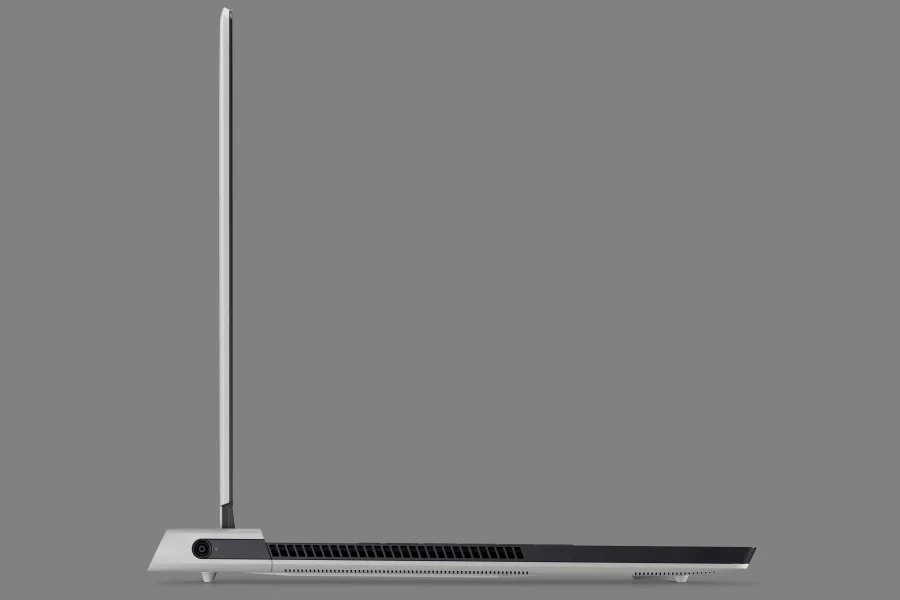
Over the years, the gaming laptop industry has been trying to shed the typical bulky and thick image that is being associated with a gaming laptop. For Alienware, the brand managed to deliver that with its current generation of the M-Series releases to a certain extent but not at the level of the upcoming Alienware X-Series.

While Alienware has yet to reveal how thin its new X-Series laptop is going to be, the teaser images and videos that Alienware has published so far clearly backing up its claim that the new model is going to be the thinnest Alienware gaming laptop to date.

One of the initial details that the brand has released regarding its new X-Series laptop is that it will feature a new thermal interface material (TIM) called Element 31. Said to be made from a gallium-silicon matrix, the material apparently has a much higher thermal performance compared to other TIM that Alienware has used before.

Other than that, the X-Series laptop will also mark the debut of the patent-pending Alienware Quad Fan solution. Aside from featuring a noticeable amount of heat pipes, the solution also utilises two sets of evacuative and outlet fans to move heat out of the ultra-thin gaming laptop.


While this was not explicitly mentioned by Alienware in its teaser video, you should be able to notice the number “17” on its lid which signifies its screen size just like the existing M-Series laptops. In case it is not obvious enough, what you’re looking here is essentially the brand-new Alienware x17.

Other than that, we have also been informed by Dell that the company is planning to release the x17 into Malaysia by mid-June. The base model will carry an 11th-Gen Intel Core i7 H-Series chip, Full HD display, 16GB of RAM, 512GB solid state drive, and NVIDIA GeForce RTX 3060 as well as a rather hefty RM 10,999 price tag.


Meanwhile, expect to hear further updates regarding the new ultra-thin gaming laptop in a few weeks time as Alienware is planning to reveal more information regarding its new x17 ultra-thin gaming laptop on 1 June via its Twitch channel.

Wednesday, May 12, 2021

GIGABYTE Introduces 43-Inch AORUS 4K 144Hz Gaming Monitor In Malaysia For RM 4,899

GIGABYTE has recently launched two new gaming monitors in Malaysia which not only aimed at the brand’s traditional PC enthusiast market but also towards console gamers. Leading the list is the AORUS FV43U which is a 43-inch monitor with a quantum-dot VA panel.

Capable of supporting 120Hz refresh rate at 4K resolution for consoles such as Sony PlayStation 5 and Microsoft Xbox Series X/S thanks to the inclusion of HDMI 2.1 ports, the monitor refresh rate peaks out at 144Hz alongside 1ms response time. It also has DCI-P3 colour gamut coverage of 97% as well as 150% for sRGB and 99% Adobe RGB.


With a maximum brightness level of 1000nits, the AORUS FV43U is also a DisplayHDR 1000-certified model. It also carries a pair of 12W speakers alongside two HDMI 2.1 ports and one DisplayPort 1.4.

Meanwhile, the other model that GIGABYTE has also introduced in Malaysia is the AORUS FI32Q which is a 31.5-inch Quad HD (2560 x 1440) monitor. This particular release comes with a Super Speed IPS panel which the company claimed has a faster response than traditional IPS panel and is much closer to TN panel without sacrificing the image quality that IPS panel is known for.


Specifically, the FI32Q offers a response time of 1ms for both MPRT and GTG while it also has a refresh rate of 165Hz which can be overclocked to 170Hz. GIGABYTE also has equipped an ESS Sabre audio chip into the DisplayHDR 400-certified monitor in order to allow it to have quality audio output through the headphone jack.

Both of these AORUS monitors have also been equipped with several gaming-specific enhancements that GIGABYTE refers to as “tactical features” including the Aim Stabilizer, Black Equalizer, customizable crosshairs, on-screen timers and more. They also come with a built-in KVM solution that allows users to switch between their PC and devices that supports DisplayPort Alternate Mode through USB-C.


Price-wise, the AOURS FV43U is readily available in Malaysia for RM 4,899 while the AORUS FI32Q goes for RM 3,599. You can check them out over at GIGABYTE’s official store on Lazada and Shopee or get in touch with your favourite retailers for more information about their in-store availability.

Friday, May 7, 2021

Redmi K40 Gaming Edition Now Official; Price Starts From RMB 1999

Redmi has officially launched the latest entry to the K40 flagship series in China, which also happens to be the brand’s first ever gaming smartphone. Known specifically as the K40 Gaming Edition, the new smartphone offers top-notch performance, unique features such as pop-up shoulder buttons, accent lighting, and more.

The new Redmi-branded gaming smartphone comes with a large 6.67-inch Full HD+ AMOLED display with a resolution of 1080 x 2400px, HDR10+ support, 120Hz refresh rate, and 480Hz touch sampling rate. Housed within the punch-hole cutout on the top of the screen is a 16MP selfie camera. One notable feature that fans would highly appreciate is the fact that its body also sports dust and water resistance with a rating of IP53.


Hardware-wise, under the hood of the phone is a MediaTek Dimensity 1200 chipset – making it the only K40 variant to not feature a flagship Snapdragon processor. Along with it is a RAM configuration that is offered up to 12GB and storage of up to 256GB of UFS 3.1. Ensuring that the internal hardware is kept at optimal temperature is Redmi’s LiquidCool vapor chamber technology which features white graphene to greatly reduce heat dissipation. Keeping the device powered up is a large 5,065mAh battery, which also comes with Xiaomi’s 67W fast charging capability via USB-C. 


Besides that, the gaming smartphone features a side-mounted fingerprint scanner, dual JBL tuned speakers with Dolby Atmos support, and a triple microphone setup for regular and video calls. As mentioned earlier, the K40 Gaming Edition also comes with shoulder triggers that pop-up when the user flips the dedicated slider switches on the top and bottom of its right side. Doing this would also activate the bracket lights around the phone’s rear camera island, which is kind of cool.


Speaking of which, housed within the aforementioned island is a triple camera setup consisting of a 64MP primary sensor with an f/1.65 aperture lens, an 8MP ultra-wide, and a 2MP macro. Other than the bracket lights, the Redmi K40 Gaming Edition features a sleek metallic rear panel with line design elements that is offered in Black, Silver, and White colors.

A more attractive two-toned yellow and black version of the phone also exists, marketed as the Bruce Lee Special Edition. We have no idea how mobile gaming is correlated to the legendary martial artist and actor, but hey… it’s Bruce Lee. And that’s awesome enough.


The Redmi K40 Gaming Edition is slated to be on sale in China starting from 30 April 2021, and are offered in multiple configurations. The base 6GB/128GB model of the handset will retail at RMB 1,999 (~RM 1,265), the 8GB/128GB at RMB 2,199 (~RM 1,390), 8GB/256GB at RMB 2,399 (~RM 1,516), 12GB/128GB at RMB 2,399 (~RM 1,516), and the 12GB/256GB at RMB 2,799 (~RM 1,770). Meanwhile, the Bruce Lee Special Edition is offered with the highest configuration, and is set to retail at RMB 2,799 (~RM 1,770). The expected global availability for Redmi’s first ever gaming smartphone has not been announced at this time.

Saturday, May 1, 2021

Redmi Gaming Smartphone Teased; Confirmed To Be A Variant Of Its K40 Flagship

Redmi, via Weibo, has released a teaser featuring a glimpse of its upcoming gaming smartphone. Interestingly, the company also revealed that the new device is actually a variant of its flagship series that was launched back in February and would officially be known as the K40 Game Enhanced Edition.

From the provided image (which happens to be animated), it is revealed that the phone will feature a triple camera setup, hidden shoulder buttons, and a slider switch. The latter, when activated, would release the K40 Game Enhanced Edition’s shoulder buttons and activate the lighting effects on the upper and lower halves of its rear camera array – an interesting yet gimmicky kind of way of announcing to the world that you’re eager to play mobile games on the Redmi-branded handset.

Besides that, the gaming variant also sports a metallic gray rear case with line design elements and a large cylindrical camera island for its triple cameras – an interesting design shift that sets it apart from the original K40 models, which featured two layered bumps for their rear shooters. The brand did not reveal what sensors will be included in the setup, and the dual horizontal spots located in between the top and middle cameras are unspecified as well.

As mentioned earlier, the top and bottom of the camera island features a bracket-like lighting system and the words “Freezing” and “Speediest” are engraved on its sides. The engravings are most likely referencing the Game Enhanced Edition’s cooling system and onboard chipset. Speaking of which…

For now, the only officially confirmed hardware to be included on the new Redmi gaming smartphone is a MediaTek Dimensity 1200 chipset. Meanwhile on the unofficial side of things, it is said that the device will come with a Samsung E4 AMOLED display with 144Hz refresh rate and a 5,000mAh battery with 67W fast charging support. Leakster Digital Chat Station recently shared that the Xiaomi subsidiary may launch the gaming smartphone in two different configurations, but did not supply any information regarding the difference of specifications.

Along with the teaser image, Redmi has confirmed that it will launch the K40 Game Enhanced Edition next week on 27 April in China. According to insiders, the phone is expected to launch at a starting price of RMB 2,000 (~RM1,260).

Sunday, April 18, 2021

NVIDIA Partners Up With MediaTek; Licenses Out Ampere IP To Create New Gaming SDK


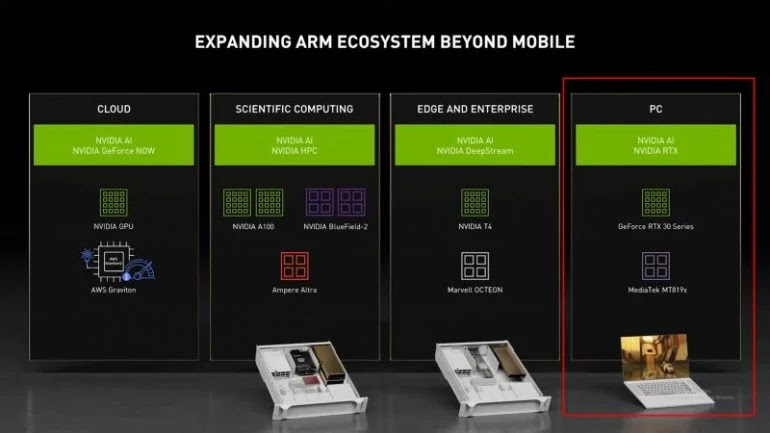
Apart from NVIDIA’s announcement of its Omniverse, its CEO, Jen-Hsun Huang also mentioned that it was expanding its reach to several avenues of the ARM ecosystem, through a series of partnerships and licensing out its technology. Of the lot, one announcement that stood out was its decision to license out the GeForce RTX 30 Series’ Ampere IP to MediaTek.

As Huang briefly stated, the Ampere IP would be paired with the Taiwanese SoC maker’s MT8199x chipset, and be used to create a reference system and SDK for Google’s Chrome OS and Linux-based PCs. It is unclear if this partnership will help NVIDIA re-enter the smartphone market once more, but for now, its partnership with Amazon Web Services’ (AWS) Graviton2 CPU is what is expected to drive “Android gaming” to the cloud.

For that matter, NVIDIA’s decision to partner up with a mobile chipset maker isn’t the surprising part; its rival, AMD, already partnered up with Samsung two years prior, with the former promising to license out its RDNA graphics technology to the Korean tech giant’s Exynos chipset. There are even some alleged benchmarks of said chipset’s performance with an AMD GPU, although that still remains verified till now.


What is surprising, though, is NVIDIA’s decision to partner up with a chipmaker like MediaTek. While it has been hailed as the third-largest chip vendor for the third quarter of last year, it has also come under fire in the past for purposely “modifying” its own chipsets, enabling it to cheat in certain benchmarks like UL’s PCMark app.

In any case, Huang did not say when a MediaTek chipset running with NVIDIA’s Ampere GPU technology would be arriving.

Samsung To Refresh Odyssey G9 Gaming Monitor With Quantum Mini LED Panel, VESA DisplayHDR 2000 Certification


It’s been more than a year since Samsung first announced its Odyssey gaming monitor series, with the Odyssey G9 being the ultrawide darling of the lineup. As you’d expect, the monitor is due for a refresh and thanks to a leak on the China-based online retail store, Taobao, we have an idea over what we can expect.

For the most part, the new Odyssey G9 will retain most of the features from the 2020 model. This includes the ultrawide 5120 x 1440 (DQHD) resolution, spread out on its massive 49-inch display, as well as its ultra-high 240Hz refresh rate and 1ms GTG response rate. Oh, and the curvature of the monitor is still rated at 1000R, and it still retains its NVIDIA G-Sync compatibility too.

What is expected to be different, though, is that the display panel is no longer your typical VA; instead, the 2021 Odyssey G9’s panel will reportedly be using Samsung’s 10-bit Quantum Mini LED technology. That in turn, will allow for the gaming monitor to have a higher peak brightness of 2000 nits, but more importantly, it also gets a much better VESA DisplayHDR 2000 certification.


At the time of writing, there is no official pricing for the refreshed Samsung Odyssey G9 and that listed price of 29999 Yuan (~RM18937) on Taobao is likely just a placeholder. The current Odyssey G9 retails for RM6199, so even if Samsung was going to increase the price, it’s unlikely to be three times the price.

Wednesday, March 31, 2021

Redmi Gaming Phone Tipped To Feature Physical Shoulder Buttons, 5000mAh battery


Earlier in January, Redmi general manager Lu Weibing revealed that the brand will release its first ever gaming smartphone later this year, which will be equipped with a MediaTek Dimensity 1200 chipset. While its other specifications are still kept under wraps at this time, leakster Digital Chat Station (via MyDrivers) claims to have additional information regarding the mysterious device.

According to the reliable industry insider, the yet-to-be-named Redmi gaming phone will feature a flat E4 OLED panel by Samsung, with a tiny punch-hole cutout for its front-facing camera. Its battery is said to come with a capacity of 5,000mAh and would also feature support for 65W fast charging, which is able to fully top-up the phone’s energy from zero to 100% in just 30 minutes. The latter isn’t particularly new and has been featured in recent smartphones from Xiaomi (Redmi’s parent company), as well as other brands such as Realme and OPPO.

Most interestingly, Digital Chat Station suggests that the new device would also be equipped with physical shoulder buttons – a feature that is much appreciated by users, especially on smartphones under the gaming variety. Unlike its fellow Xiaomi subsidiary Black Shark, it is quite unlikely that Redmi would equip its own gaming smartphone with mechanical shoulder buttons – especially considering the brand’s usual focus on offering products at affordable price points.

Speaking of which, the leakster noted that Redmi’s upcoming device may be priced around RMB 2,000 to RMB 2,500 (~RM 1,262 to ~RM  1,578) at launch. If proven accurate, this would make it one of the cheapest gaming smartphones available on the market. However, despite the attractive price range, some users might not find its featured Dimensity 1200 chipset all that appealing.

Redmi has yet to announce when it is planning to officially unveil its first ever gaming handset.

Tuesday, March 30, 2021

Razer Announces Kraken V3 X Wired USB Gaming Headset; Retails At RM399


Razer has unveiled a new addition to its gaming headsets with the new Kraken V3 X. Inspired by the brand’s best selling Razer Kraken X model, the new headphones is promised to offer improved comfort for prolonged use and features upgraded audio drivers.

The Kraken V3 X is equipped with the same TriForce 40mm drivers that are featured on the eSports oriented BlackShark V2 headsets. Consisting of 3 separate parts, each audio driver focuses on high, mid and low audio frequencies which, the gaming firm claims, offers “richer trebles, brighter sound and more powerful bass”. Complementing it is 7.1 Surround Sound support for added immersion.

Being a gaming headset, you can expect the new Kraken to also feature an obligatory microphone for team communication or voice calls. Featured onboard is the brand’s HyperClear Cardioid Mic which offers “greater speech pickup” and noise cancellation.


Design-wise, the new headset looks similar to the original Kraken X; featuring hybrid fabric and memory foam for its ear cushions, soft padding on its headband and a light weight at only 285g. For improved comfort, Razer says that the V3 X applies “just the right amount of force” for a measured, firm and comfortable fit.


Other than that, the new gaming headphones features a mute button and volume slider underneath its left earcup, and – as with most Razer products – comes with the brand’s Chroma RGB lighting. Attached to the device itself is a 1.8m long USB-A cable.

The Kraken V3 X is available via Razer’s official website and is priced at RM399.

Sunday, March 21, 2021

Dell G15 Gaming Laptop Coming To Our Shores This April; Price Starts At RM 3799


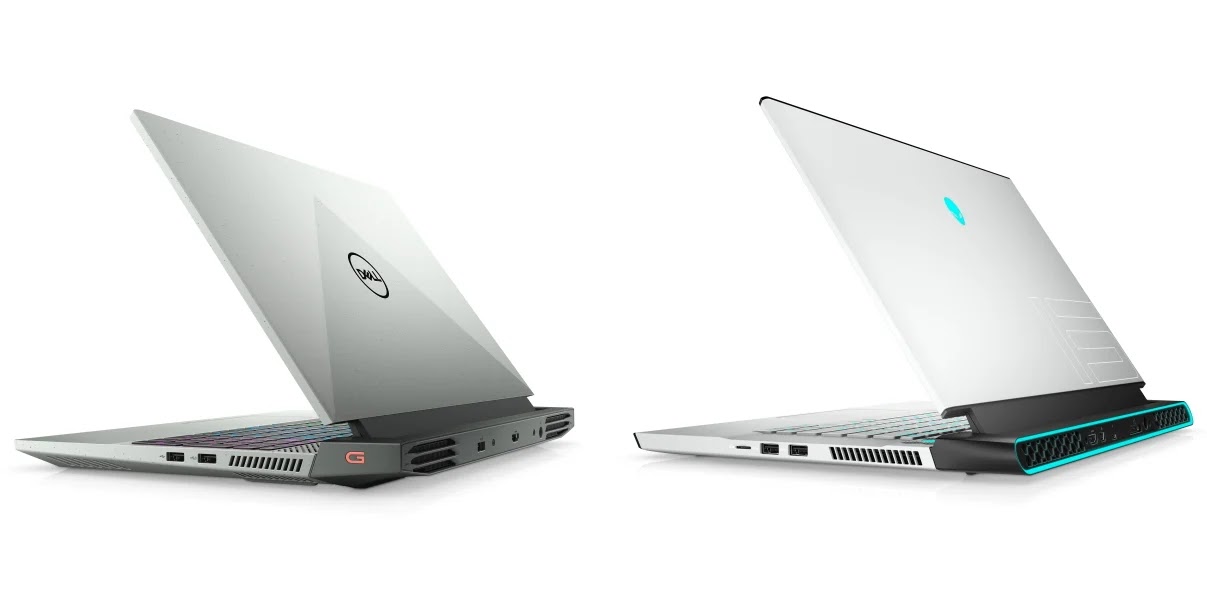
Dell generally has two gaming laptop groups under its wing with the premium segment being the Alienware m-Series while there is also the G Series which is being offered at a much lower price point. This exact reason made the newly revealed Dell G15 rather interesting.

This is because the G15 carries a new physical design that is skewed towards Alienware Legend design identity rather than what Dell has implemented on the current G Series. Just take a look at the laptop when put side-by-side with the Alienware m15 R4 which has just made its way to Malaysia recently:
 

Based on general specs alone though, the G15 seems to be positioned as an entry-level gaming laptop. According to the official websites of Dell China and Hong Kong which are the two initial markets for the new gaming laptop, it is equipped with Intel Core i5-10200H and NVIDIA GeForce GTX 1650 graphics alongside 15.6-inch 120Hz Full HD display.

When we reached out to Dell Malaysia, the company has confirmed that the G15 is expected to arrive in Malaysia sometime in April. The base model for our market will carry similar specs from China and Hong Kong that we mentioned above, alongside 8GB of RAM and a RM 3,799 price tag.


There are reports which said that the G15 will be made available with more powerful CPU options, RTX 30 Series graphics, and 360Hz panel but naturally, the full hardware options can only be known when the laptop goes live on Dell Malaysia’s website. We’ll keep you posted once that takes place, so stay tuned.

Thursday, March 18, 2021

Gaming Veteran Jade Raymond Announces New Studio Called Haven


If you’re a fan of the Assassin’s Creed and Watch Dogs series, you’ll probably know that you partly have Jade Raymond to thank for that. Having just left Google Stadia, she now has a new studio called Haven Studios.

The announcement came from Raymond herself, albeit via the PlayStation Blog. It may sound like an odd avenue, considering the fact that she calls it an independent studio. But then she mentions that the studio is already making an as-of-yet unannounced IP. This basically means that it’s a new IP for the PlayStation platform, and likely the PS5 more specifically.

As mentioned earlier, among the achievements under Jade Raymond’s belt include the playing a key role in the creation of both the Assassin’s Creed and Watch Dogs series. But beyond the two games, she was also responsible for the founding of Ubisoft Toronto and EA Motive. So it’s fair to say that her 25-year history in the video game industry is a pretty decorated one.

As for what she’s currently working on with the new Haven Studios, we’ll unfortunately just have to wait to find out more. And it will be quite the wait, considering the studio’s own website has yet to be completely set up.

Tuesday, March 2, 2021

Cooler Master To Offer Discounts of Up To RM 1,000 For Its Curved Gaming Monitors


A gaming monitor is not something that you would immediately associate with Cooler Master but it is indeed one of the products that the company has offered as part of its expanded catalogue that has since gone beyond just computer cases, thermal solutions, and power supplies.

Two of them made their way to Malaysia last year with one of them being the 34-inch GM34-CW curved gaming monitor. With a curvature rate of 1500R, it features a 3440 x 1440 VA Quantum Dot panel alongside 144Hz refresh rate, 95 per cent DCI-P3 colour gamut coverage, and maximum brightness level of 400nits.

Another model came in the form of the 27-inch GM27-CF that also has a curvature rate of 1500R. This AMD FreeSync Premium-certified model offers a Full HD VA panel with a 165Hz refresh rate that can be pushed to 200Hz together with 90 per cent DCI-P3 colour gamut coverage.

As part of its 3.3 promotion that will take place tomorrow, Cooler Master is offering the GM34-CW for RM 1,999 instead of its usual price tag of RM 2,999. At the same time, consumers can also get their hands on the GM27-2F for RM 999 which is RM 370 off its normal price.


While the company didn’t mention where this promo will be taking place, we reckoned that it would likely be offered at Cooler Master’s official store on Lazada. So, if you are interested to get your hands on these monitors, make sure to keep a close look at the store as well as the brand’s official Facebook page.

Thursday, February 25, 2021

Lenovo Teases New Legion Gaming Smartphone Announcement In Spring


Lenovo surprised the smartphone scene last year with the launch of its very own gaming handset, the Legion Duel. Despite being the company’s first jab in the niche, the device packed substantial hardware that easily rivaled its competitors – featuring a Snapdragon 865 Plus chipset, large battery capacity, fast charging and so on. Hoping to keep up with this momentum, Lenovo is planning to introduce a follow up to the Duel in the coming months, according to its GM Chen Jin via a post on Chinese social media platform Weibo.

Along with the announcement, Chen Jin also included a teaser image that shows the Lenovo Legion logo within an ice cube – subtly hinting at the upcoming gaming phone’s potential selling point. A handset’s internal cooling system is one of several factors that brands often emphasise on, especially for those in the gaming category. Based on the hint, it is possible that the new device could feature an improved version of the Duel’s internal dual-liquid heat pipe cooling system, or maybe an all-new cooling technology altogether.

Besides that, nothing else regarding the phone’s design or specifications have been revealed at this time. It is uncertain if the company plans to carry over any features from its predecessor, such as the side-mounted pop-up camera or dual shoulder air triggers with haptic feedback. If anything, it is quite likely for the upcoming Lenovo gaming phone to feature a Snapdragon 888 chipset, along with an improved FHD+ AMOLED display with 144Hz refresh rate or higher, and high-end sensors for its rear and front-facing cameras.

Chen Jin added that the new Lenovo Legion smartphone is expected to be officially unveiled sometime in spring this year. However, with no specific date provided, we might not see any glimpses of the new gaming handset for another month or two.

Xiaomi Shows Off Physical Concept Of Vision Gran Turismo

At the very tail end of last month, Xiaomi unveiled the Vision Gran Turismo. The car was revealed as a digital hypercar, and one that’s made...