Showing posts with label Mobile. Show all posts

Wednesday, July 20, 2022

ARM Announces New Immortalis Mobile GPU With Ray-Tracing Support

Arm recently announced its latest flagship GPU, the Immortalis-G715. The new mobile GPU is the first of its kind to implement hardware-based ray tracing for mobile.

The Immortalis-G715 signals ARM’s shift in bringing its products into the mainstream, in the same way that Sony and Microsoft brought ray-tracing to their respective consoles. Specs-wise, the new mobile GPU is built on top of Mali and designed to accommodate between 10 and 16-cores, with a promised performance boost of up to 15% over previous generation Mali GPUs. This is alongside double the architectural machine learning (ML) improvements. 

With the presence of hardware accelerated ray-tracing, Andy Craigen, director of Product Management at ARM. says that the Immortalis-G715 will use approximately 4% of power per the shader core area while delivering more than 300% performance improvement. The trade-off here is that the Immortalis can and will use significant power, energy, and area within the SoC it is attached to.

The company has not provided any more particular details on what devices the Immortalis-G715 will be featured in, but you may expect that the first phones that have them will arrive at the beginning of 2023. 

Moving on, Arm also announced the Mali-G715 and Mali-G615 as premium GPUs, which are aimed at devices with lesser pricing, but with fewer cores and no ray tracing support. The Mali-G615 has 6 cores or less while the Mali-G715 has 7 to 9 cores respectively, but unlike the Immortalis-G715, they will only have Variable Rate Shading that provides up to 40% on frames per second (FPS) and Execution Engine.

ARM also gave a glimpse of its roadmap, which said that it plans on following up Immortalis other flagship mobile GPU next year, codenamed “Titan”, while it plans on bringing “Krake” in 2024. The chipmaker did not indicate if it intends to extend the same hardware-based ray-tracing to the other two.

Wednesday, December 1, 2021

MediaTek Announces Flagship-Tier Dimensity 9000 Chipset For Mobile Devices

MediaTek is finally looking to close the gap with its rival Qualcomm, which have been dominating in the smartphone chipset market for quite some time now. Just recently unveiled is the company’s latest 5G SoC, the Dimensity 9000, that is specially designed to power flagship-tier Android mobile devices – something that the company has been sorely lacking for several years.

The MediaTek Dimensity 9000 also holds several other firsts to its name, including being the first chip to be built on TSMC’s 4nm process, alongside ARM’s new v9 architecture. The latter includes a single 3.05Ghz Cortex-X2, three 2.85GHz Cortex-A710 cores, four 1.8GHz Cortex-A510 efficiency cores, and a 10-core Mali-G710 GPU.


For AI processing, the chipset features the company’s latest fifth generation six-core APU, which is claimed to offer four times the performance and power efficiency compared to its predecessors. Also onboard is MediaTek’s new 18-bit Imagiq Gen 7, the world’s first ISP (image signalling processor) that can support image captures of up to 320MP and transferring data at 9 gigapixels per second. Video-wise, its encoder is capable of recording up to 8K resolution videos at 30fps, supports simultaneous 4K video recording on three different cameras, and features Super Night mode for low-light capture.


Connectivity-wise, the Dimensity 9000 offers an onboard 5G modem with 3GPP release 16 features, 3CC carrier aggregation (supporting up to 7Gbps downlink speeds), and MediaTek’s own PowerSave tech for improved battery life. Despite being based on the company’s first mmWave modem, the chipset only supports sub-6GHz 5G connectivity at this stage. It is also claimed to be the first to support Bluetooth 5.3 and Wi-Fi 6E standard.


The company did not mention any upcoming smart devices which would be equipped with the  Dimensity 9000 SoC at this time. Nevertheless, it won’t be long until we see the announcements pop up from the usual industry players, especially with the new year closing in. It remains to be seen whether the new flagship MediaTek chip is on par or better in terms of performance when compared to its Snapdragon-branded rival.

Tuesday, October 5, 2021

YouTube Will Let You Resume Unfinished Mobile Videos On Desktop

YouTube quietly launched a new feature that lets you resume watching videos from your phone to your desktop. “Continue watching” will appear in the form of a mini-player when you pause an unfinished video from your mobile app.

The mini-player will appear on the bottom right corner and will queue the video just a second or so before you paused on the mobile app. You can click the play button to continue watching in the shrunken view or click anywhere on the mini-player itself to expand and open up the video in full.

9to5google reports that the feature works for both Android and iOS, and is even effective when handing off from an Android TV to the desktop site. However, the continuity apparently only works one-way, as the mobile apps cannot resume videos from your computer.

For this to be enabled, both platforms must be logged into the same account in order for the history to be synced. YouTube seems to be trickling out the feature though, as only a handful of people have been able to access it. While you’re waiting for Continue Watching to be released in full, you’ll be happy to know that the premium background playback feature will be coming to all mobile users starting from November.

Thursday, June 10, 2021

HONOR Confirms Return Of Google Mobile Services; HONOR 50 To Be First Device


HONOR, the brand that was once a subsidiary of Huawei, made an indirect announcement recently that Google Mobile Services will indeed be returning to its devices. According to the brand, the first device that is set to reflect the return in a post-Huawei world is the HONOR 50.

Confirmation of GMS’ return to the brand’s upcoming device was done via Twitter, through the brand’s official German account. The tweet is no longer available, but as per Android Authority, it came as a reply to one user’s query. In addition to GMS, HONOR Germany also confirmed that the phone will retain Magic UI, which is technically an off-shoot of Huawei’s own EMUI.

As a quick primer, news about Huawei potentially selling off HONOR first cropped up in November last year. Back then, it was reported that the Chinese telecommunications and smartphone brand would sell its sister brand to a Shenzhen-based consortium for a sum of US$15.2 billion (~RM63 billion). Within a week, the sale was confirmed.

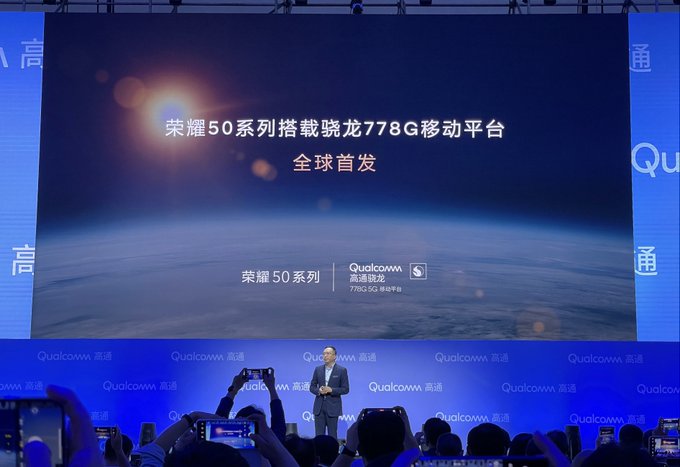
As for the hardware powering the HONOR 50, we know that the phone will be one of the first devices to be fitted with Qualcomm’s Snapdragon 778G 5G SoC, while the Pro version of it should house the top-tier Snapdragon 888. Camera-wise, the phone is expected to feature a 50MP main camera reminiscent of Huawei’s alleged main camera design of the P50. It will also reportedly include a 13MP ultrawide and 8MP ultrawide.


In addition, the phone is expected to sport a 6.79-inch AMOLED display with 120Hz refresh rate.

Tuesday, June 1, 2021

AMD Radeon RX 6000M Series Mobile GPU Now Official; Features Up To 12GB GDDR6 Memory


Beside its latest Zen 3-powered Ryzen APUs, today’s keynote also saw the official announcement of AMD’s new Radeon RX 6000M mobile graphics series for laptops. Much like its desktop counterparts, the new mobile GPU series are based on the brand’s current 7nm, RDNA2 architectures.

In total, the RX 6000M comprises three different GPUs; sitting pretty at the top is the RX 6800M, while the RX 6700M dominates the middle ground, and last but not least, we have the RX 6600M covering base for the entry-level.

As you’ve no doubt guess, the RX 6800M is the most powerful of the trio, sporting 12GB GDDR6 graphics memory, 40 Compute Units (CUs) and Ray Accelerators, a game clock of 2.3GHz at full whack, and a 96MB Infinity Cache. Again, as it is an AMD product , the GPU also supports both Smart Access Memory (SAM) and Smartshift when paired with an AMD Ryzen 5000 series mobile CPU.

In terms of raw gaming performance, the 6800M isn’t quite set up to dominate the 4K realm, but to AMD’s credit, it is setting realistic expectations, aiming for max graphics settings at 1440p with this mobile GPU, which is more than plenty for us.

As to which laptop will be the first to showcase the 6800M, that honour goes to ASUS’ ROG Strix G15 “AAA” Edition gaming laptop. In addition to the 6800M, the laptop is also fitted with AMD’s Rzyen 9 5900HX CPU, both of which are also kept cooled through the use of Liquid Metal and vapour chamber technology.

Moving on, the RX 6700M serves as the halfway mark of the three mobile GPUs. Specs-wise, the mobile GPU has 10GB GDDR6 memory, 36 CUs and Ray Accelerators, an 80MB Infinity Cache, and a 2.3GHz game clock. Whereby the 6800M is designed to enable gamers to play their favourite triple-A title at 1440p resolution at their highest graphics settings, the 6700M unsurprisingly takes it down a notch. By allowing gamers to still game at 1440p, but at either the second or third highest graphics settings of each respective games.


Last on the list is the entry-level RX 6600M. On paper, this mobile GPU ships out with 8GB GDDR6 memory, 28 CUs and Ray Accelerators, a 32MB Infinity Cache, and a game clock of 2.18GHz. Whereas the 6800M is designed to enable laptops to maintain high framerates at 1440p and with the graphics settings maxed out, the 6600M is targeted at the gamer that is perfectly content with gaming at Full HD resolution. While still maintaining max graphical settings for their favourite title.


The AMD Radeon RX 6800M and RX 6600M are available starting today. While the 6800M is available via the ASUS Strix G15 “AAA” Edition, the RX 6600M will first be available via the HP Omen 16. At the time of writing, there is still no word regarding the availability of the 6700M.

Saturday, May 15, 2021

Opensignal: Malaysia’s Mobile Data Consumption Is Way Higher Than Other SEA Countries


The impact of the Movement Control Order (MCO) on data consumption in Malaysia has been well-documented by various parties including the Malaysian Communications and Multimedia Commission MCMC) itself. However, a new report from Opensignal has shown that the demand for mobile data in our country is generally much higher than in other Southeast Asian countries.

Using data that was gathered from January 2020 to March 2021, Malaysia mobile data consumption has steadily increased from February 2020 before hitting the first peak in April 2020 which coincides with the early part of MCO 1.0. The demand then drops before it steadily picked up again from July 2020 onwards and reached the second peak in February 2021.

While Opensignal didn’t provide the exact amount of data consumption for each month, the network analytical company pointed out that the April 2020 mobile data consumption in Malaysia is 30.7% higher than in January. Additionally, the difference between consumption in January 2019 and January 2021 is around 35.2%.

With an average consumption rate of 26.4GB per user in January 2021, it is apparently the highest in Southeast Asia:


Opensignal has noted in its report that the massive surge of mobile data consumption showed that telcos in Malaysia faced a greater challenge as compared to their counterparts in other SEA countries.

Similarly, this may explain why some local telcos such as Celcom and Maxis have recently experienced noticeable declines in terms of speed. On another hand, the analytical firm was also quick to point out that JENDELA may help things become better.

Sunday, April 18, 2021

Samsung Reportedly Partnering With Olympus To Its Elevate Mobile Camera Systems


A recent rumour is suggesting that Samsung may be teaming up with Japanese camera maker Olympus (now operated by OM Digital Solutions) for some form of collaboration. It’s not confirmed on what the expected goal of this partnership would be, but it is speculated that it may involve the further development of the Korean brand’s mobile camera tech for its future smartphones.

News of this was first shared by leakster Yogesh on Twitter, who also suggested that both Samsung and Olympus could be working together to develop the Galaxy S22 Ultra, or a special edition Galaxy Fold smartphone. A separate report from Ice Universe on Weibo corroborated this, saying that his sources had also informed him of this alleged partnership.

Smartphone companies partnering up with camera brands to elevate their smartphone’s imaging system isn’t anything new. In fact, just this year we saw OnePlus signing a three-year deal with Hasselblad, whereas Huawei’s existing partnership with Leica is still going strong despite the various setbacks the Chinese giant have been facing thus far.

As mentioned earlier, details of this supposed team-up between Samsung and Olympus is mostly unknown. However, Dutch tech site GalaxyClub claims that the Korean smartphone maker is considering including sensor-shift technology to its future Galaxy device with the help of the Japanese camera brand. 

Unlike the commonly used Optical Image Stabilisation (OIS) system in smartphones which shifts the lens element of a camera to compensate for its shake, sensor-shift stabilisation moves the shooter’s image sensor instead – resulting in better image stabilisation in photography and video recording. The only known smartphone to feature sensor-shift tech is Apple’s most recent top-of-the-line model, the iPhone 12 Pro Max.

Whether or not Samsung and Olympus have actually inked a deal of some kind remains to be seen. Should this rumour be proven accurate, we’ll most likely be hearing an official announcement by either company in the near future.

THX Onyx Is A Mobile DAC That Uses USB-C; Costs RM1190


When it comes to music on mobile phones, there’s still nothing like having a portable DAC, and a pair of wired headphones plugged in. The THX Onyx is a new one in the market. And despite it coming from a big-name mainstream company, the thing itself is pretty tiny.

The company says that the Onyx comes with its own THX AAA DAC, as well as the ESS Pro DAC chips inside. Adding to those is MQA support. There’s also three audio indicator LEDs that tell you the quality of the music you’re currently listening to. If you know your stuff, there’s probably no need for this. But it may be useful for the uninitiated who want to hear the difference between standard quality and top quality music, and being told which is which.

THX did not mention the physical size of the Onyx, but from the images, it looks smaller than the average pen. It makes use of the USB-C port, addressing the lack of a 3.5mm audio jack on most phones these days. You can even fold it when not in use, as the two ends attach magnetically. This allows it to be used as a cable tie for your extra long headphone cables. And if you want to use it with a PC, there’s also a USB-C to USB-A adapter.

The THX Onyx is available to us in Malaysia, and you can get it via the Razer online store. Probably not too surprising, since the two companies work together quite a lot in the past. It is very pricey though, coming in at RM1190.

Saturday, April 17, 2021

LG Officially Shuts Down Its Mobile Business


LG has announced that it is winding down its mobile business. Rumours regarding the closure have been floating around since earlier this year but it is only today that the company revealed that the move has now been approved by LG’s board of directors earlier today.

Inside the announcement, LG also stated that its existing phone will continue to be available for purchase. Similarly, customers will also be able to obtain aftersales support and software update for a certain period of time that LG said will differ from one market to another.

Despite its exit from the mobile phone market, LG insists that it will be utilising everything that it has learned and developed during its two decades in the mobile industry for other business segments. The company will also continue to be involved in the development of future mobile technologies such as 6G.

While LG expects that the closure is to be finalised by the end of July this year, the fate of the employees within the LG’s mobile phone division was not revealed in detail inside the announcement. There was a rumour earlier this year claiming that LG was going to sell off its mobile phone manufacturing facilities in Vietnam, China, and Brazil to Vietnam’s Vingroup but this was not addressed in today’s announcement.


Nevertheless, the company did say that it will be “determined at the local level,”. On another hand, we don’t expect today’s announcement from LG will have impact on Malaysian consumers though, due to the fact that LG has stopped selling its phones in our market since a few years ago with 2017’s LG V30+ being the last model sold here.

Wednesday, February 17, 2021

Mobile Ad Agencies Form Alliance To Prepare For Apple iOS Privacy Changes


A group of mobile advertising companies have banded together to form the Post-IDFA Alliance, a partnership designed to help marketers and app developers adapt to Apple’s iOS privacy plans. This consists of six agencies including Liftoff, Fyber, Chartboost, Singular, InMobi and Vungle – all of which will be affected by the App Tracking Transparency changes on the upcoming iOS 14.5 update.

IDFA, an abbreviation for Identifier for Advertisers, is a unique, random and resettable device identifier assigned to a user’s iOS device. Advertisers rely on this to track and identify a user (without revealing personal information) in order to deliver customised advertising based on their behaviour as well as interactions with certain in-app event triggers.

As previously reported, Apple will be giving iPhone users the ability and choice to permit or block IDFA tracking in the upcoming iOS 14.5 update, which is already available via its beta release. Users will be able to disable IDFA on an app-by-app basis, where every application on the platform is required to prompt users to ask for their permission for tracking.

Ad companies are predicting that a majority of users will opt out from this, which will heavily impact mobile advertising – at least for iOS devices. This significant change in ad tracking also caused the ongoing stir between Apple and social media giant Facebook, which saw both sides trading blows through various means – often publicly.

As a result, the Post-IDFA Alliance aims to help advertisers and developers by providing tips and best practices. This would ensure effective ads are placed in front of relevant customers and the effectiveness of those ads can still be measured once the iOS changes are rolled out.

According to Liftoff chief executive Mark Ellis, the group plans to offer these through videos, webinars and other materials to help the aforementioned understand how to use data in an “Apple-friendly manner.” Most of these and other relevant resources are available via the alliance’s website, which is aptly named “No IDFA? No Problem” (link provided below).

On a related note, other independent marketing agencies are already offering their services on how to tackle the upcoming privacy changes as well. These include companies such as Adjust, Appsflyer, Tinuiti and many others.

Xiaomi Shows Off Physical Concept Of Vision Gran Turismo

At the very tail end of last month, Xiaomi unveiled the Vision Gran Turismo. The car was revealed as a digital hypercar, and one that’s made...