Showing posts with label Support. Show all posts

Wednesday, July 20, 2022

ARM Announces New Immortalis Mobile GPU With Ray-Tracing Support

Arm recently announced its latest flagship GPU, the Immortalis-G715. The new mobile GPU is the first of its kind to implement hardware-based ray tracing for mobile.

The Immortalis-G715 signals ARM’s shift in bringing its products into the mainstream, in the same way that Sony and Microsoft brought ray-tracing to their respective consoles. Specs-wise, the new mobile GPU is built on top of Mali and designed to accommodate between 10 and 16-cores, with a promised performance boost of up to 15% over previous generation Mali GPUs. This is alongside double the architectural machine learning (ML) improvements. 

With the presence of hardware accelerated ray-tracing, Andy Craigen, director of Product Management at ARM. says that the Immortalis-G715 will use approximately 4% of power per the shader core area while delivering more than 300% performance improvement. The trade-off here is that the Immortalis can and will use significant power, energy, and area within the SoC it is attached to.

The company has not provided any more particular details on what devices the Immortalis-G715 will be featured in, but you may expect that the first phones that have them will arrive at the beginning of 2023. 

Moving on, Arm also announced the Mali-G715 and Mali-G615 as premium GPUs, which are aimed at devices with lesser pricing, but with fewer cores and no ray tracing support. The Mali-G615 has 6 cores or less while the Mali-G715 has 7 to 9 cores respectively, but unlike the Immortalis-G715, they will only have Variable Rate Shading that provides up to 40% on frames per second (FPS) and Execution Engine.

ARM also gave a glimpse of its roadmap, which said that it plans on following up Immortalis other flagship mobile GPU next year, codenamed “Titan”, while it plans on bringing “Krake” in 2024. The chipmaker did not indicate if it intends to extend the same hardware-based ray-tracing to the other two.

Wednesday, October 27, 2021

Nintendo Switch OLED Dock Can Theoretically Support 4K

The Nintendo Switch OLED was not the 4K capable device that many thought it would be. The Japanese company also made the rare effort to shoot down notion that there will be one this year a couple of times. But it looks like while the device itself may not be able to, its dock sure looks like it has the capability.

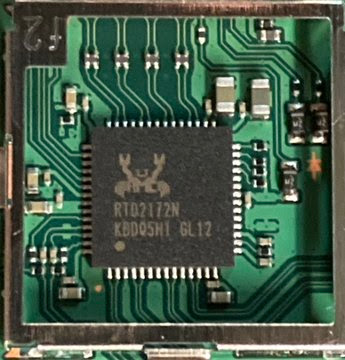
Twitter user @KawlunDram opened up one such dock of the Nintendo Switch OLED, and shared that it contained a new Realtek chip. And it’s one that is advertised as “4K UHD multimedia SoC”. This chip was also reportedly referenced in a firmware update from January this year.

Further supporting this is the HDMI cable that came with the Nintendo Switch OLED. @KawlunDram plugged it into an Xbox One X to check that it supports 4K 60fps, and the results turn out positive, suggesting that it was a HDMI 2.0 cable.


But in the end, the chip may be used simply for the improved audio. The Switch itself should also be able to support 4K output, given that it uses the Nvidia Tegra X1 chip. But considering its graphical performance for most games, that’s probably not the best of ideas.

But if anyone still needs straws to grasp onto, then there’s the existence of an “update dock firmware” function for the dock of the Nintendo Switch OLED. There’s no description of what it does, so one can hope that it can, against all odds, add 4K support the way Bluetooth audio support got added.

Tuesday, October 5, 2021

Samsung Confirms Ray-Tracing Support With Exynos 2200 SoC

Samsung has confirmed that its upcoming Exynos 2200 SoC will indeed ship out with support for ray-tracing. Support for feature, which is currently an optional aesthetic available for desktop GPUs, is possible thanks in no small part to the Korean tech giant’s collaboration with the CPU and GPU maker, AMD.

The confirmation was posted by the brand itself via its official account, Samsung Exynos, on the Chinese social media platform, Weibo. Technically speaking, the post sounds more like the company giving the equivalent of a layman’s breakdown about the functions of ray-tracing, followed by a quick confirmation of the technology’s presence in its upcoming Exynos 2200 SoC.

As it stands, initial reports already point towards the Exynos 2200 using an 8-core layout, running in a 4+3+1 configuration. Specifically, that’s four high-efficiency cores running at 1.73GHz, three mid-tier cores at 2.5GHz, and one high-performance core at 2.59GHz. The GPU, codenamed “Voyager”, are provided by AMD and are based on its RDNA2 GPU architecture. Further, it is rumoured to feature six Compute Unit, which translates into 384 Stream Processors, along with six Ray Accelerators.


Incidentally, the posting also included a poster that allegedly shows the difference between a GPU running without and with ray-tracing cores. For that matter, we strongly suggest to treat the image with a moderate amount of skepticism, for the simple fact that activating ray-tracing does not add additional burning vehicles to the scene.

Tuesday, September 14, 2021

AMD Radeon Software Adrenalin 21.9.1 Bring Auto-Overclock, Windows 11 Support


AMD’s latest Radeon Software Adrenalin drivers, version 21.9.1, is now live and as with all GPU drivers, it comes pack with several updates. Included in the new update is a new Auto-overclocking feature, and support for Microsoft’s Windows 11.

The support for Windows 11 is pretty much self-explanatory for Radeon users who are part of the Microsoft Windows Insider Program. With Adrenalin 21.9.1, you effectively gain access to the full suite of Radeon-related features, including Radeon boost, Radeon Anti-Lag, and Radeon Image Sharpening. In addition, the new drivers will also allow users to use the AMD Link app with the Windows 11 insider build.

Moving on, the new Radeon Auto-Overclock is the latest addition to AMD’s Radeon Software and is easily accessible via program’s Tuning tab. The feature is a one-button does all, conveniently located in the Tuning Control section and as the name suggests, clicking the button will automatically adjust the performance of your Radeon GPU and Ryzen CPU. Do note that, as per AMD’s blog, the Auto-Overclocking feature will only function with Radeon RX 6000 Series GPUs and Ryzen 5000 Series CPUs.


Last but not least, the Adrenalin 21.9.1 drivers also carry FidelityFX Super Resolution (FSR) support for several titles, which includes Resident Evil Village, Chernobylite, and Arkane’s newly launched title, Deathloop, among many others.

Tuesday, August 31, 2021

iPhone 13 To Support Satellite Communications, Claims Analyst

The iPhone is one of the most popular of phones for the general public. But its next iteration is about to come with something that’s not usually for mainstream use. Analyst Ming-Chi Kuo predicts that the iPhone 13 will come with, of all things, support for satellite communications.

AppleInsider reports that in a note to investors, Kuo says that this will be made possible thanks to a modified Qualcomm X60 modem chip. This prediction is based on the company’s work with Globestar, a provider of such a service. And by extension, the analyst also predicts that Apple will be working with Globestar for its satellite comms tech for the iPhone 13.

For now, it’s not stated what sort of modifications Apple will be doing to the Qualcomm X60 modem for this to work. Though if the company can do so without changing the expected look of the iPhone 13, it will be an impressive feat. At least when you consider most satellite phones look like feature phones. Kuo also notes that other phone makers looking to give their devices satellite communications will have to wait until next year, for the Qualcomm X65 chip.

Kuo claims that this will be just the first Apple product to use satellite comms. In the future, the analyst predicts that the iPhone maker will also be using said tech to supplement other products like Apple Car. But as for the iPhone itself, it remains to be seen if the tech will debut in this year’s series or the next. After all, it’s possible that this year’s batch will be called the iPhone 12s.

Monday, July 19, 2021

Intel Confirms 600 Series Chipset Support For Alder Lake-S, Raptor Lake-S CPUs

Intel appears to have provided confirmation that its upcoming 600 series motherboards will support both 12th generation Alder Lake-S and 13th generation Raptor Lake-S CPUs, when all three products launch in the future. The chipset board’s compatibility was discovered within documentation submitted to the SATA-IO, the body responsible for getting hardware vendors to adhere to SATA specifications and other accessories.

Breaking down the document further, it lists the model number and name of the product, Alder-Raptor Lake, along with four device IDs, 7AB0, 7ACB, 7A30, and 7A4B. Beyond that, however, there is no further information about the chipset board.

That said, the discovery does provide a bit of good news for the future; rather than create another motherboard chipset for each consecutive CPU generation, Intel has once again chosen to enable backwards compatibility between its 12th and 13th generation Core series lineup. Much like the Z270 chipset that supports both its 6th generation Skylake and 7th generation Kaby Lake processors, albeit with less features available for the former.


As for the CPU lineups themselves, we at least know that Alder Lake-S is set to be the second lineup to use a hybrid processor architecture, the first having been its 10th generation Lakefield CPUs that were recently discontinued, at least for its laptop segment anyway.

We also know that the Alder Lake-S will be the first CPU lineup to move away from the already archaic 14nm die lithography and into 10nm. Further, the new CPU series is expected to support the new DDR5 memory standard, as well as PCIe 5.0 and the possibility of a 14-core CPU as one of its offerings.

Wednesday, July 7, 2021

US does not support Taiwan independence


U.S President Joe Biden's point man on Asia is "astonished" by China's determination to play the leading role on the global stage and will "step up" its engagement in Southeast Asia to hold back such a trend. But the administration does not support Taiwan independence and understands the sensitivities involved, Indo-Pacific Coordinator Kurt Campbell said Tuesday.

Campbell's remarks at the Asia Society, are his first public comments since President Xi Jinping's July 1 speech celebrating the 100th anniversary of the founding of the Communist Party, in which the Chinese leader called the reunification of Taiwan "a historic mission and an unshakable commitment" of the party.

"We support a strong unofficial relationship with Taiwan. We do not support Taiwan independence," Campbell said in response to a question from the moderator asking "how much love is too much?" when it comes to stronger relations with the island.

"We fully recognize and understand the sensitivities involved here," he said. "We do believe that Taiwan has a right to live in peace. We want to see its international role, particularly in areas like vaccines and issues associated with the pandemic, they should have a role to play here, they should not be shunned in the international community."

The Biden administration, meanwhile, will "step up our game substantially" with regards to Southeast Asia diplomacy, understanding that engagement with that region is key to successful Indo-Pacific policy, Campbell said.

See also

"We recognize fully that really for an effective Asia strategy, for an effective Indo-Pacific approach, you must do more in Southeast Asia," Campbell said.

The administration's Southeast Asia game plan has been hampered by the cancellation of the Shangri-La Dialogue, which draws top level military officials, diplomats and weapons makers from around the world, and that other regional summits later in the year look to be held virtually, Campbell noted. But, he said that through vaccine gifting and new funding for infrastructure, the U.S. seeks to engage in a sustained way.

"We've taken it on board with our own vaccine programs, but also working with the Quad. We are deeply engaged to ensure that we will provide vaccines in 2022 to Southeast Asia and the Pacific. We think this is the most important contribution that we can make in the next little while," he said.

National Security Council Indo-Pacific Coordinator Kurt Campbell speaks to the Asia Society on July 6.
On infrastructure, Campbell said, "We're looking carefully at how we apply elements of the Build Back Better World set of commitments made in Europe last month," pointing to the infrastructure initiative U.S. President Joe Biden and fellow leaders of the Group of Seven rich nations launched at the Cornwall, U.K., summit.

He said that will include leveraging new finance arrangements for infrastructure at the U.S. International Development Finance Corporation.

"You will see later this year when the president hosts the Quad leaders in Washington, you'll see some commitments that will be, I hope, exciting, I think, decisive with respect to not only continuation of vaccine diplomacy, but infrastructure as well," he said pointing to the Quadrilateral Security Dialogue between the U.S., Japan, India and Australia.

On the threat China poses, Campbell said, "Coming back in, I was astonished by some of the things I read, saw and experienced and have had diplomatic engagements about. And one of them is just undeniable: A very assertive determined China that wants to play the leading role on the global stage, and has really quite unsentimental views of United States and really wants to reshape the operating system of Asia."

To counter this challenge, the Biden administration has made Asia the center of its regional focus, Campbell said. "You'll see this movement from the Middle East, and it will be painful, in all likelihood. We'll see some real challenges in places like Afghanistan, but a much greater focus on the Indo-Pacific."

Campbell said the challenge for the U.S. would be to come up with a strategy that presents China with opportunities, but also a response if it takes steps "antithetical to the maintenance of peace and stability."

Asked when he expected a first meeting between Biden and Chinese leader Xi Jinping and whether this could come at the G-20 summit in October, Campbell replied: "My expectation will be that we'll have some sort of engagement before too long."

Campbell's statement on Taiwan independence is in line with what he has said in past speeches and does not indicate a change of policy. But they will be interpreted in Beijing as a commitment to the status quo, coming after Xi's July 1 speech.

Under the "One China" policy, which the U.S. has maintained since 1979, Washington "acknowledges the Chinese position" that there is but one China and that Taiwan is part of China. The U.S. recognizes the government of the People's Republic of China as the "sole legal government of China" but does not explicitly recognize Chinese sovereignty over Taiwan.

This is distinct from Beijing's "One China" principle, which considers Taiwan a Chinese province and part of its sovereign claim.
 

Sunday, July 4, 2021

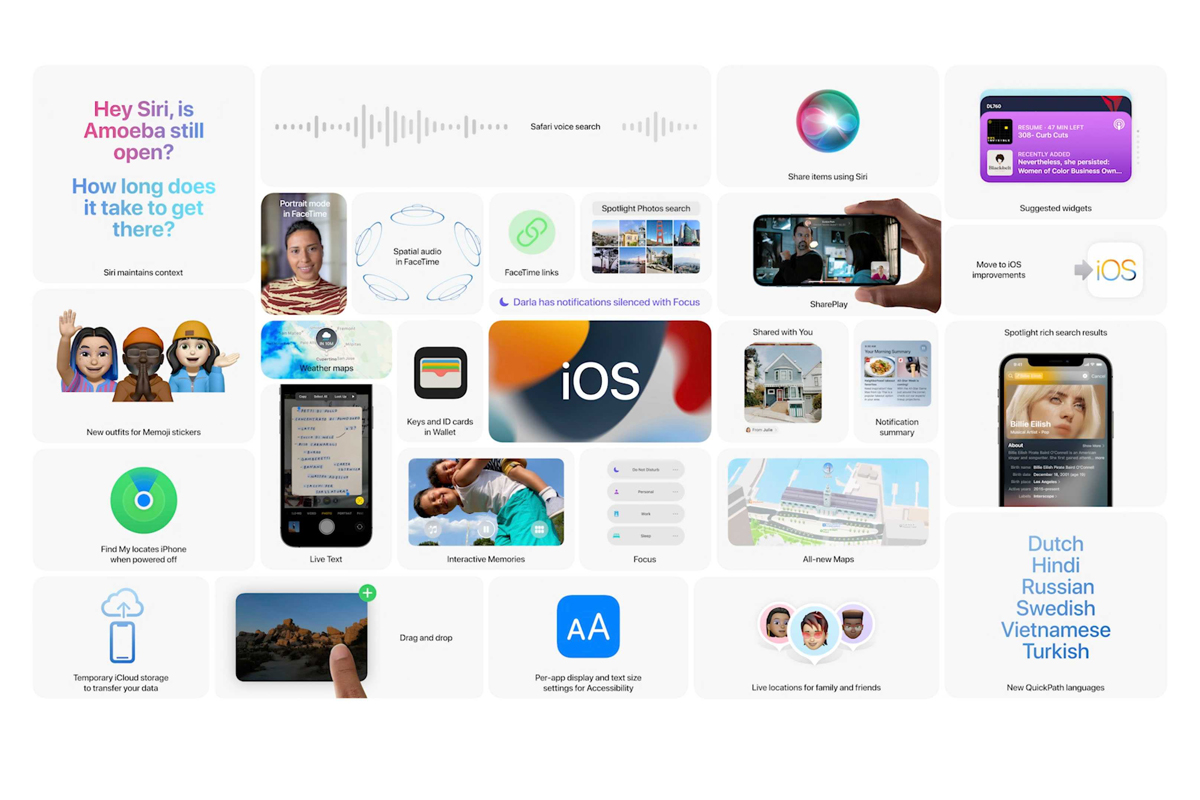
Apple iOS 15 To Add UWB Digital Key Support And New Features To Wallet App


Apple first introduced the digital car key feature on its Wallet app last year, which enabled users to unlock their cars wirelessly with just their iPhones. As revealed during its WWDC 2021 keynote that was held earlier today, the company is looking to expand the function even further by adding Ultra-Wideband (UWB) support along with the upcoming iOS 15 update.

The current iteration of digital car keys relies solely on NFC technology. What this means is that users are required to first activate the function on the Wallet app and then place their phone near the door handle of their vehicle in order to unlock it. 

On top of adding support for UWB-based keys to the app, the newly added tech would enable users to unlock and start their car remotely – more or less functioning similarly to existing keyless entry systems featured by most auto brands. In addition, Apple plans to add newer features to the app, such as the ability to set unique key identifiers for each car door and also using an Apple Watch as an extension.

The company noted that the first companies that will offer UWB keys support for its upcoming feature are BMW and Hyatt Hotels. Others that are also onboard include Walt Disney World, Schlage, Proxy, Evergreen, Latch, Assa Abloy and many others. And yes, the upgraded function will add support for compatible digital hotel keys and even smart homes as well.

Other than that, also new is the future inclusion of digital ID functionality. This lets you incorporate a digital version of your country, state and even driver ID on your iPhone, which can be used to verify your identity at checkpoints and so on. But don’t get too excited just yet, as the feature is planned to debut only for certain states in the US for now.


Apple’s ever increasing quality-of-life additions to iPhones is indeed highly appreciated, at least for some. However, this would also result in dire consequences if the user were to lose it, such as losing access to your digital wallet and the ability to unlock your vehicle, home or hotel room. Granted, the company also introduced various precautions to deny strangers from fully utilising these features, but the fact remains: if you are planning to transform your phone into a do-it-all device, always keep it secured on your person at all times.

Sunday, June 20, 2021

NVIDIA To Cease GPU Driver Support For Windows 7 And 8 By October 2021

Despite being several years old, NVIDIA is still releasing GPU driver updates for older Microsoft operating systems including Windows 7, 8 and 8.1. However, this will no longer be the case once October 2021 rolls in, as announced by the company via a newly published support page on its website.

“Effective October 2021, Game Ready Driver upgrades, including performance enhancements, new features, and bug fixes, will be exclusively available for systems utilizing Windows 10 as their operating system,” NVIDIA wrote. “Critical security updates will be available on systems utilizing Windows 7, Windows 8, or Windows 8.1 through September 2024.”


Seeing that current games and applications are only compatible with the current generation Windows systems, NVIDIA’s (and even Microsoft’s) decision to cease support for the older platforms shouldn’t be an issue to most users. That is, provided that they have already upgraded to the popular Windows 10 system, which will soon hit its six-year-old mark late next month.

Sunday, May 2, 2021

Alleged OPPO Smart Tag Leaks; Could Feature UWB, USB-C Charging Support

It appears that tracking tags have been gaining momentum once more, with both Apple’s AirTag and Samsung’s Galaxy SmartTag leading the charge. Not wanting to feel left out, it seems that even OPPO wants in on the “tagging” action and is reportedly preparing to launch its own Smart Tag soon.

Images of OPPO’s alleged Smart Tag were first posted on the Chinese Social network, Weibo and spotted by Digital Chat Station. Based on the first picture, the smartphone brand seems to have gone with a standard, disk-shaped design, with its branding plastered simply on the top.

The second image reveals that the tracker will support USB-C charging, as well as ultrawide band (UWB) technology. In comparison to the Galaxy SmartTag’s Bluetooth tracking, UWB would effectively allow OPPO’s smart tag to be more accurate. Sadly, there isn’t a lot of detail about the tracker, nor when its parent company plans on releasing the device.


On that note, we’ll be keeping an eye out for updates, so be sure to check this space from time to time.

Thursday, March 4, 2021

Report: AAA Game Devs Outsource Crunch To Support Studios


The subject of crunch (extended periods of overtime) is a hot topic in the world of video games. Most recently, the crunch debate, if you could call it that, emerged again with Cyberpunk 2077. We’ve heard some developers saying that they will work towards reducing crunch too in recent months. But does that apply to the third party support studios that they hire?

Apparently not, according to a new report by YouTube channel People Make Games. The outlet interviewed 19 current and former employees from two outsourcing studios. One being our very own Lemon Sky Studios in Malaysia, and the other being Brandoville in Indonesia.

And the common consensus is that, unpaid overtime is very common. One former concept artist of Lemon Sky said that things can go from no overtime while working on TV animation to daily crunching for Warcraft III Reforged.

But unfortunately, this reality is unlikely to change for most outsourcing studios. One former Lemon Sky employee explains that in order for such studios to get a deal with a big-time AAA publisher, studios will need to offer to get the job done in a certain amount of time. That will then get squeezed further after negotiations, which means devs have to do more in less time. And if one studio doesn’t take the deal, another one will.

WhatsApp Desktop App Now Includes Video And Voice Call Support


WhatsApp, through its official blog, revealed that video and voice call support has been added to its desktop app on Windows and Mac platforms. As you may recall from our previous report, the new features first entered beta testing in December 2020, but were only made available for a small number of users.

Unfortunately, users of the web version of WhatsApp will be disappointed to know that the new video and voice call features have not been implemented just yet. It is not known when the company is planning to roll out the update for that particular platform.

Launching the new functions on desktop is similar to how it is done via the mobile version of WhatsApp. Simply open up a chat window and then click on either the video camera or phone icon on top to start the respective type of call. Video calls will pop out in a resizable window, and will always appear on top of any opened applications on screen. Of course, a webcam and/or microphone are required in order to initiate these calls.

However, the Facebook-owned messaging service noted that the new features are only available for individual chats, and would eventually be expanded to groups at a later time. A blunder on WhatsApp’s end, as this delay will definitely give rival platforms such as Zoom and Skype an advantage in terms of multi-user video conferencing.

Surprisingly, WhatsApp is still offering new quality-of-life features to its users, despite receiving a tremendous amount of backlash for its upcoming policy change. However, these new additions and a majority of the platform’s functionality will eventually be stripped off from those who insist on refusing to accept its new privacy changes by 15 May 2021.

Wednesday, March 3, 2021

AMD Brings Smart Access Memory Support To Ryzen 3000 Series CPUs


Alongside the launch of the Radeon RX 6700XT, AMD officially announced that it is opening up support for its Smart Access Memory (SAM) feature to its Ryzen 3000 series CPU. The feature, which was announced last year during the launch of the Radeon RX 6000 series, was initially reserved for AMD’s Ryzen 5000 series and its RDNA2-powered graphics cards.

The feature is basically AMD’s own take of the existing Resizable BAR, which has been around since the 2nd generation PCIe interface. Prior to AMD’s announcement, the feature’s use was mainly used by programmers and others within the Linux and sever communities.

Essentially, Resizable BAR enables a CPU to gain full access to a GPU’s memory and theoretically providing gamers with a slight boost in their gaming performance. In the case of SAM, the feature is designed to only work between AMD’s Radeon RX 6000 series GPUs, Ryzen 5000 series CPUs, and as of this article, its Ryzen 3000 series CPUs.


In terms of performance, AMD says that gamers that enable SAM with their Ryzen 3000 series CPUs should see a performance increase of approximately 16%. Compared to when they don’t have the feature turned on. Like the Ryzen 5000 series processors, owners of Ryzen 3000 series processors will need to update the BIOS on their motherboard before you can access those gains in framerates.

At the time of writing, AMD’s Smart Access Memory for its Ryzen 3000 series CPUs is accessible.

Xiaomi Shows Off Physical Concept Of Vision Gran Turismo

At the very tail end of last month, Xiaomi unveiled the Vision Gran Turismo. The car was revealed as a digital hypercar, and one that’s made...