Showing posts with label Facebook. Show all posts

Saturday, August 27, 2022

Quest VR Headsets To No Longer Require A Facebook Account For Login


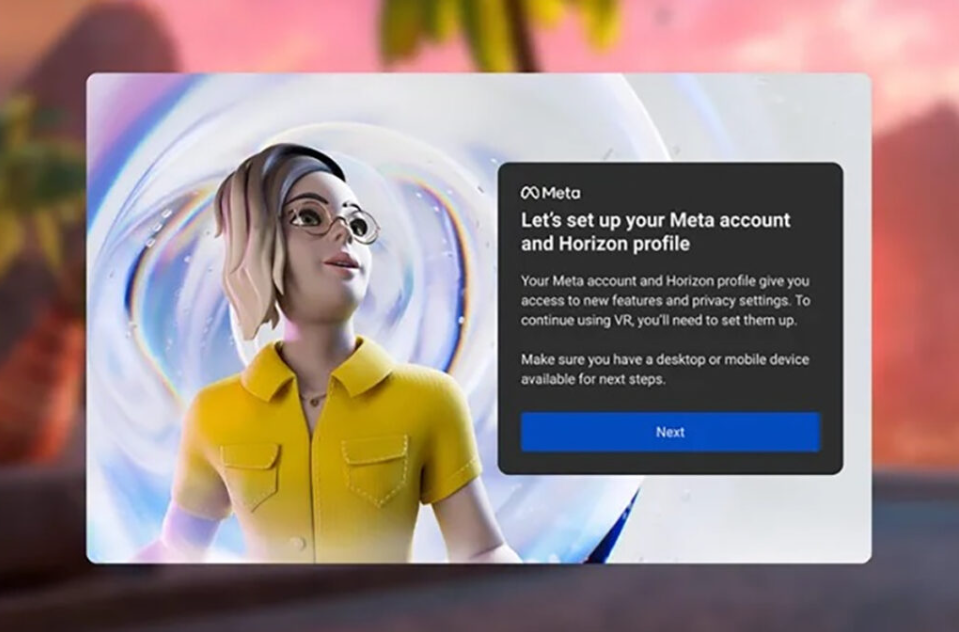
Meta has recently announced that a Facebook account is no longer needed for Quest VR headset logins. Instead, owners are now required to create a new Meta account and a Meta Horizon profile in order to fully utilise the virtual reality headgear – both of which are currently being rolled out on a gradual basis across the globe.

As some may recall, this isn’t the first time Meta has shifted the login policy for its headsets. Prior to this, the company discontinued the original Oculus accounts in 2020, requiring users to log in to their Quest VR devices with a Facebook account instead. The move proved to be unpopular, with existing headset owners – those with and without an existing Facebook account –  raising privacy concerns due to the tech giant’s well-known (but infamous) track record on the subject.


This supposed U-turn may seem like an attempt to quell users of any fears related to the stigma that Meta possesses. However, all this does is raise even more eyebrows at best, as you’re still required to register with the company anyway – this time around with another account made directly under the brand itself, which is undeniably redundant.

Despite all this, Meta is adamant that this move is the best course of action moving forward. “Our new Meta account structure gives you more flexibility and control, letting you choose how you do and don’t show up—and whether Facebook and / or Instagram is part of your experience in VR and other surfaces where you use your Meta Horizon profile,” the social media conglomerate said in its recent blog post.


If you’re cool with this (not like we’re given much of a choice to begin with), you can create a new account through the Meta mobile app using an email address, Facebook account, or Instagram account. Once it is created, all that’s left is to set up a linked Meta Horizon social profile for your Quest VR headset. Additionally, you can also choose to remove your Facebook profile from your newly created Meta account afterwards.

Tuesday, October 5, 2021

Router Configuration Is Behind Facebook, Instagram, and WhatsApp Massive Downtime

Facebook has experienced a global-scale downtime late last night which also affected its subsidiaries including Instagram and WhatsApp.  Lasted for more than 6 hours, the company has provided some explanation a few hours after it manages to put back all of its services online again.

In a blog post by Facebook’s Vice President of Engineering and Infrastructure, Santosh Janardhan, the root cause behind the massive downtime was apparently due to some configuration changes that were performed on the company’s backbone routers. He pointed out that these routers were responsible for the traffic between Facebook’s data centres.

The changes somehow interrupted the traffic flow which then led to the global-scale downtime. Santosh was quick to point out that the company didn’t find any evidence that user data has been compromised during the incident.

In general, Santosh’s explanation is in line with what Facebook’s CTO, Mike Schroepfer said earlier that the company was experiencing networking issues. Nevertheless, the timing of the massive downtime is rather interesting though as it happened right before Facebook’s former product manager Frances Hauge, who leaked tons of documents to The Wall Street Journal is scheduled to testify in front of the U.S Congress regarding her time with the company.

Monday, August 16, 2021

Facebook Adds End-To-End Encryption To Voice And Video Calls On Messenger

Facebook has announced that it has introduced new end-to-end encryption (E2EE) to enhance privacy for one-to-one voice and video calls on its Messenger platform. This expands on the messaging platform’s current encryption feature that has been implemented to its text chats since 2016 under the “Secret Conversation” option.

Although it is worth noting that the new E2EE feature for voice and video calls on Messenger would not be activated by default. Much like the existing one-to-one encrypted text messaging mode, users are required to manually opt into the feature when initiating a call with another person. Facebook is ensuring that all text and calls that are under E2EE are kept private between the user and the individual that they’re communicating with.

Introduced alongside encrypted voice and video calls is a minor update to its “disappearing messages” feature. This time around, users can choose to have chats designated as such to expire as soon as five seconds after it is viewed. Previously, disappearing messages can originally be set to vanish either after a minute or up to 24 hours. 

Additionally, Facebook also revealed that it is running a limited test for other encryption-based features to select users at this current time. These include E2EE enhanced group chats and calls between “friends and family that already have an existing chat thread or are already connected.” The social network says it is planning to implement the same limited test to Instagram’s direct messaging feature as well, but did not provide any further details regarding it.


Interestingly, Facebook also noted in its blog post that E2EE has become “the industry standard” for messaging services. However, despite characterising it as such, the company ironically continues to feature encrypted conversations as an opt-in experience on Messenger – unlike its subsidiary private messaging platform WhatsApp, which actually implements E2EE as a standard to chats since its launch.

Thursday, July 22, 2021

Facebook Survives Major Lawsuit That Could Have Broken Up Its Empire

A US federal court has dismissed antitrust complaints from the Federal Trade Commission (FTC) as well as numerous states against Facebook, quashing a major bid to force the social media giant to sell subsidiaries Instagram and WhatsApp.

Unsurprisingly, the court’s decision moved the markets. The price of Facebook’s shares rose by over 4% after the ruling, pushing the company’s total value over US$1 trillion (~RM4.15 trillion) for the first time, Reuters reported.

The judge who presided over the case ruled that the FTC failed to prove that Facebook had monopoly power in the US social networking market. He further dismissed a lawsuit initiated by many US states because they took too long to challenge the company’s acquisitions of Instagram and WhatsApp in 2012 and 2014 respectively.

“We are pleased that today’s decisions recognise the defects in the government complaints filed against Facebook,” said a Facebook spokesperson.

The FTC, which enforces US antitrust law, and a large group of US states sued Facebook last year for stifling market competition by acquiring its rivals like Instagram and WhatsApp.

Like other US tech giants, Facebook has come under increasing global scrutiny over its size and influence. Some American lawmakers want it to be broken up. In Germany, regulators are looking into whether the tech giant is strangling market competition – Apple, Amazon, and Google are also being probed over the same issue.

Wednesday, June 30, 2021

Facebook Smartwatch May Release Next Year; To Feature Two Cameras


Earlier in February, we saw reports that say Facebook may be working on a smartwatch of its own. New reports provide more details on what this wearable may entail, as well as when it may be released. And it’s not anytime soon, to be sure.

The Verge reports that the smartwatch by Facebook will come with a detachable display. This display will also come with two cameras . Detaching the module will then let users take pictures and videos, Naturally, you’ll be able to upload them to the company’s many platforms, including Instagram. It may also come with LTE connectivity for this purpose, so that it can work without a phone.

One camera will sit in front, the way a front-facing camera on a phone will. This one exists mostly for video calls, which probably means a lower resolution. Another sits at the back of the module, allowing for 1080p recording with auto-focus. Facebook will also be working with other companies to make accessories to allow the module to be attached to things like backpacks. Which makes it sound like an action cam.

The Verge reports that the smartwatch by Facebook will come with a detachable display. This display will also come with two cameras . Detaching the module will then let users take pictures and videos, Naturally, you’ll be able to upload them to the company’s many platforms, including Instagram. It may also come with LTE connectivity for this purpose, so that it can work without a phone.

One camera will sit in front, the way a front-facing camera on a phone will. This one exists mostly for video calls, which probably means a lower resolution. Another sits at the back of the module, allowing for 1080p recording with auto-focus. Facebook will also be working with other companies to make accessories to allow the module to be attached to things like backpacks. Which makes it sound like an action cam.


The report also states that this is the social media company’s plan to circumvent Apple and Google, going straight to users. Which also goes to explain why, despite it being a smartwatch, the detachable module behaves quite like a dumbed down smartphone.

Facebook is also reportedly already working on second and third generations of the device. Which sounds like the company is confident of its success. But the first generation will not be seeing the light of day until some time in summer 2022.

Saturday, June 19, 2021

Silicon Valley Democrat Suggests Breaking Up Facebook And Its Subsidiaries


Facebook’s takeover of Instagram in 2012 and WhatsApp in 2014 has been its most well known acquisitions in the last decade. Ever since then, the social media giant established an ecosystem between the two and its own social media platform and even enabled various cross-platform integrations along the way. However, one US congress member isn’t onboard with the company’s growth and suggests that it should be broken up.

“It seems to me we would be better off if they were multiple platforms,” said California Democrat and Silicon Valley representative Ro Khanna in an interview with Bloomberg TV. “I don’t think that merger [with Instagram] should have been approved in the first place.”

He explained that having Instagram and WhatsApp as separate entities would build up more competition, and expressed that there aren’t many robust social media platforms currently available. Khanna also referred to a bill introduced by fellow Democrat and Senator of Minnesota Amy Klobuchar, which challenges companies to prove a takeover isn’t anti-competitive. Bloomberg noted that the US Federal Trade Commission, which reviewed and approved Facebook’s aforementioned acquisitions in 2012 and 2014, had filed a lawsuit seeking to break the companies up in December of last year.

In addition, Khanna called for guidelines for content regulations during the interview, believing that these should not be determined by the heads of social media platforms such as Twitter’s Jack Dorsey and Facebook’s Mark Zuckerberg. “I don’t think that’s how we ought to operate,” he said.

The Silicon Valley Democrat also brought up the Internet Bill of Rights, a proposal he introduced in 2018, which ensures net neutrality by forbidding broadband providers from favouring their own content, guard against mass government surveillance, and provide individuals more control over their data. “I believe [technology is] a force for innovation and entrepreneurship, but we need stronger regulations on privacy, with my Internet Bill of Rights, and on antitrust to have a competitive playing field,” he added.

Friday, June 18, 2021

EU Court’s Ruling Opens Door To More Regulatory Scrutiny Of Facebook, Big Tech


The European Court Of Justice, the EU’s highest court, has ruled that national regulatory agencies can act against alleged privacy violations by Facebook and other big tech companies even when they’re not the respective lead regulators, Reuters said.

Many large American tech companies – Facebook, Google, Apple, and Twitter – have planted their EU headquarters in Ireland, making them subject to the Irish data protection regulator under the rules of an EU privacy law called GDPR (General Data Protection Regulation).

The problem is, quite a few national regulatory agencies in other EU countries have complained that their Irish counterpart has been taking too long to decide on cases. Ireland, on the other hand, has claimed that it needs to be especially meticulous when dealing with powerful, cash-flush companies. 

This apparently came to a head when Facebook contested the territorial competence of a Belgian privacy watchdog which had pursued legal action against the social media company. Consequently, a Belgian court sought guidance on the matter from the EU Court of Justice.

“Under certain conditions, a national supervisory authority may exercise its power to bring any alleged infringement of the GDPR before a court of a member state, even though that authority is not the lead supervisory authority,” the EU court ruled.

Big tech companies have been beginning to feel the pinch as governments around the world take a more critical view of their dealings and practices. Even on their home ground in America, legislators have been increasingly vocal against the anti-competitive power of Silicon Valley giants.

Thursday, June 17, 2021

Mark Zuckerberg Hosts First Live Audio Room On Facebook


Facebook announced its Clubhouse clone, called Live Audio Rooms, in April. The company has been testing the feature in Taiwan with public figures and announced that it will run across both Facebook and Messenger. On Tuesday, Facebook CEO Mark Zuckerberg hosted its first public test of Live Audio Rooms in the U.S, joined with fellow execs and creators.

The attendees for this event included Andrew Bosworth, Facebook VP and Head of Facebook Reality Labs, Fidji Simo, Head of Facebook App, and Facebook Gaming creators StoneMountain64, QueenEliminator and TheFierceDivaQueen.

The creators mostly talked about game streaming on the platform, followed by an announcement by Zuckerberg regarding an upcoming gaming feature called “Looking for Players.” It will be a new post type that will help creators find others in the community to play games with while they’re streaming.


Live Audio Rooms have a similar UI design to that of its rivals, Clubhouse and Spaces. The hosts of the event are represented by rounded profile icons at the top of the screen, while the listeners are represented by smaller icons in the bottom half of the screen. In between is a section with people followed by the speakers.

The active speaker is indicated with a glowing ring in shades of blue, purple, and pink with a blue check next to their name if they’re verified. There are also auto-generated captions available for accessibility.


Zuckerberg also clarified that the platform will not immediately take a cut of the revenue generated from creators’ content. Given the competition in the space, this decision seems to be an incentive to attract creators.

Clubhouse currently allows creators to keep 100% of their revenue and funds the shows of some creators. Meanwhile, Twitter is tying Spaces to its broader set of creator tools, which now includes newsletters, tips, and an upcoming subscription platform called Super Follow.

At the time of writing, Live Audio Rooms are only available on iOS and Android in the US. Zuckerberg did not specify when the feature will be released to the public but did hint that it would be coming “soon”.

Thursday, June 10, 2021

Facebook Will No Longer Ban Posts Claiming COVID-19 Was Man-Made

Facebook said it would no longer take down posts claiming that COVID-19 was man-made. This comes as US President Biden ordered further investigation into the origins of the virus, which are disputed in both the scientific and intelligence communities.

“In light of ongoing investigations into the origin of COVID-19 and in consultation with public health experts, we will no longer remove the claim that COVID-19 is man-made from our apps,” a Facebook spokesperson said, according to a Reuters report.

She said the company would continue consulting with health experts and update its policies as new facts and trends emerge. Facebook, like other social media platforms, have committed to removing falsehoods and misinformation about the virus.


The claim that the virus came from a laboratory in the Chinese city of Wuhan has long been dismissed as a baseless conspiracy theory. Former US President Donald Trump famously floated the theory, which at the time was widely rejected by the scientific community.

But according to the BBC and other news outlets, a recently disclosed US intelligence report said that three researchers from the Wuhan laboratory were treated in hospital in November 2019 – just before the virus broke out in the city.

As news of the report spread, the Biden administration admitted that the US intelligence community was split on whether the virus came from a laboratory accident or emerged naturally (from human contact with an infected animal). The US president wants officials to look into the question again and get him answers within 90 days, the BBC said.

China, unsurprisingly, has rejected the lab leak theory.

Monday, May 17, 2021

Signal Tried To Use Facebook’s Ad System Against Facebook


Signal, the privacy-focused messaging app, said it tried to run Instagram ads to highlight how much information Facebook collects about users. Facebook, in turn, accused Signal of pulling a disingenuous “stunt”.

Signal said it tried to run a “multi-variant targeted ad” on Instagram, using Facebook’s own advertising tools to show people how they’re being targeted by ads. Facebook has been frequently bashed for collecting and using reams of personal user data for advertising purposes.

According to Signal, Facebook rejected the ads and disabled its ad account. “Facebook is more than willing to sell visibility into people’s lives, unless it’s to tell people about how their data is being used,” the messaging app said.


Facebook, on the other hand, denied it shut down Signal’s ad account and claimed that the latter didn’t even try to actually run the ads in question, a CNBC report said.

“If Signal had tried to run the ads, a couple of them would have been rejected because our advertising policies prohibit ads that assert that you have a specific medical condition or sexual orientation, as Signal should know. But of course, running the ads was never their goal — it was about getting publicity.”

Signal, of course, disputed this, reiterating on Twitter that the ads were indeed rejected and providing screenshots of their disabled ad account.

Friday, May 7, 2021

Signal Tried To Use Facebook’s Ad System Against Facebook

Signal, the privacy-focused messaging app, said it tried to run Instagram ads to highlight how much information Facebook collects about users. Facebook, in turn, accused Signal of pulling a disingenuous “stunt”.

Signal said it tried to run a “multi-variant targeted ad” on Instagram, using Facebook’s own advertising tools to show people how they’re being targeted by ads. Facebook has been frequently bashed for collecting and using reams of personal user data for advertising purposes.

According to Signal, Facebook rejected the ads and disabled its ad account. “Facebook is more than willing to sell visibility into people’s lives, unless it’s to tell people about how their data is being used,” the messaging app said.


Facebook, on the other hand, denied it shut down Signal’s ad account and claimed that the latter didn’t even try to actually run the ads in question, a CNBC report said.

“If Signal had tried to run the ads, a couple of them would have been rejected because our advertising policies prohibit ads that assert that you have a specific medical condition or sexual orientation, as Signal should know. But of course, running the ads was never their goal — it was about getting publicity.”

Signal, of course, disputed this, reiterating on Twitter that the ads were indeed rejected and providing screenshots of their disabled ad account.

Monday, May 3, 2021

Facebook Encourages iOS Users To Enable Tracking So Its Apps Would Remain “Free Of Charge”

In a latest attempt to legally bypass Apple’s recently implemented App Tracking Transparency (ATT) requirement, Facebook is now encouraging users of its social media app and also Instagram on iOS to enable data tracking via a new prompt. First spotted by technologist Ashkan Soltani, this new pop-up contains the usual “benefits” of allowing tracking, such as personalised ads and helping businesses to reach customers – the same reasonings it used in a previous effort to persuade users.

However, one major point stands out from the rest. In this updated prompt, Facebook added that keeping data tracking enabled also “helps keep [the apps] free of charge”. This basically implies that the social media giant may one day consider charging users to use its platforms and apps, should it be denied any tracking capabilities.

In a recent update to its “Speaking For Small Businesses” blog post, Facebook vice president for ads and business products Dan Levy explained that these prompts serve as “educational screens” to inform users on how the company uses data for personalised ads. “Agreeing to these prompts doesn’t result in Facebook collecting new types of data; it just means that Facebook can continue to give people better experiences,” he wrote.

Apple’s new ATT requirement was recently included in the latest iOS 14.5 update that was released for iPhone users last week. This restricts developers and companies from retrieving an individual’s Identifier for Advertisers (IDFA) to be shared and collected across apps on the platform. Even prior to its implementation, Facebook has been steadfast against ATT since it was first announced last year – even to go as far as bashing the iPhone maker in a series of newspaper ads, among other things.

For many, the social media giant’s “warning” of potentially going pay-to-use for all of its various platforms and their respective apps sound more like a bluff. The reason being that Facebook doesn’t necessarily rely on iOS users to collect data for advertisers, as it still has the ability to do so on Android as well as desktop (via its website). Losing Apple users would indeed cause a significant blow to the company’s profits, but it still has plenty of alternatives to generate a large safety net from hitting rock bottom.

That being said, it remains to be seen whether Facebook would hold its end of the bargain should Apple and users insist on choosing not to comply with its persuasion.

Saturday, May 1, 2021

Facebook Announces Clubhouse Clone Live Audio Rooms, Set To Launch Mid-Year


Facebook announced a new feature called Live Audio Rooms that mimics much of what popular audio-based app Clubhouse does. It is expected to launch by summer – that’s mid-2021 for the rest of us who don’t live in the Northern Hemisphere.

Rumours have swirled around the development of Facebook’s Clubhouse clone. Facebook has already been beta testing Hotline, a Q&A-based app that’s quite similar to Clubhouse, but Live Audio Rooms seems to be a separate feature that’s fully integrated within the existing Facebook ecosystem.

Before launch, Facebook said it intends to test Live Audio Rooms in Groups, making it available globally for Group users and their communities. Public figures will also have access to the feature, allowing them to host conversations with other public figures, experts, and fans.


Live Audio Rooms will also be available on Messenger at launch – which comports with rumours last month that the social media giant was working to build a broadcasting feature into Messenger. Unlike Clubhouse though, content creators have the options of turning a live conversation into a podcast for later listening, and sharing audio excerpts from a session in the form of Soundbites (also a new feature). In contrast, Clubhouse’s philosophy emphasises privacy and the app generally doesn’t allow recordings – an attribute that made it initially popular in China before it was banned there.


Facebook is taking a different route probably based on commercial considerations – it wants to make things easier for creators, attracting a large pool of them. While unveiling Live Audio Rooms, the social media giant also pointed to creator monetisation opportunities through its Star feature, and announced an upcoming ability to charge access to a Live Audio Room through a single purchase or a subscription.

Earlier this month, Clubhouse itself announced its first monetisation feature called “Payments”, which enables direct payments to creators.

Facebook Expands Partnership With Spotify Through Project Boombox

Facebook is reportedly interested in expanding its partnership with the online music streaming service, Spotify, through a new initiative, known simply as “Project Boombox”.

According to Mark Zuckerberg, CEO of Facebook, the social network plans on building an “in-line” audio player, designed to allow listeners to hear songs or playlists, shared directly from its own platform, instead of redirecting them to the Spotify app or webpage. Further, Zuckerberg says that Project Boombox will also be designed for creators on the platform, while giving musicians the ability to share their work.

Other details suggest that Project Boombox will support both music and podcasts, and has already been tested in countries outside of the US, including Mexico and Thailand. As for when the new platform will be available, sources says that Facebook and Spotify could launch the new player, possibly by the end of the month.


Facebook enhancing Spotify’s service on the latter’s platform isn’t groundbreaking. Prior to this, the streaming service also integrated its service with Facebook’s Instagram Stories, which itself is a carry forward from Facebook Stories.

Wednesday, April 28, 2021

Facebook Now Allows You To Transfer Your Posts To Other Platforms


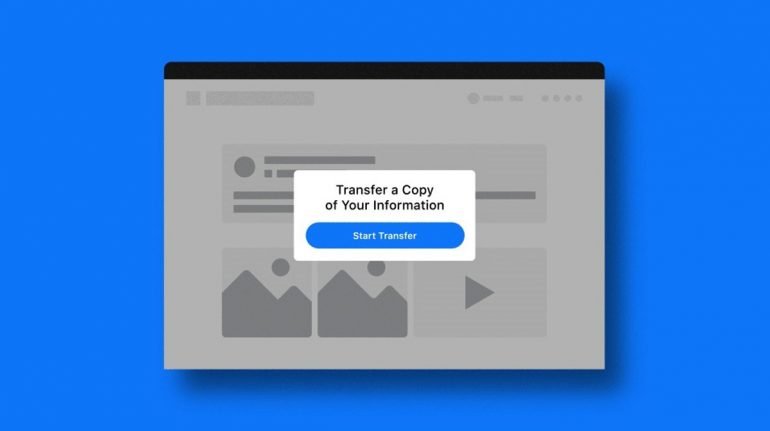
Facebook today revealed that it has rolled out a new feature which would allow its users to preserve their published posts to platforms outside of its ecosystem such as Google Docs, WordPress or Blogger. This greatly expands the existing data transfer tool for photos and videos that was introduced by the social media company last year.

The new feature is part of a cross-company data-sharing initiative that launched in 2018, simply known as the Data Transfer Project. Its aim is to have users freely move their data across various online services and platforms seamlessly without restriction. Among those participating in this initiative includes Apple, Google, Microsoft and Twitter – all of which also have introduced their own data-export tools.


Concurrently, as noted by The Verge, the introduction of this new feature would also help bring Facebook in line with two recent regulation laws, the California’s Consumer Privacy Act and the European Union’s General Data Protection Regulation. “We hope this tool empowers people to take control of their data and encourages the creation of updated rules around data portability by lawmakers,” said company Chief Privacy Officer Michel Protti. “We look forward to working with more experts and companies to expand the scope of what you can move between platforms.”


This new addition to Facebook’s information transfer tool is now available to all users across the globe. Those who wish to utilise the feature may find it in the “Your Facebook Information” page, under the platform’s Settings page. From there, you can choose which type of content you wish to transfer, and to which platform outside of Facebook that you want it delivered to.

Keep in mind that the choices of transfer destinations will differ depending on what type of content you wish to move. Also, it’s worth noting that any data ported to other platforms will not include elements such as comments or data from other users, as they belong to their respective owners.

Facebook Announces Clubhouse Clone Live Audio Rooms, Set To Launch Mid-Year


Facebook announced a new feature called Live Audio Rooms that mimics much of what popular audio-based app Clubhouse does. It is expected to launch by summer – that’s mid-2021 for the rest of us who don’t live in the Northern Hemisphere.

Rumours have swirled around the development of Facebook’s Clubhouse clone. Facebook has already been beta testing Hotline, a Q&A-based app that’s quite similar to Clubhouse, but Live Audio Rooms seems to be a separate feature that’s fully integrated within the existing Facebook ecosystem.

Before launch, Facebook said it intends to test Live Audio Rooms in Groups, making it available globally for Group users and their communities. Public figures will also have access to the feature, allowing them to host conversations with other public figures, experts, and fans.


Live Audio Rooms will also be available on Messenger at launch – which comports with rumours last month that the social media giant was working to build a broadcasting feature into Messenger. Unlike Clubhouse though, content creators have the options of turning a live conversation into a podcast for later listening, and sharing audio excerpts from a session in the form of Soundbites (also a new feature). In contrast, Clubhouse’s philosophy emphasises privacy and the app generally doesn’t allow recordings – an attribute that made it initially popular in China before it was banned there.


Facebook is taking a different route probably based on commercial considerations – it wants to make things easier for creators, attracting a large pool of them. While unveiling Live Audio Rooms, the social media giant also pointed to creator monetisation opportunities through its Star feature, and announced an upcoming ability to charge access to a Live Audio Room through a single purchase or a subscription.

Earlier this month, Clubhouse itself announced its first monetisation feature called “Payments”, which enables direct payments to creators.

Xiaomi Shows Off Physical Concept Of Vision Gran Turismo

At the very tail end of last month, Xiaomi unveiled the Vision Gran Turismo. The car was revealed as a digital hypercar, and one that’s made...