Showing posts with label Users. Show all posts

Wednesday, October 6, 2021

Telegram Gains 70 Million Users After Facebook’s Recent Outage

As most of us are very aware by now, Facebook’s entire ecosystem – including its own social media platform, Instagram, Messenger, and Whatsapp – was affected by a major six-hour outage late Sunday evening, which lasted till early Monday morning in Malaysia. This expectedly ensued chaos amongst its users, resulting in those relying on the company’s various services for both business and personal use to seek the closest alternatives. Among those in line to willingly welcome these “refugees” are none other than WhatsApp’s closest rival, Telegram.

In fact, the amount of users the platform has recently gained greatly surpasses the influx of new registrations it experienced in January. As a refresher, WhatsApp announced an update to its privacy policy back in early 2021, revealing that it would begin sharing user data with parent company Facebook. The move backfired, raising privacy-related concerns which resulted in over 25 million users of the private messaging service to jump ship to Telegram.

According to the platform’s founder Pavel Durov, Telegram welcomed over 70 million users on Monday – the largest number of registrations it had ever received in a single day. While a milestone in every sense, Durov also acknowledged that the unexpected surge of new users in the short time frame have caused slower speeds on the platform due to the increased load.

Meanwhile, Twitter also greeted Monday’s Facebook-less crowd with a “hello literally everyone” tweet, which was posted not long after various reports regarding the outage were shared online. And as expected, various other brands ranging from tech to fast food franchises also rode along the wave, replying to the tweet with jokes and memes directed at the situation.

Just in case you missed it, Facebook revealed that the cause of the outage was apparently due to “some configuration changes” on its backbone routers, which are responsible for the traffic between the company’s data centres. The social media giant also assured that despite this unexpected shortcoming, all user data has not been compromised during the downtime.

Friday, October 1, 2021

iPhone Users Reporting Overheating And Battery Issues With Spotify On iOS 15

iPhone owners using the latest iOS 15 update have reported issues of overheating and battery draining when running Spotify. According to a support thread on the music streaming service’s official forum that was created last week, dozens of users have been reporting the same issue with one user even claiming that the music app drains through 30-40% of their iPhone’s battery every hour.

Initially, the forum’s admins responded by continuously giving generic advice, such as removing and reinstalling the app and suggesting users to try disabling Background App Refresh for Spotify on their iPhone – all of which were ineffective. Spotify finally acknowledged the battery drain complaints on Monday, and stated that the relevant team is working on the issue.

Besides that, there are also reports of similar issues occurring on older versions of iOS, including 14.7 and 14.8. Some users reported that the app would crash whenever their iPhones were locked, while others said that they have uninstalled Spotify altogether as a result of overheating issues.

As of now, there’s no confirmation on whether this is a problem with iOS or Spotify. One of the affected iPhone owners said they’ve tried using an older version of the streaming app and concluded that these issues only occur on newer releases, though they did not specify which versions exactly.

Spotify recommends that users always keep their app up-to-date for the latest patches, but gave no definitive timeline on when this issue will be resolved. Apple is said to be releasing iOS 15.0.1 soon, which would hopefully shed some light on the matter.

Tuesday, September 14, 2021

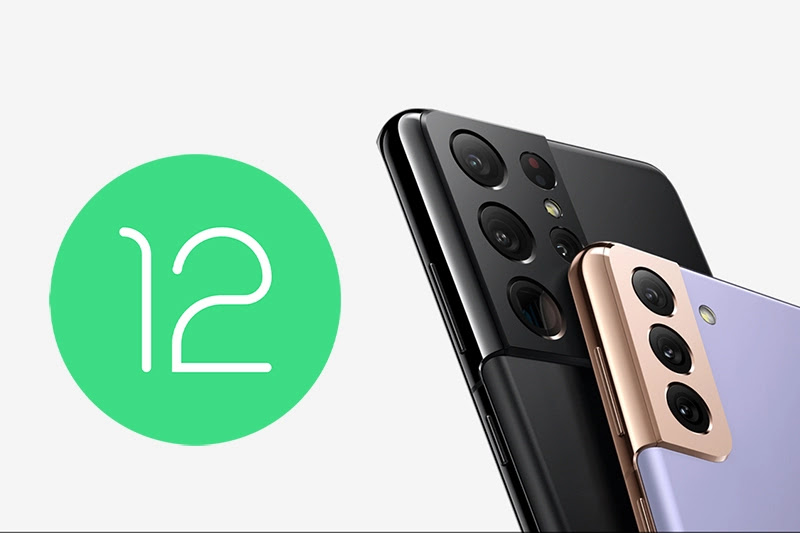
Samsung Galaxy S21 Users Will Be First To Get Samsung’s Android 12 Beta

After teasing about its upcoming beta program a few weeks ago, Samsung has officially opened up registration for Galaxy S21 series users to get early access and try out the One UI 4.0 beta based on Android 12. This year’s release is earlier than usual, as the stable release of Android 12 isn’t even out yet. In comparison, Samsung’s 3.0 beta last year got rolled out a month after the debut of Android 11.

The One UI 4 Beta Program is open to Galaxy S21, Galaxy S21+, and Galaxy S21 Ultra users in China, India, Germany, Poland, South Korea, the U.K., and the U.S. with varying release dates. Eligible users can sign up to preview the OS using the Samsung Members app and use some of the latest features being developed for the final version, including more customisable and transparent data settings.

Samsung says they’ll use the data from the beta program to fine-tune the final release coming later this year. Interestingly, the beta registration is being pushed out on the same day as Apple’s event, which is expected to launch this year’s iPhone.


One UI is the company’s custom Android skin, which looks markedly different from vanilla Android. Google’s upcoming version uses a new design theme called Material You, which is a major design revamp from previous versions of the OS. Seeing as Material You is a fundamental part of Android 12, it’ll be interesting to see how Samsung will integrate the AI theming into One UI’s aesthetics.

Samsung does say that 4.0 will have theming options that span from home screens, icons, notifications, wallpapers, and more, in addition to customisable widgets. From the pictures shown of the beta, it seems Samsung phones will be getting the microphone and camera indicators from Android 12 that show when these components are turned on. And of course, users will have even more customisation options in the AR Emoji Studio.


Coincidentally, a recent rumour based on internal Google documents suggests that the tech giant might be planning to officially release Android 12 for Pixel phones on 4 October, less than three weeks from now. Last year, One UI 3.0 was pushed out to Galaxy S20 phones a month after its public beta, so Samsung users who won’t be joining the beta programme might not have to wait that long for this year’s rollout.

Sunday, August 1, 2021

Twitter Is Testing New Like And Dislike Feature For Selected iOS Users

Twitter has confirmed via its official Support account that it is testing a new user approval function for tweets in the form of like and dislike buttons. However, the platform noted that the new feature will only be available to select users on iOS for now.

In regards to “disliking” a tweet, Twitter claims the function would act similarly to Reddit’s downvote feature, where it is used for researching on what type of replies users find relevant in a conversation. The company added that dislikes will be hidden, whereas the number of likes will be publicly visible. That being said, the number of dislikes will only be visible to the owner of the tweet and won’t affect the order of the replies. Users will be notified if their tweets receive likes, but no alerts will be given out when it receives the opposite.

According to user @DrOlufunmilayo, those on the iOS version of Twitter will see the prompt shown below. As seen from the screenshot, the new feature will completely replace the existing “heart” icon that is found alongside the reply, retweet and share buttons underneath a tweet.


A “dislike” button for social media platforms has always been a controversial issue. Prior to this, Twitter’s product lead executive Kayvon Beykpour responded to user suggestions for the feature by saying she disagreed with it. She explained that it’s difficult to find “a balance of incentives that rewards positive behaviour & disincentives toxic behaviour.”

Facebook users, in particular, have been requesting the thumbs down button for a long time, with a new rumour cropping up almost yearly. Mark Zuckerberg, Facebook CEO, stated in 2014 that the social media giant had considered adding a dislike button but was eventually scrapped due to its risk of being too, well, negative. The platform instead opted for Reactions, which allows users to react using emojis. Interestingly, Twitter is rumoured to also introduce emoji reactions similar to Facebook’s in the near future.


YouTube, on the other hand, has been testing on hiding dislike counts on videos from public view, similar to what Twitter is doing. The reason for this could be because many users argue that such a feature could be misused for abuse and bullying. At this current time, it is still unclear whether Twitter plans to expand the feature to the general public or keep it as just a researching tool for engagement.

Thursday, July 22, 2021

TPM 2.0 Requirement Could Affect Windows 11 Upgrade For Many Users


Windows 11 has just been officially announced last night as a free upgrade for Windows 10 users. However, the minimum system requirements for the new operating system are now much higher than its predecessor which include having a Trusted Platform Module (TPM) 2.0 chip.

TPM is a microprocessor that is designed to perform security functions such as storing encryption keys and login information. Microsoft has made the TPM 2.0 chip mandatory for certified Windows devices since 2015 which mean PCs that were manufactured before 2015 would likely not have the chip and will be ineligible for the Windows 11 upgrade.

On another hand, those who built their own PCs may not notice that a TPM chip has been integrated directly into their CPUs in the form of Intel Platform Trust Technology or AMD Platform Security Processor fTPM. Of course, this is provided that their Intel or AMD chip was released within the past 5 to 7 years as pointed out by Microsoft’s Director of OS Security, David Weston.

According to The Verge’s Tom Warren, even if your computer has a TPM chip, you’ll still need to make sure that Secure Boot is enabled in your motherboard BIOS before you’re able to upgrade. Each manufacturer has different steps to enter the BIOS, so you may need to do a bit of research for your own machine.

There are generally two ways to check if your desktop computer or laptop has a TPM chip. One, you could do it manually through Windows Terminal — Tom’s Guide has provided step-by-step instructions here. Or two, you could just download Microsoft’s new PC Health Check tool that will tell you if your machine meets all the requirements for the upgrade as per what we have mentioned in our previous report.

If you find yourself left out in the cold, there are a few ways to get around it but they are definitely not for the faint of heart. For example, ExtremeTech found that they could install the OS on incompatible systems by virtualising a TCM 2.0 module through VMWare Workstation Pro 16. You could also buy and install the module yourself provided your motherboard supports it, which may be tricky for some users out there.

Monday, July 19, 2021

WhatsApp Reportedly Working On Letting Users Send Uncompressed Photos

WABetainfo reports a very interesting new feature being developed by WhatsApp that could fix the annoying issue of low-res quality when sending images on the platform; a non-issue on other popular messaging apps such as Telegram and Apple’s Messages. The issue stems from WhatsApp’s heavy image compression that causes even sharp, high-quality photos to be converted to a blurry shadow of its former self.

Android users can now hold their breath in anticipation as the report hints that the latest WhatsApp beta update is developing a way for users to send images without being degraded by heavy compression. From the interface, we can see that there will be three options for photo quality:

  • Auto (Recommended): WhatsApp will decide whether or not to compress your photo based on your internet connection.
  • Best quality: This option will make WhatsApp send the image in the best quality possible. It’s still unclear whether the images will be fully uncompressed or the app will just apply less aggressive compression.
  • Data Saver: Images will be compressed as usual to save data and storage space.

Just last week, a beta update revealed that similar options for video quality are in the works. Just like the video feature, these functions are not yet active. Rather, the interface is there as a placeholder until the fully-fledged feature is released to beta users. There’s no telling when these features will be added to the beta, let alone the public. You can join the beta programme here, but do note that slots are currently full so you might have to wait a while.

Wednesday, July 7, 2021

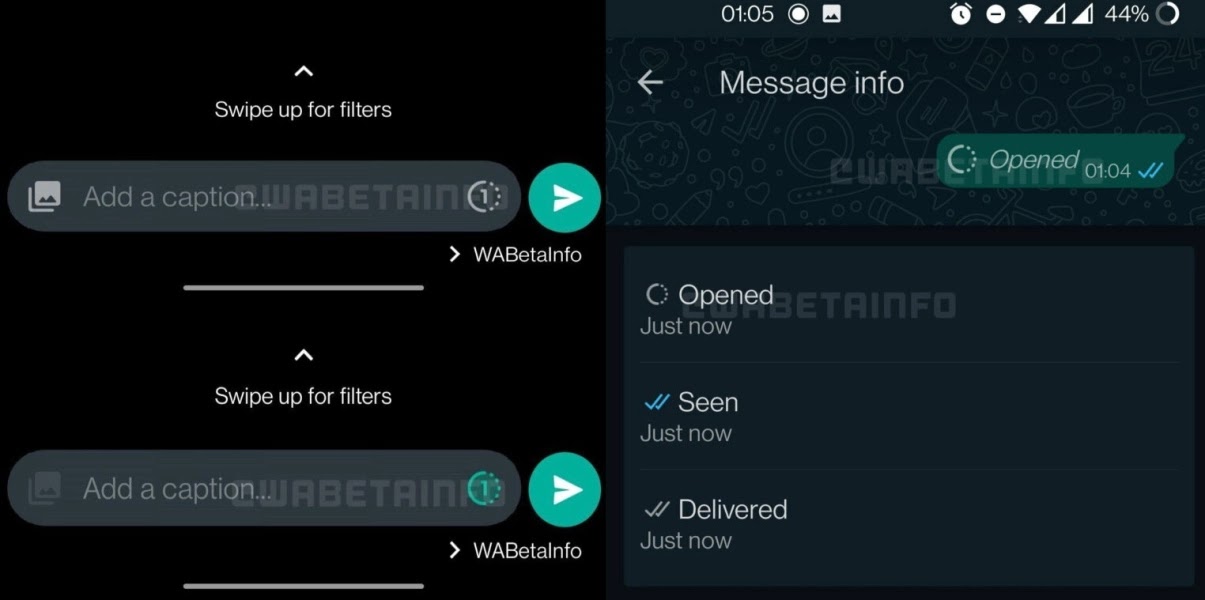
WhatsApp Rolls Out ‘View Once’ Feature To Beta Users on Android


WhatsApp has begun to roll out a new feature known as View Once to beta users on Android. This particular feature is one of three new functionalities for the messaging app that has been confirmed by its CEO, Will Cathcart as well as CEO of Facebook, Mark Zuckerberg to WABetaInfo earlier this month.

Meant to deliver more privacy to users, this feature allows them to send photos and videos that would disappear immediately after it is viewed and closed by the recipient. This is opposed to the existing Disappearing Messages feature, whereby users can set their messages to be automatically removed from WhatsApp after seven days.

At the same time, users would also be notified once the media file has been viewed by the recipient. This option can also be enabled for groups and even recipients that have not activated or yet to receive the feature on their device.

However, do note that recipients can still screenshot View Once’s photos or videos before they are deleted which is something you have to be mindful about, since WhatsApp does not have a built-in screenshot detector. WABetaInfo has also said that iOS beta testers will have access to View Once soon, but didn’t mention any exact rollout date for them.

Sunday, July 4, 2021

Apple Digital Legacy Service Lets Users Choose Heirs For Their iCloud Data After Death


Apple is adding a Digital Legacy feature that allows users to nominate contacts as legacy contacts who will be granted access to their Apple account in the event of their demise.

For years, users and campaigners have lobbied the tech giant to implement a formalised method of accessing emails, photos, and other contents of a loved one’s iCloud account after their death.

Up until now, the company had only advised users to include access to their personal information in their will:

“We encourage customers to add an inheritance plan to their will that covers the personal information they store on their devices and in iCloud. This may simplify the process of acquiring a proper court order and reduce delay and frustration for family members during a difficult time.”


With Digital Legacy, that process is both simplified and formalised; Legacy contacts will use a “legacy contact Apple ID” to sign in. The user will have access to the iCloud data and will be able to download it using the ID and access key.  Once logged in, the legacy contact user must provide a valid copy of the primary user’s death certificate in order to gain access to the deceased person’s data.

It should be pointed out that Facebook has had a Legacy contact feature for years. In the case of the social network, its Legacy contacts feature is in charge of memorialised accounts or offers users the choice of having their account deleted after Facebook is informed of your death.

It should be noted that for Apple’s Digital Legacy service, payment information such as credit card details, subscriptions, licensed media, and Keychain password will be excluded from the accessible data.

Saturday, June 19, 2021

Survey: Half Of Malaysian Gen Z, Millennials Will Be Frequent Augmented Reality Users By 2025

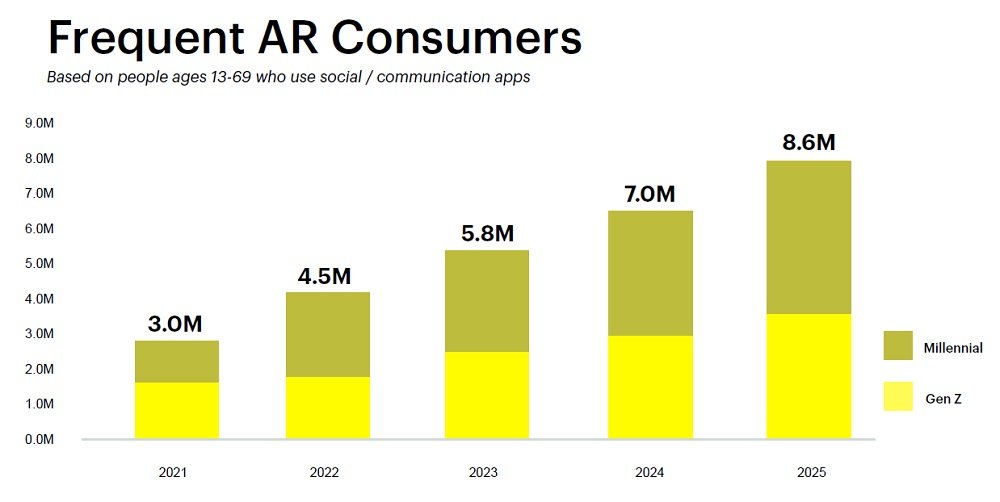
Deloitte Digital and Snap Inc., the developer of Snapchat, have produced a report estimating that half of Malaysian Gen Z-ers and millennials will be frequent augmented reality (AR) users by 2025.

As of 2021, the report found that approximately 3 million Gen Z-ers and millennials are frequent AR users, as in people who use AR weekly or daily. That figure is expected to grow by a whopping 187% to 8.6 million in 2025.

The report also revealed a shift in AR use towards utility as opposed to the playful videos that AR has been long known for. Today, 64% of Malaysian consumers on Snapchat use AR primarily at home for activities like communication (98%), media and entertainment (81%), gaming (79%), and shopping (67%).


Nine in ten Malaysians believe that AR will be even more important in their lives in the next five years. When asked what they expect to use AR for in the future, utility was put front and centre, with most Malaysians wishing to use the technology to help them stay connected with others, learn something new, and improve productivity levels.

The survey / report had 15,000 respondents from around the world, including Malaysia, with about half of which use Snapchat.

It’s no surprise why Snapchat is going all-in on AR since it plays such an outsized and even definitive role on the platform. Last month, the messaging app revealed the latest generation of its Spectacles which is specially designed for AR.

Monday, May 10, 2021

Disney+ Web Address Now Redirects Malaysian Users To Disney+ Hotstar Website

For the longest time, Malaysian users that have tried to visit Disney+ official website would be redirected to a placeholder page where they can register their interest for the streaming service. Things have changed though as the Disney+ web address now redirects users to a different site.

Specifically, if you typed Disney+ URL (disneyplus.com) on your browser, you would be redirected to Disney+ Hotstar’s website (hotstar.com/my) instead of the ROI’s site (preview.disneyplus.com/my). As you can see from the redirected URL, we are likely looking at the address for Disney+ Hotstar Malaysia.


However, that address currently brings users to Disney+ Hotstar India (hotstar.com/in/my) instead. Furthermore, that specific section would return a 404 error as you can see from the screenshot above.

So, there is still no Disney+ Hostar Malaysia at the moment but we still deem that the sudden URL redirection is yet another huge sign indicating that the service is coming to Malaysia soon. Before this, we have seen its social media pages as well as the specific Malaysian user interface within the Disney+ Hotstar app.


Not to forget, Disney has also recently confirmed that it is shutting down the majority of its TV channels in Southeast Asia in order to focus on its streaming service. For what it’s worth, we believe that it is just a matter of time before Disney+ or Disney+ Hotstar make its debut in Malaysia.

Analysts: Only 12-Percent Of Global Users Allowed App Tracking After iOS 14.5 Rollout

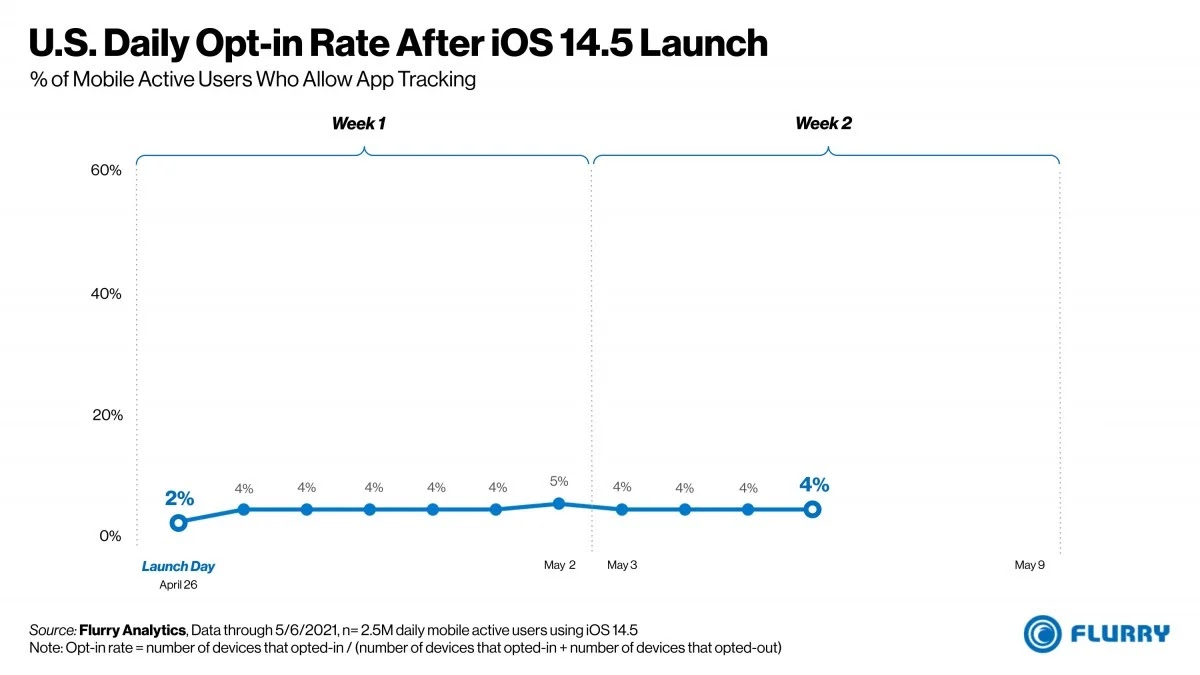
A study by Verizon-owned Flurry Analytics has discovered that the majority of iOS users worldwide have chosen not to enable app tracking. As you may recall, Apple recently rolled out version 14.5 of its operating platform for iPhones which introduces its new App Tracking Transparency (ATT) feature. This enables users to decline certain apps from acquiring their Identifier for Advertisers (IDFA) data to be shared and collected for targeted advertising.

In the study, the analytics firm found that only 12% out of 5.3 million daily active users worldwide allowed app tracking on their devices after the rollout of iOS 14.5. Meanwhile in the US, that number is reported to be only 4% out of 2.5 million users. Additionally, only 5% and 3% of users worldwide and in the US respectively have set up their app tracking preferences to Restricted in their device settings, Flurry Analytics said.

At this current time, the numbers are definitely not in favour of certain companies such as Facebook and its numerous subsidiaries. As previously reported, the social media giant has been aggressively campaigning against Apple’s implementation of its ATT feature, while championing itself to protect the sustainability of small businesses which relies heavily on Facebook’s services. So much so that it even went as far as warning its users of the possibility of charging for its social media services, should they continue to deny apps to access their data.

Perhaps the more drastic consequences are the upcoming restrictions that will befall users of Facebook’s private messaging service WhatsApp. To quickly recap; should users (on both iOS and Android) refuse to accept its new privacy policy by 15 May 2021, the service will remove certain functions such as messaging and calling via the app, and will also eventually delete accounts that are inactive over 120 days.


However, WhatsApp recently updated its Security and Privacy page, noting that no accounts will be deleted nor would it completely remove functions from users who have not accepted its policy after the deadline hits. Instead, the platform now states that it will allow them to continue using the entirety of its services for a couple of weeks, but with a Hail Mary of persistent reminders to have users reconsider accepting the changes. Once the unspecified period has exceeded, WhatsApp will then gradually limit its services for another couple of weeks and will remove them completely from these users after that.


Apple’s new ATT feature has indeed caused a significant impact, and could somewhat be considered as a win for privacy-conscious users. However, as described by Newton’s Third Law of Motion: For every action, there is an equal and opposite reaction. At this time, Facebook’s mulling of charging for its social media services and WhatsApp’s decision to limit and remove functionalities are likely to be just the tip of an inevitable iceberg that’s due for collision.

Friday, May 7, 2021

Survey Shows Southeast Asian Social Media Users Don’t Want Their Financial Info Stored Online

A whopping 76% of social media users said they would choose not to store their financial information online, according to a Kaspersky-YouGov survey of several Southeast Asian countries, including Malaysia.

But there are notable gaps between generations. Baby Boomers (85%) show the highest resistance against having their financial data stored online, followed by Gen X (81%), Millennials (75%), and finally Gen Z (68%). It’s possible that this reflects young people’s greater openness to fintech innovations like e-wallets.

In general, social media users in the region don’t want their personally identifiable information (69%), family information (64%), and current location (54%) stored online. But only 47% would choose not to have their job details stored online – probably because of the widespread use of employment and professional networking websites.


“It is a welcome insight that users here are now thinking thoroughly about the data they share and don’t share online. Most also know now that cybercriminals and the general online public should never get their hands on such information. Awareness, however, does not necessarily equate to action,” said Kaspersky Managing Director for Asia Pacific Chris Connell.

Just 54% of Southeast Asian social media users check and change the privacy settings of devices, apps, or services they use, and very unsurprisingly, only 47% avoid illegal or pirated software and applications.

All respondents in the survey, which was conducted last November, were working professionals active on social media. Aside from Malaysia, the other Southeast Asian countries included in the survey were the Philippines, Singapore, and Vietnam.

Monday, May 3, 2021

Facebook Encourages iOS Users To Enable Tracking So Its Apps Would Remain “Free Of Charge”

In a latest attempt to legally bypass Apple’s recently implemented App Tracking Transparency (ATT) requirement, Facebook is now encouraging users of its social media app and also Instagram on iOS to enable data tracking via a new prompt. First spotted by technologist Ashkan Soltani, this new pop-up contains the usual “benefits” of allowing tracking, such as personalised ads and helping businesses to reach customers – the same reasonings it used in a previous effort to persuade users.

However, one major point stands out from the rest. In this updated prompt, Facebook added that keeping data tracking enabled also “helps keep [the apps] free of charge”. This basically implies that the social media giant may one day consider charging users to use its platforms and apps, should it be denied any tracking capabilities.

In a recent update to its “Speaking For Small Businesses” blog post, Facebook vice president for ads and business products Dan Levy explained that these prompts serve as “educational screens” to inform users on how the company uses data for personalised ads. “Agreeing to these prompts doesn’t result in Facebook collecting new types of data; it just means that Facebook can continue to give people better experiences,” he wrote.

Apple’s new ATT requirement was recently included in the latest iOS 14.5 update that was released for iPhone users last week. This restricts developers and companies from retrieving an individual’s Identifier for Advertisers (IDFA) to be shared and collected across apps on the platform. Even prior to its implementation, Facebook has been steadfast against ATT since it was first announced last year – even to go as far as bashing the iPhone maker in a series of newspaper ads, among other things.

For many, the social media giant’s “warning” of potentially going pay-to-use for all of its various platforms and their respective apps sound more like a bluff. The reason being that Facebook doesn’t necessarily rely on iOS users to collect data for advertisers, as it still has the ability to do so on Android as well as desktop (via its website). Losing Apple users would indeed cause a significant blow to the company’s profits, but it still has plenty of alternatives to generate a large safety net from hitting rock bottom.

That being said, it remains to be seen whether Facebook would hold its end of the bargain should Apple and users insist on choosing not to comply with its persuasion.

Sunday, May 2, 2021

Twitter Now Allows Android, iOS Users To Tweet 4K Resolution Pictures

Starting today, Twitter users on both Android and iOS will now be allowed to tweet and view images at 4K resolution on the app. The social network’s allowance for higher resolution images comes a little more than a month, after it began testing the upload option on mobile devices.

Prior to this, only the web version of Twitter was able to support 4K images, with the mobile versions of the app only capable of supporting half the resolution. That said, not every mobile device is capable of capturing images at 4K resolutions or greater; as a rule of thumb most cameras with a sensor greater than 10MP are capable of the feat. Even more so for the latest iPhone 12 series, since all the sensors in their main camera modules are rated at 12MP.


In any case, if you want to upload images at 4K resolution on your Android or iOS device, you’re going to need to enter the Twitter preferences Tab and tick off a few criteria within the Data Usage section. Basically, you’ll need to select if you want to allow 4K resolution photos to be uploaded via your mobile data or only when connected via Wi-Fi.

Wednesday, April 28, 2021

Android 12 May Let Users Access Hidden Recycle Bin


With Android 11 having launched last year, it’s probably safe to expect Android 12 getting announced sometime this year. And one of the features the new mobile OS may feature is a recycle bin that users can access. XDA has found code referencing this in a developer build of the OS.

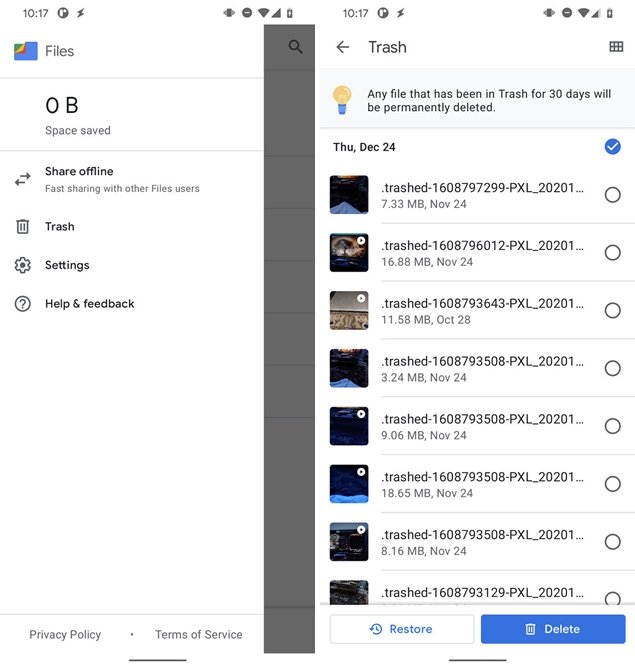
Android 11 has a version of the recycle bin built in already. That being said, it’s not something that users can freely access, like on a Windows PC. Instead, certain apps have the ability to restore certain types of files in the bin if they have the right permissions. One example is the Google Files app.


This could change with Android 12, where access to the recycle bin becomes system-wide. The recycle bin will possibly be placed under Settings > Storage. Though this will only allow you to empty the recycle bin. Restoring individual files will still require the Google Files app.


It’s a nice feature to have, especially if you frequently delete and restore files on PC. This will give the Android 12 experience a sense of parity, so to speak. That being said, as is the case with features found in unreleased versions of Android, this user-accessible recycle bin may not actually make it to the release version.

Tuesday, April 20, 2021

Android Will Soon Remind Users To Keep Their Heads Up While Walking


There are plenty of video clips with people walking into things because they were looking at their phone. Google’s Android mobile OS may be getting something to help make sure you’re not the subject of a similar video. And it has a very on-the-nose name, Heads Up.

Twitter user Jay Prakash Kamat shared screenshots of the feature in action on a Google Pixel 4a. And it’s as straightforward as it sounds. With it turned on, your phone will remind you to look up while walking, rather than at it, when you’re walking. Heads Up also comes with a reminder that this “doesn’t replace paying attention”. Or, if it’s telling you.


According to XDA, the Heads Up feature is rolling out only on the Google Pixel series of devices. Not entirely surprising, since the Pixel phones usually get new Android features earlier than any other. No word on when it will be available on devices by other brands just yet.

The Heads Up feature is another entry into overarching Digital Wellbeing umbrella, first introduced in Android 9 Pie. But it’s quite unfortunate that we’ve come to the point that we need our phones to remind us to watch where we’re going.

Xiaomi Shows Off Physical Concept Of Vision Gran Turismo

At the very tail end of last month, Xiaomi unveiled the Vision Gran Turismo. The car was revealed as a digital hypercar, and one that’s made...