Showing posts with label Rumoured. Show all posts

Wednesday, October 27, 2021

MacBook Pro M1X Rumoured To Have 120Hz Mini-LED Display, 1080p Webcam

With Apple’s recently announced “Unleashed” event coming up soon, rumours and leaks have been flooding out about the speculated MacBook Pro refresh. While we don’t know how accurate these claims are, they’ve set expectations high and even analyst Mark Gurman says that people have been asking about the new MacBook nonstop.

According to leakster @dylandkt, the new lineup will consist of a 14-inch and a 16-inch MacBook Pro, instead of the current 13-inch and 16-inch options. He also claims that the base models will have 16GB of RAM and 512GB of storage. Moreover, the Pro is said to come with a new charging brick as rumours suggest that the USB-C charging port might be replaced by a Magsafe port.

Sticking with his claims from earlier this year, Dylandkt says that the 720p webcam will finally be upgraded to 1080p and the anticipated M1X chip will sport the same ten cores for both MacBook configurations at similar prices. The M1X MacBook Pro variant was expected to be launched back in June during WWDC but it never came to fruition.


As for the screen, display analyst Ross Young tweeted that both MacBook Pros will feature a mini-LED display with 120Hz refresh rate. Similarly, Dylandkt revealed that Apple has been working on a 120Hz display but says he doesn’t know when it will actually be implemented.

If the M1X MacBook Pro does come with a 120Hz display, then Apple will officially have another addition to its list of products that support the high refresh rate, alongside the iPhone 13 Pro and the iPad Pro. The Unleashed launch event will take place on 19 October at 1:00 AM Malaysian time and is expected to unveil the M1X MacBook Pro and Mac Mini, as well as the AirPods 3.

Wednesday, October 6, 2021

NVIDIA Rumoured To Launch GeForce RTX 3090 SUPER In January 2022

Back in September, a leak sprung forth from NVIDIA’s rusty pipes, alleging that the GPU brand was already preparing to launch a “SUPER” class lineup of Ampere-powered GeForce RTX 30 series graphics cards. Recently, a new rumour is hinting that NVIDIA could launch its RTX 3090 SUPER as early as January next year, along with a couple of other cards.

Rumours of NVIDIA’s alleged launch plans first came to light via a Tweet from user hongxing2020 (@hongxing2020), who claims that the RTX 3090 SUPER, which is obviously an updated model of the current RTX 3090, will be the first card of the SUPER lineup to be announced next year. In addition to that, hongxing2020 also claims that NVIDIA will launch two more cards: an RTX 3070 Ti with 16GB GDDR6X memory and a resurrected RTX 2060 from the Turing era, but one with 12GB GDDR6 memory.

Stating the obvious yet again, the RTX 3070 Ti 16GB is clearly expected to be placed above the current RTX 3070 Ti, seeing how it has double the graphics memory. As for the 12GB variant of the RTX 2060: if the tweet rings true, then it serves as a confirmation of a rumour that first made its way online at the start of the year.

Of course, as with all rumours and leaks, we do suggest that you take hongxing2020’s tweet with a liberal sprinkling of salt, especially since it is missing the more important information pertaining to the other SUPER cards, including the RTX 3080 SUPER and RTX 3060 SUPER.

Friday, October 1, 2021

NVIDIA Rumoured To Relaunch GeForce RTX 2060 With Double The Graphics Memory


Back at the start of this year, a rumour began circling online that NVIDIA was planning to resurrect its Turing-powered GeForce RTX 2060, with one difference: instead of 6GB GDDR6, the revived card would instead have 8GB GDDR6. Recently, a new rumour is now suggesting that the amount of graphics memory has increased again.

According to sources close to Videocardz, NVIDIA is supposedly planning on making an RTX 2060 with as much as 12GB of GDDR6 memory, which is just as much as the non-Ti version of the Ampere-based RTX 3060. The card, goes by the model number PG161 and uses the same TU106-300 GPU as the original RTX 2060, save for the “KX” name at the end of the GPU ID.

First announced during CES 2019, the RTX 2060 has long been considered an entry-level GeForce card for the Turing GPU range. The card was popular amongst many gamers, mainly for its price-to-performance ratio and the fact that, like its brethren, it was capable of performing real-time ray-tracing, when and where applicable. Production of the card was quietly discontinued by NVIDIA last year, just as the company announced its current Ampere-based RTX 30 series graphics card.


NVIDIA’s supposed decision to resurrect the RTX 2060 has also been seen as the GPU brand’s way of tackling the ongoing shortage of its RTX 30 series GPUs. Moreover, its CEO, Jen-Hsun Huang, has also said that the shortage is likely to last well into 2022.

Wednesday, September 8, 2021

Huawei Mate 50 Also Rumoured To Feature Satellite Communication Capabilities

It appears that the next generation iPhone may not be the only upcoming smartphone to come with satellite communication capabilities. Or at least according to a new rumour provided by a tipster on Weibo (via GizChina.it), who suggested that Chinese tech giant Huawei might also equip the feature on the Mate 50, its second flagship handset.

Much like the more recent report regarding the function on next-gen iPhones, it is said that the Mate 50’s satellite communications is intended for emergency use as well. Similarly, this enables the phone to send distress messages via SMS, independent of a cellular service connection.

The tipster claims that this feature is supported by China’s Beidou satellite system, which offers navigation and emergency SMS services. Beidou first launched in the country back in 2015 and eventually expanded its services across the globe last year, which places it alongside other satellite-based navigation systems such as the United States’ GPS, Russia’s GLONASS, and Europe’s Galileo.

Interestingly, the tipster added that the new satellite communications feature would also allow Huawei Mate 50 users to reach out to smartphones by other Chinese brands. This suggests that satellite communications might also be introduced to future devices from the likes of Xiaomi, Honor, Vivo, and so on.

If this rumour is to be believed, we might see more handsets to be equipped with this feature throughout 2022. On that note, it is also suggested that Huawei could launch the unannounced Mate 50 flagship series by early next year. Which is actually much later than the Mate series’ usual launch window, but expected nonetheless due the component shortages caused by the various US sanctions imposed on the company.

Sunday, September 5, 2021

Apple Watch Health Upgrades Rumoured To Include Blood-Pressure Monitoring, Fertility Planning

In the not-too-distant future, you may be able to use your Apple Watch to constantly monitor your health. Sources who claim to have access to internal Apple documents told the Wall Street Journal that the tech company is planning to add various new health features to the Apple Watch. These features may include blood pressure trends, a thermometer for fertility and sleep tracking, sleep apnea detection, and diabetes detection, as well as a few updates for existing models.

The sources claim that the aforementioned temperature sensor might be coming to a new Apple Watch as early as next year. This contradicts an earlier report by Bloomberg which expected Apple to add the thermometer and glucose sensor in this year’s model. The sensor is said to assist in fertility planning based on ovulation cycle tracking and improved detection of sleep patterns, with hopes that it could someday be used to detect fevers.

Apple is also developing a blood-pressure sensor that would do away with the usual inflatable cuffs, which will be able to highlight the presence of hypertension. The system works by using said sensor to measure the speed of the heartbeat, through a user’s arteries. However, Apple employees have reportedly been skeptical of the usefulness of the feature, since it would not be able to provide a baseline systolic and diastolic blood pressure measurement.

Last year’s Series 6 watches launched with a blood-oxygen sensor that measures the oxygen saturation level within the user’s blood. Apple has plans to use this sensor to monitor sleep apnea but encountered a stumbling block when the required number of readings for it to be effective would quickly drain the watch’s battery. The company’s ambitions to have a non-invasive glucose monitor also appeared to hit a snag and they are apparently working with the National University of Singapore to research lifestyle coaching for pre-diabetic people who use regular blood-glucose monitoring devices.

It should be emphasized that the report also warns that most of these new features are currently being studied, and may not even make it to consumers’ hands. On a separate note, Apple seems to be requesting FDA clearance to expand the use of existing Apple Watch models. These include heart rhythm tracking for people with atrial fibrillation and alerts for drops in blood oxygen levels.

Monday, July 19, 2021

AMD Ryzen Threadripper 5000 Series CPUs Rumoured For August Launch


After a long period of silence, rumours about AMD’s next-generation Ryzen Threadripper 5000 series CPUs have finally begun appearing once more. The most recent rumour now suggests that the HEDT CPU lineup could launch as early as next month.

According to MoePC, the new AMD Ryzen Threadripper 5000 series CPU goes under the codename “Chagall” and there are several unsubstantiated rumours to it. For a start, the Chinese site claims that the number of cores in each Threadripper 5000 series CPU remain unchanged. Of course, what is known is that the CPU architecture in the new HEDT lineup will be upgraded from Zen 2 to the current 7nm Zen 3 CPU architecture. With that, the top-of-the-line CPU in the series should offer up to 64-cores and 128-threads.

One other rumour is that the Chagall might also feature a slightly larger Inter-Chip Global Memory Interconnect (xGMI), up from 16GT/s to 18GT/s. This is similar to AMD’s EPYC 7003 server CPU series, which goes by the codename “Milan”.

Again, these are merely just rumours and unverified details. Therefore, until an official announcement from AMD is made, we highly recommend that you take this report with a large grain of salt.

Tuesday, June 1, 2021

Certain Apple iPad Models Rumoured To Be Fitted With OLED, Not LED Displays


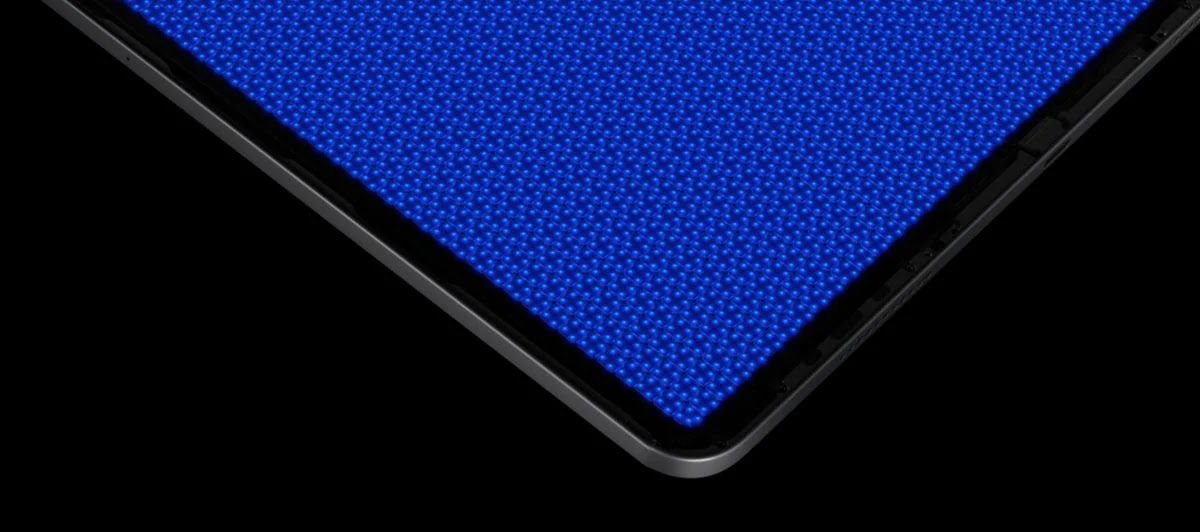
The iPad already received a significant glow up (literally) this year with its 12.9-inch model debuting Apple’s mini-LED display. Now there are rumours that Apple is planning to adopt OLED displays for some of next year’s iPad models.

According to a report by ETNews, Apple and multiple display companies have agreed on the production and delivery of OLED iPad displays starting in 2022 as “the small and medium-sized OLED market is expected to enter the second growth phase”. This is in line with the contents of the research note from reliable Apple analyst Ming-Chi Kuo in March that said that the 2022 iPad Air will feature an OLED display.

Kuo pointed out that although Apple would adopt Mini-LED displays for the new iPad Pro, other tablet models would switch to OLED displays, beginning with the iPad Air next year. Mini-LED and OLED panels are similarly revered for their ability to display deeper blacks, though the former does not suffer from the issue of burn-in, such as the latter. Kuo stated that it is for that specific reason that Apple has no plans to bring OLED to its productivity devices.


Since the OLED displays for the upcoming iPad will be flat — unlike the custom iPhone panels folded at the bottom — it will cost less than the expensive mini-LED panels. It should be noted that while the new iPad’s mini-LED display tops out at 1,600 nits peak brightness, the iPhone 12 Pro’s OLED only reaches 1,200 nits.

Tuesday, March 30, 2021

Google Rumoured To Be Working On A “Game Mode” For Chrome OS


Google has reportedly ordered its software engineers to begin work on developing a new “Game Mode” for its Chromebooks. More specifically, the supposed Game Mode will reportedly be based off a Steam gaming container called “Borealis”.

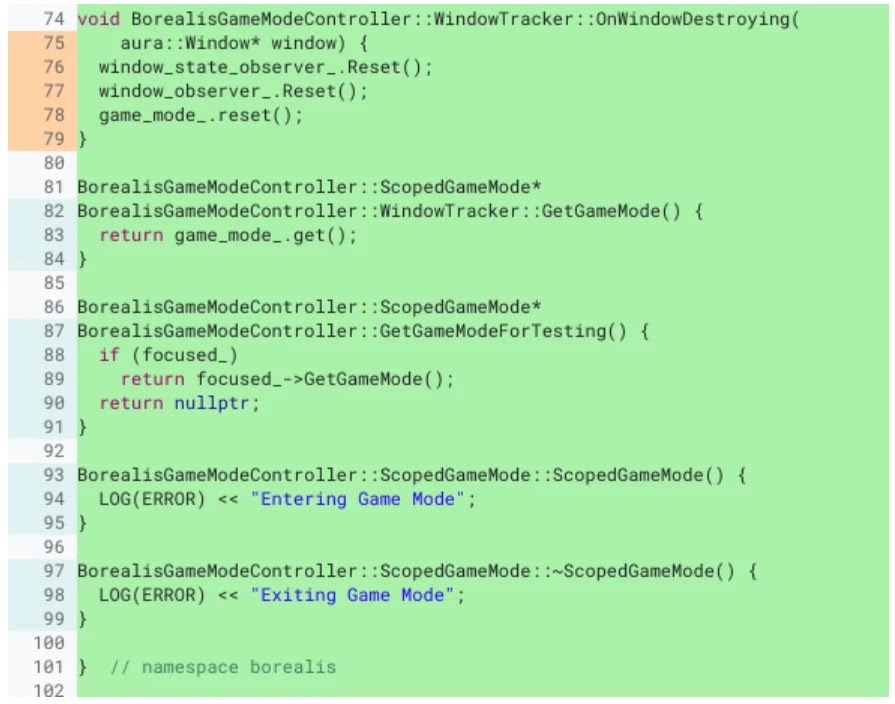
Based on an article and screenshot of the program’s execution on ChromeUnboxed, the Game Mode seems to becomes active, once the Borealis window becomes full-screen. However, a comment by Chromium Gerrit also makes clear that, at current, the Game Mode has yet to be implemented and any attempts to get it running seems to result in an error message is logged instead.

As it stands, there still isn’t a lot of solid information about the feature, but speculations suggest that once Game Mode is enabled, it should provide Chrome OS users with access to tools like pointer lock and performance priority on the gaming window. This also includes access to other apps and executables like messaging, screen recording, among others.


Having a dedicated Game Mode makes sense, depending on the angle you view it from. The majority of Chromebook users already have access to game streaming services like Google Stadia and NVIDIA’s GeForce NOW. Couple those with the fact that Valve has a Steam client for the platform already underway, it understandable why Google wishes to have a dedicated Game Mode out and about, in order to provide its userbase with a more immersive gaming experience.

Thursday, March 11, 2021

SONOS Rumoured To Announce Roam Portable Speaker With US$169 Pricetag


It’s about that time of the year where SONOS is expected to announce a few new products. This year, one of the brand’s more anticipated products is actually a portable speaker, known simply as Roam.

Images and details of the Roam began to surface several days ago, along with its expected retail value of US$169 (~RM697). Thanks to The Verge, we now have some idea of what to expect from this new portable speaker.


Specs-wise, the Roam will inherit SONOS’ Trueplay, which is an audio tuning feature that was first introduced in its bigger brother, the Move. Basically, it’s a feature that automatically calibrates the performance of the speaker based on its immediate environment.

Like all SONOS devices, the Roam is also expected to house the ability to connect itself to a multi-room system via Wi-Fi and Bluetooth, allowing users to stream whatever they’re playing on their phone or audio source to another Roam over Bluetooth. While also streaming the same audio track to other SONOS devices in and around the room.


On that note, the Roam is expected to introduce a new feature called Sound Swap. There’s not a whole lot of detail about it, but supposedly, users will be able to send music that is played on the Roam to a nearby SONOS speaker by holding down the play button. Oh, and the writer seems to make it explicitly clear that the Roam cannot be used as an impromptu surround speaker for the SONOS Arc or Beam.

In terms of performance, the SONOS Roam is expected to have a battery life that supports up to 10 hours of continuous playback, as well as IP67 dust and waterproof rating, the latter allowing it to be submerged at a depth of one metre and for a period of half an hour. As for its sound quality, we can’t tell you that until we actually get a unit to test for ourselves.


Lastly, it seems that the Roam is set to support wireless charging, but the corresponding hub is expected to be an optional extra. At what costs, though, we have no idea.

In any case, SONOS is expected to make any official announcement sometime this week, and we’re still not sure if the brand even intends on launching the Roam in Malaysia. So, take this news with a large grain of salt.

Apple Rumoured To Hold A Virtual Event On 23 March For New Product Reveals


Apple may be holding a virtual event later this month on 23 March, according to reputable Chinese leakster “Kang” via MacRumours. Although specifics regarding the event was not disclosed by the insider, several sources believe that the company is expected to debut a new iPad, next generation AirPods, and the much rumoured AirTags.

An earlier leak suggests that Apple may unveil a new iPad mini in Spring 2021 that would spearhead the company’s new yet drastic design direction. As previously reported in January, the new model would feature a dual punch-hole design to separately house its in-display camera and Home button with Touch ID functionality – a first for any Apple product. While the initial rumour believes that this particular model is the iPad mini 6, a separate leak earlier this month suggests that this may be known as the iPad mini Pro instead. Regardless, this is one Apple product to look out for this year, provided that the leaks are proven accurate.

The other product expected to be revealed during this supposed upcoming event is the AirPods 3, which was leaked in late February. According to Chinese site 52audio, the next generation Apple TWS earbuds will sport a similar design to the AirPods Pro, and may inherit some of its features as well. In regards to the latter, these include the pressure-relieving system that reduces discomfort for extended periods of use, and a more intuitive touch-based controls for playback and other functions.


Lastly is the Apple AirTag, which is believed to be a Bluetooth-powered tracking device similar to the recently launched Samsung Galaxy Smart Tag. While never officially unveiled or mentioned by the company itself, various sources have discovered the existence of this potential product through codes data mined from Apple’s mobile operating system as early as iOS 13. The AirTags were initially rumoured to be unveiled in late 2020, but have eluded both of Apple’s final quarter launch events in October and November.


Whether the company is actually planning to host an event later this month remains to be seen. MacRumors vouches for Kang’s reliability in terms of leaks, where the leakster had previously provided accurate details and expected launch dates of the iPhone 12 line-up last year. If Kang’s suggestion is to be believed, we’ll be expecting Apple to make an announcement regarding this alleged event sometime soon.

Wednesday, February 24, 2021

Samsung Unveils 50MP ISOCELL GN2 Sensor; Rumoured To Debut On Xiaomi Mi 11 Ultra


Samsung recently announced its new 50MP ISOCELL GN2 camera sensor for smartphones, the successor to last year’s GN1. It is highlighted to offer bigger pixels, better energy consumption and introduces a new Phase Detection Auto-Focus (PDAF) technology known as Dual Pixel Pro.

The ISOCELL GN2 is a 1/1.12-inch sensor with a pixel size of 1.4μm, which the company claims is able to capture “exceptionally detailed” images, even in low light conditions. For the latter, the sensor relies on the familiar four-pixel-binning technology to simulate a larger 2.8μm pixel in order to absorb more light when shooting photos in poorly lit environments. To further enhance image capture quality are the onboard Smart ISO and Smart ISO Pro tech, which intelligently optimises the sensor’s ISO settings to different lighting conditions and create high dynamic range photos with less motion artifacts.

As mentioned earlier, the GN2 is also the first sensor to feature Samsung’s new Dual Pixel Pro PDAF tech. What it does is provide faster and accurate autofocusing in low-light environments or when trying to photograph fast-moving objects, by utilising one hundred million phase detecting agents available on the sensor. It is very likely that the company will include this technology along with its upcoming high-end sensors such as its Bright HM series for flagship phones.

Other than that, it also offers the capability to take 100MP photos by merging three 50MP layers into a single high-resolution image. Video-wise, Samsung claims that the sensor supports recordings in Full HD 1080p at a whopping 480 fps, and 4K resolution at 120fps.

The company has confirmed that the ISOCELL GN2 sensor has entered mass production, but did not mention which upcoming smartphone models may feature it. Industry insider Ice Universe suggests that the Ultra variant of the Xiaomi Mi 11 series will likely be equipped with the new sensor. Earlier rumours have pointed out that the Mi 11 Ultra will come with an unspecified 50MP main camera, instead of the 108MP sensor (also by Samsung) that is featured on the standard variant.

It is not uncommon for Samsung to debut its latest camera tech on a third party smartphone either. The sensor’s predecessor, for instance, first debuted along with the Vivo X50 in June of last year. As for the legitimacy of Ice Universe’s claim regarding the GN2, we’ll only find out once Xiaomi is ready to announce the Mi 11 Ultra in the foreseeable future.

Wednesday, February 17, 2021

Sony FX3 Cinema Line Camera Leaks; Rumoured To Launch Later This Month


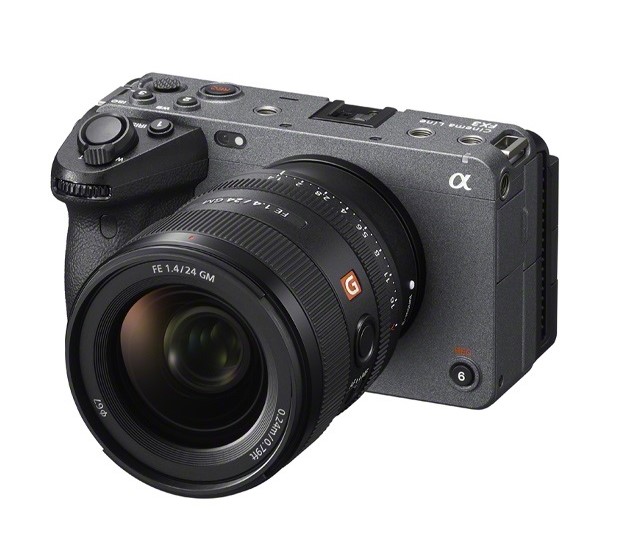
Sony is rumoured to unveil a new entry to its Cinema Line camera series with the unannounced FX3 model next week. An image of the device was originally shared by Japanese industry insider Nikoshita last week, while its alleged specifications were recently provided by YouTuber Gaston Shutters.

Based on the leaked press render, the Sony FX3 Cinema Line is shown to sport a compact body that resembles a more rugged-looking A7C. And much like that model, the new camera also lacks a centre hump and instead features a flat top – where a series of buttons, a control stick, shoe mount, and external accessory screw holes are located. Additionally, it will feature interchangeable lens support via E-mount, judging by the attached Sony FE 24mm f/1.4 GM.

The camera is revealed to lack an EVF (electronic viewfinder) – as seen from another leaked photo provided by Twitter user Joe Lawry, who reshared the image from an unspecified source. This suggests that shot framing on the FX3 would be determined via its rear flip-out LCD screen instead.

Should this leak be proven accurate, the alleged Sony FX3 could be the smallest Cinema Line camera yet. It is rumoured to be priced under US$4,000 (~RM16,120), and is expected to launch later this month around 23 February or so. Hopefully we’ll be able to learn more about this new camera by then.

Saturday, January 30, 2021

Intel 12th Gen Alder Lake-S Desktop CPUs Rumoured For September 2021 Launch


Last week, rumours surfaced about Intel preparing a 16-cores, 32-threads 12th generation Alder Lake-S Core CPU, a little more than a week after its official CES 2021 keynote. Now it appears the new CPU platform has gotten a launch date of sorts: September 2021.

To be fair, the alleged launch date is nothing more than a tweet from Uniko’s Hardware (@unikoshardware). However, the source has often proven themselves to be on the nose about such things in the past, so it is actually worth taking this bit of news with a pinch of salt.

To that end, we more or less know what to expect of Intel’s next-generation Alder Lake-S lineup: the CPUs will be the first desktop CPU to depart the brand’s archaic 14nm process, moving forward with its new 10nm SuperFin die lithography. Further, the processors will also introduce a new LGA 1700 chipset and 600-series motherboards, as well as support for a new DDR5 memory standard and PCIe 5.0 interface.

Wednesday, January 20, 2021

Battlefield 6 Rumoured To Be Soft Cross-Gen Reboot; Will Support Up To 128 Players


It’s been more than two years since EA launched Battlefield V (BFV) and any news about a Battlefield 6 (BF6) has been far and few. That is, up until a few days ago.

According to YouTuber and popular leakster, Tom Henderson, he recently received information that BF6 would be return players back to a modern setting but more specifically, it would be a “soft reboot” of Battlefield 3. While this may not agree with some, we honestly believe this to be a good thing; Battlefield 3 has often been regarded as one of EA’s best instalment of the franchise, even after the arrival of its sequel, Battlefield 4.


Moving on, Henderson also says in his video that BF6 would reportedly be cross-generational, meaning that the game will be playable on the PS5 and Xbox Series X and Series S, as well as last-generation PS4 and Xbox One. In regards to the latter consoles, Henderson goes on to say that owners of said consoles should manage their expectations in terms of visuals and a limited level of destruction.

As for the multiplayer aspect of BF6, there’s talk that EA plans on making the maps bigger, with the ability to accommodate up to 128 players on a single game. For context, that’s double the number of players that the largest BFV map is capable of holding, meaning that we can look forward to more mayhem, more destruction, and an even greater number of Conquest matches. Sadly, Henderson said that there’s no indication if EA plans on bringing the Battle Royale mode it introduced in BFV into its next instalment.


EA has said that it plans on launching Battlefield 6 during the holidays of 2021, but fell short of providing an exact launch date. That said, if Henderson’s rumours are true, then we could be, in true Battlefield fashion, looking at yet another grand multiplayer ambition by the studio itself.

Xiaomi Shows Off Physical Concept Of Vision Gran Turismo

At the very tail end of last month, Xiaomi unveiled the Vision Gran Turismo. The car was revealed as a digital hypercar, and one that’s made...